
In a climate where ambient temperatures frequently reach 50°C, your architectural lighting might be working against your cooling system more than you realize. Traditional fixtures generate significant heat at the source, forcing HVAC units to work harder and driving up electricity costs. You’ve likely dealt with the frustration of frequent maintenance on outdoor fixtures that simply can’t withstand the harsh desert humidity and salinity. Implementing energy efficient fibre optic lighting UAE solutions solves this by decoupling the light source from the output point. This remote-source approach eliminates heat gain at the fixture, significantly reducing the load on your cooling systems while providing dramatic effects for facades and pools.
This professional guide for 2026 outlines how to achieve world-class aesthetics while meeting the May 30, 2026, compliance deadline for Federal Decree-Law No. (11) of 2024. You’ll discover how specialized components like Mitsubishi ESKA plastic optical fibre and marine-grade stainless steel fixtures ensure a system lifespan of over 10 years. We’ll preview the latest integration standards for DMX512 and Lutron systems, ensuring your lighting is both technically superior and fully compliant with Dubai Law No. (2) of 2026 on Public Safety.
Key Takeaways
- Understand how remote-source technology decouples heat from light delivery, significantly reducing HVAC operational costs in the UAE climate.
- Learn how energy efficient fibre optic lighting UAE systems utilize a single LED illuminator to power hundreds of points, streamlining your electrical infrastructure.
- Discover the durability benefits of specifying Mitsubishi ESKA plastic optical fibre to prevent fixture yellowing and thermal degradation in high-ambient temperatures.
- Follow a professional framework for specifying lighting by conducting thermal load assessments and selecting appropriate IP ratings for desert humidity and dust.
- Ensure your 2026 projects achieve full compliance with UAE Federal Decree-Law No. (11) of 2024 and regional green building standards.
What is Energy Efficient Architectural Lighting in the UAE?
Architectural lighting in the UAE has transitioned from a purely aesthetic discipline into a critical component of high-performance building infrastructure. It’s the technical fusion of form, function, and sustainable technology. In the high-stakes environment of 2026 developments, energy efficiency is no longer an optional feature; it’s a non-negotiable regulatory standard. Professionals now prioritize systems that deliver world-class visual effects without compromising the building’s thermal integrity.
The core of this efficiency is measured through lumens per watt (lm/W), yet the most important metric for the Gulf region is light delivery efficiency. Traditional lighting setups often fail because they generate heat at the point of emission. By utilizing Optical fiber technology, designers can decouple the light source from the output point. This shift toward energy efficient fibre optic lighting UAE solutions allows for precise illumination while keeping sensitive electrical components in climate-controlled environments. Implementing energy efficient fibre optic lighting UAE hardware ensures that the visual design doesn’t become a liability during the peak of the summer heat.
The Impact of Heat Gain on UAE Energy Consumption
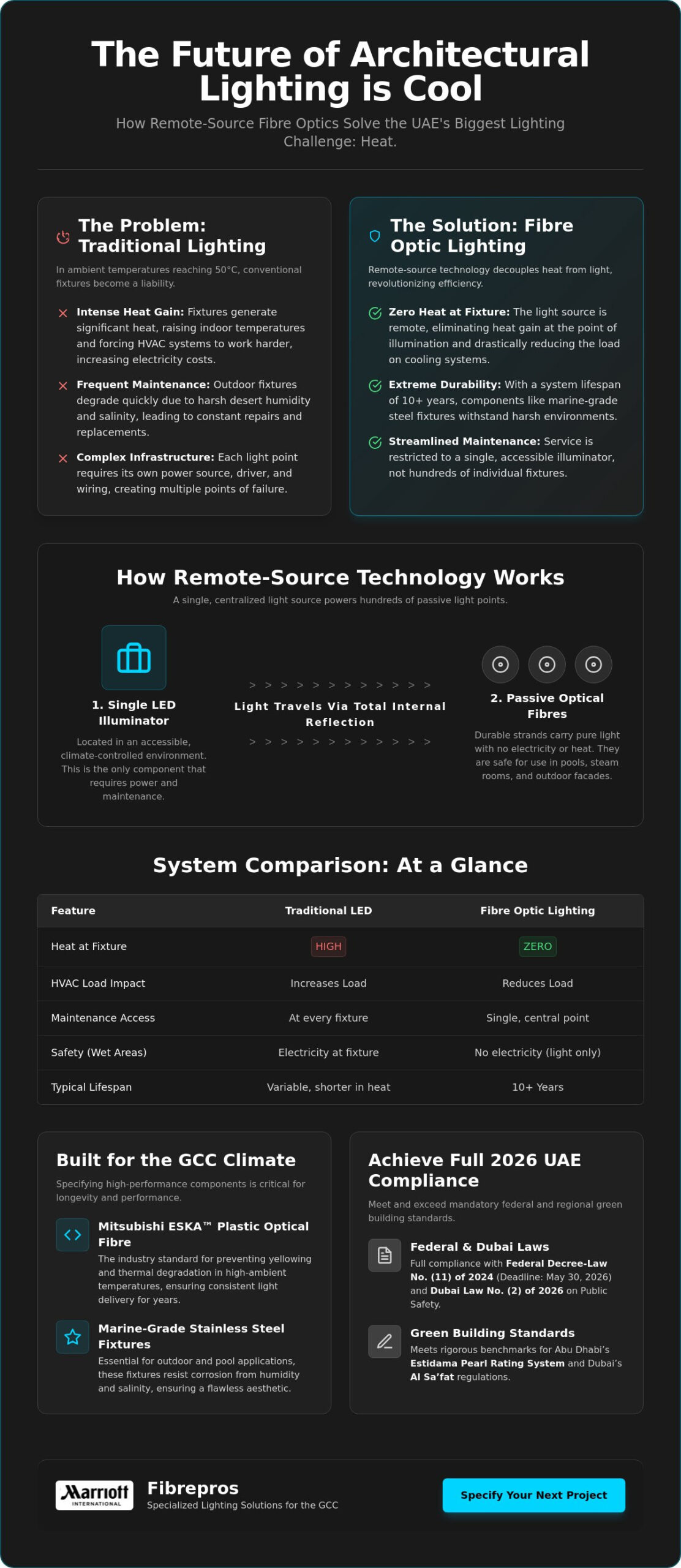
Traditional lighting fixtures act as internal heaters. In large-scale residential and commercial projects, hundreds of integrated LED fixtures can raise indoor temperatures by several degrees. This forces air conditioning systems to consume more power to maintain a set point. Heat gain in the context of UAE architectural lighting is the measurable increase in a building’s thermal load caused by the energy dissipated from lighting fixtures and their associated drivers. The hidden costs of ignoring this include accelerated HVAC wear and significantly higher monthly utility bills. By removing the heat-producing illuminator from the conditioned space, you reduce the total cooling load and improve overall system longevity.
Sustainability Standards in Dubai and Abu Dhabi
Regional green building initiatives have set rigorous benchmarks for 2026. In Abu Dhabi, the Estidama Pearl Rating System mandates specific energy performance targets. Similarly, the Dubai Green Building Regulations, known as Al Sa’fat, require developers to implement technologies that minimize environmental impact. Architectural lighting plays a pivotal role in achieving these certifications, as well as international LEED standards. Specialized suppliers who understand these local requirements are essential partners. They provide the high-performance components, such as LED illuminators and stainless steel fixtures, necessary to meet the UAE’s strict energy codes while delivering the dramatic architectural effects that the region’s luxury market demands.
The Efficiency Advantage of Fibre Optic Lighting Systems
The mechanical advantage of a remote-source system lies in its centralized architecture. Unlike traditional setups that require a separate power source and housing for every bulb, a single high-output engine drives the entire network. This configuration allows one LED illuminator to power hundreds of individual light points through a harness of optical strands. It’s a fundamental shift in energy-efficient lighting design that prioritizes system-wide performance over individual component replacement. By consolidating the power draw to a single point, you gain granular control over the system’s total energy footprint.
Light travels through these strands using the principle of total internal reflection. Because the strands themselves contain no electrical components, there’s zero heat emission at the point of light. This is a game-changer for UAE interiors, where reducing the internal heat load is critical for operational efficiency. When you specify energy efficient fibre optic lighting UAE solutions, you’re investing in a system that simplifies maintenance. Instead of deploying technical teams to replace hundreds of individual integrated LEDs across a building facade or within a pool, maintenance is restricted to a single, accessible illuminator. This reduces long-term labor costs and ensures the architectural vision remains intact for years.
Mitsubishi ESKA: Enhancing Light Transmission Efficiency
The core material of your system dictates the final lumen output. Low-quality fibres suffer from high attenuation, meaning light intensity drops significantly over short distances. We utilize Mitsubishi ESKA Plastic Optical Fibre because its technical composition minimizes light loss. This high-performance POF is engineered to resist the UV and heat degradation common in the UAE climate. It maintains its clarity and flexibility long after generic alternatives have yellowed or become brittle. Choosing the right material ensures that every watt of energy consumed by the illuminator translates into visible, high-quality light at the output.
LED Illuminators as the Modern Engine
The 2026 generation of LED illuminators represents the pinnacle of low-wattage, high-output performance. These units aren’t just light sources; they’re sophisticated control hubs. Modern systems integrate seamlessly with DMX, Bluetooth, and RF protocols, allowing for precise energy management and automated scheduling. Whether you’re specifying a high-intensity unit for a commercial architectural facade or a whisper-quiet engine for residential star ceilings, the focus remains on reliability. If you’re looking to optimize your next project, you can consult with our technical specialists to determine the ideal illuminator for your specific load requirements. This precision ensures you don’t over-specify hardware, keeping both capital expenditure and energy consumption within tight parameters.
Comparing Traditional LED vs. Remote-Source Fibre Optics
Selecting the right illumination strategy in the Middle East requires more than just looking at the fixture’s design. Traditional integrated LEDs are often marketed as the ultimate solution, but they carry a significant thermal penalty. Every individual LED fixture houses a driver and electronics that generate heat directly into the architectural space. In contrast, energy efficient fibre optic lighting UAE systems move the heat source away from the light output. This remote-source architecture isn’t just about aesthetics; it’s a strategic approach to Building Energy Saving that addresses the specific challenges of the Gulf climate.
Over a 10-year period, the Total Cost of Ownership (TCO) for remote-source systems often proves lower than integrated LED alternatives. While the initial installation involves more complex cable runs for the optical strands, you eliminate the need for hundreds of individual electrical points. This is particularly vital in wet areas like spas and pools. Because the fibre carries no electricity, you achieve total safety without the risk of electrical failure or shock, which is a common concern with traditional underwater LEDs. The durability of the system is significantly higher because the light-emitting points contain no electronics to fail.
Thermal Load and Cooling Efficiency
Consider the thermal impact of a standard installation. One hundred LED ceiling spots can generate a combined BTU output that forces your AC system to work significantly harder to maintain a comfortable temperature. Switching to a single fibre optic star ceiling system consolidates that heat to one illuminator. By placing this illuminator in a ventilated, accessible closet away from the cooled living space, you effectively remove the lighting’s thermal load from the room. Integrated LEDs treat the ceiling as a heat radiator, whereas fibre optics isolate thermal output to a single, manageable point.
Maintenance in High-Salinity and Desert Zones
Integrated LEDs frequently fail in the UAE due to the lethal combination of driver heat, sand ingress, and high salinity. Once an integrated unit fails, the entire fixture usually needs replacement, which is both costly and disruptive. Fibre optic systems offer a “set and forget” solution for architectural facades. The end-glow and side-glow strands are inert materials that don’t degrade from salt or dust. You can find more detailed durability comparisons in The Ultimate Guide to Fiber Optic Lights in Dubai. This maintenance efficiency is a core reason why professionals specify energy efficient fibre optic lighting UAE hardware for high-stakes commercial and luxury residential projects.
Implementation Guide: Specifying Lighting for UAE Projects
Specifying a high-performance system in the GCC requires a rigorous technical approach. It isn’t just about picking a design; it’s about engineering for resilience. When you implement energy efficient fibre optic lighting UAE solutions, you must follow a structured specification process to ensure the hardware survives the environmental extremes. A well-planned installation reduces operational costs and prevents the premature failure common with lower-grade alternatives.
- Conduct a thermal load assessment. This calculation determines the exact reduction in AC load you’ll achieve by removing heat-generating drivers from the interior space.
- Select appropriate IP ratings. Outdoor fixtures in the UAE must withstand fine sand ingress and extreme humidity. IP65 is the minimum for facades, while submerged elements require IP68.
- Specify 316 marine-grade stainless steel. Standard metals corrode rapidly in coastal salinity. Stainless steel fixtures are essential for the longevity of any exterior installation.
- Integrate smart sensors. Automate your system to respond to the UAE’s rapid daylight transitions. This ensures the system only draws power when necessary, maximizing energy savings.
- Verify POF bend radius. Forcing high-quality plastic optical fibre into tight architectural niches can cause light loss or fibre fatigue. Always check the manufacturer’s diameter specifications before finalizing architectural details.
Technical precision during the design phase eliminates the “hidden costs” of maintenance. By selecting components that are rated for the local climate, you ensure the system remains operational for its intended 10-year lifespan. This proactive approach is what distinguishes a professional-grade installation from a generic kit that might fail after its first summer season.
Underwater and Pool Lighting Efficiency
Fibre optic underwater lighting fixtures are the premium choice for luxury pools in the UAE. They offer a unique advantage: they’re completely inert in the water. By keeping the electrical illuminator in a remote, dry location, you eliminate the risk of shock and thermal degradation of the pool shell. Adding crystal end fittings to these fixtures enhances light dispersion. This creates a sophisticated shimmer that traditional integrated LEDs can’t replicate, all while consuming less power through centralized illumination.
Architectural Facades and Side-Glow Applications
Architectural facades benefit significantly from side-glow fibre technology. It provides a continuous, dot-free line of light that defines building perimeters with precision. In a recent Dubai villa project, a single high-efficiency illuminator powered a 150-meter linear run. This minimized the electrical footprint and simplified the installation by removing the need for multiple power points along the facade. The result is a clean, minimalist aesthetic that maintains its visual integrity regardless of the external heat. Ready to optimize your project’s performance? Request a technical consultation to get a customized lighting specification today.
Fibrepros: Specialized Lighting Solutions for the GCC
Technical authority in the Middle East isn’t built overnight. Since 1995, Fibrepros has operated as a dedicated specialist in high-performance lighting components across the GCC. We understand that a lighting system is only as reliable as its weakest link, especially in the high-stakes environments of luxury hospitality and large-scale commercial developments. Our role as an authorized supplier of Mitsubishi ESKA Plastic Optical Fibre in the UAE ensures that architects and developers have direct access to the gold standard of light transmission technology. This specialized focus allows us to provide energy efficient fibre optic lighting UAE solutions that perform consistently from Riyadh to Doha.
Our inventory supports the full lifecycle of a project, from the initial engine to the final decorative detail. We supply a comprehensive range of high-output LED illuminators designed for 2026 energy standards, alongside specialized star ceiling kits for premium interior applications. Whether you’re engineering a complex underwater lighting system for a resort pool or a high-intensity facade for a skyscraper, our technical support team provides the precision required for seamless execution. We don’t just sell components; we deliver integrated infrastructure that stands up to the region’s unique environmental challenges.
Why Specifiers Choose Fibrepros
Professional specifiers prioritize Fibrepros because we bridge the gap between aesthetic vision and regulatory compliance. All our systems are curated to meet the May 30, 2026, deadline for Federal Decree-Law No. (11) of 2024, helping projects achieve essential energy reduction targets. Our expertise in climate-resilient lighting means we only provide hardware that withstands the extreme heat and salinity of the UAE coastline. We act as an expert partner, offering the technical precision needed to alleviate the anxieties of B2B clients who cannot afford downtime or system failure. This commitment to reliability has made us the trusted choice for high-stakes projects where performance is critical.
Next Steps for Your Architectural Project
Optimizing your development requires a tailored approach to energy management and light delivery. You can request a technical consultation for your residential or commercial project to ensure your lighting plan maximizes efficiency while minimizing thermal load. We also provide specialized hardware for bespoke designs, such as crystal end fittings for custom chandeliers and sensory applications. These components allow for dramatic visual effects without the maintenance burden of traditional fixtures. Consult with the Fibrepros specialists today for your UAE lighting project to secure a system that delivers world-class aesthetics and 2026-compliant efficiency.
Optimizing Your 2026 Architectural Vision
Achieving a balance between luxury aesthetics and operational efficiency requires a fundamental shift in how we deliver light. By adopting a remote-source approach, you effectively eliminate the thermal load associated with traditional fixtures. This strategy is essential for meeting the UAE’s rigorous 2026 energy regulations while reducing long-term HVAC costs. Your choice of high-performance components, such as Mitsubishi ESKA plastic optical fibre, ensures that your infrastructure remains resilient against the extreme humidity and salinity of the Gulf coast.
Since 1995, we’ve specialized in providing climate-resilient solutions that prioritize technical precision and zero-heat light delivery. Whether you’re designing a high-end residential pool or a commercial facade, implementing energy efficient fibre optic lighting UAE hardware is a decisive step toward sustainable development. As an authorized Mitsubishi ESKA supplier, we provide the specialized mastery needed to navigate complex regional requirements. We invite you to Contact Fibrepros for an Expert Architectural Lighting Consultation to refine your project’s technical specifications. Let’s build a lighting system that outlasts the desert summer and delivers world-class performance.
Frequently Asked Questions
How does architectural lighting affect the energy efficiency of a building in Dubai?
Architectural lighting impacts energy efficiency through both direct electrical consumption and the secondary thermal load placed on cooling systems. In Dubai, traditional fixtures generate significant heat that forces HVAC units to work harder. Implementing energy efficient fibre optic lighting UAE solutions minimizes this internal heat gain. This dual-action efficiency helps developers meet local green building standards like Al Sa’fat by reducing the total kilowatt-hour requirement for the building.
Can fibre optic lighting really reduce my air conditioning costs in the UAE?
Yes, fibre optic systems reduce air conditioning costs by isolating the heat source from the cooled environment. Unlike integrated LEDs that dissipate heat at the ceiling or wall level, fibre optics place the heat-generating illuminator in a remote, ventilated location. This prevents the lighting from raising the indoor temperature. Reducing this internal thermal load allows AC units to maintain set points with less energy, lowering monthly utility expenditures.
What is the lifespan of Mitsubishi ESKA fibre in high-heat environments?
Mitsubishi ESKA plastic optical fibre is engineered to last over 10 years in the extreme heat of the UAE. Its high-grade polymer composition is specifically designed to resist the yellowing and thermal degradation that affects generic fibres. By maintaining its clarity and flexibility in ambient temperatures reaching 50°C, it ensures that the system’s light transmission efficiency remains consistent throughout its long-term operational life.
Is fibre optic lighting more energy efficient than standard LED strips?
Fibre optic lighting is often more efficient for large-scale architectural highlighting because a single high-efficiency LED illuminator replaces dozens of individual drivers. While LED strips are efficient light sources, they generate heat along their entire length and require distributed electrical points. Fibre optics consolidate power draw to one central engine and deliver light through inert strands, eliminating heat at the output and significantly simplifying the maintenance cycle.
What IP rating is required for energy-efficient outdoor lighting in Abu Dhabi?
Outdoor architectural lighting in Abu Dhabi must adhere to the Department of Energy’s Electricity Wiring Regulations, which typically mandate a minimum of IP65. This rating ensures the fixture is protected against fine desert dust and high-pressure water during maintenance. For submerged applications like luxury pools or fountains, IP68 is the required standard to prevent water ingress and ensure the long-term safety and efficiency of the lighting infrastructure.
How many light points can a single LED illuminator power in a star ceiling kit?
A single professional-grade LED illuminator can power between 100 and 400 individual light points in a star ceiling kit. The exact number depends on the chosen fibre diameter and the required lumen output for the specific architectural effect. This centralized configuration allows for complex, dramatic aesthetics without the need for hundreds of individual bulbs, which reduces both installation complexity and the total electrical load of the system.
Are there specific UAE government regulations for energy-efficient architectural lighting?
Specific regulations include Federal Decree-Law No. (11) of 2024, which established a compliance deadline of May 30, 2026, for reporting energy reduction plans. Additionally, Dubai Law No. (2) of 2026 on Public Safety governs the standards for all new lighting installations. Projects must also comply with the Emirates Conformity Assessment Scheme (ECAS) to obtain necessary energy efficiency labels and conformity certificates for all lighting products used.
Why is Mitsubishi ESKA considered the gold standard for UAE lighting projects?
Mitsubishi ESKA is the gold standard because it offers the lowest attenuation rates for plastic optical fibre, ensuring maximum brightness across long architectural runs. Its technical superiority lies in its resistance to UV radiation and high salinity, which are prevalent in UAE coastal developments. Architects specify this material because it won’t become brittle or lose clarity in the desert climate, providing a reliable, high-performance solution for high-stakes projects.