
What if the most immersive part of your therapeutic environment was also the safest, carrying zero heat and zero electricity directly to a child’s hands? In the specialized field of sensory room fibre optic lighting, the difference between a high-performance installation and a failed kit often comes down to the quality of the polymer used. You likely recognize that in the intense UAE climate, standard retail lighting often becomes brittle or yellows over time, leading to maintenance headaches and safety concerns. It is frustrating when equipment fails to meet the high standards required for clinical or educational settings.
This guide explains how to design therapeutic spaces using professional-grade Mitsubishi ESKA fibre optics that offer a safe, “cold” light source for immersive tactile stimulation. You will learn how to select durable components that meet the latest UAE architectural standards and DCD fire safety codes. We will also cover how to integrate high-output LED illuminators that provide uniform, calming color-shifting effects for up to 50,000 hours. By focusing on technical precision and specialized materials, you can create a reliable environment that supports well-being without the risks of electrical leakage or heat degradation.
Key Takeaways
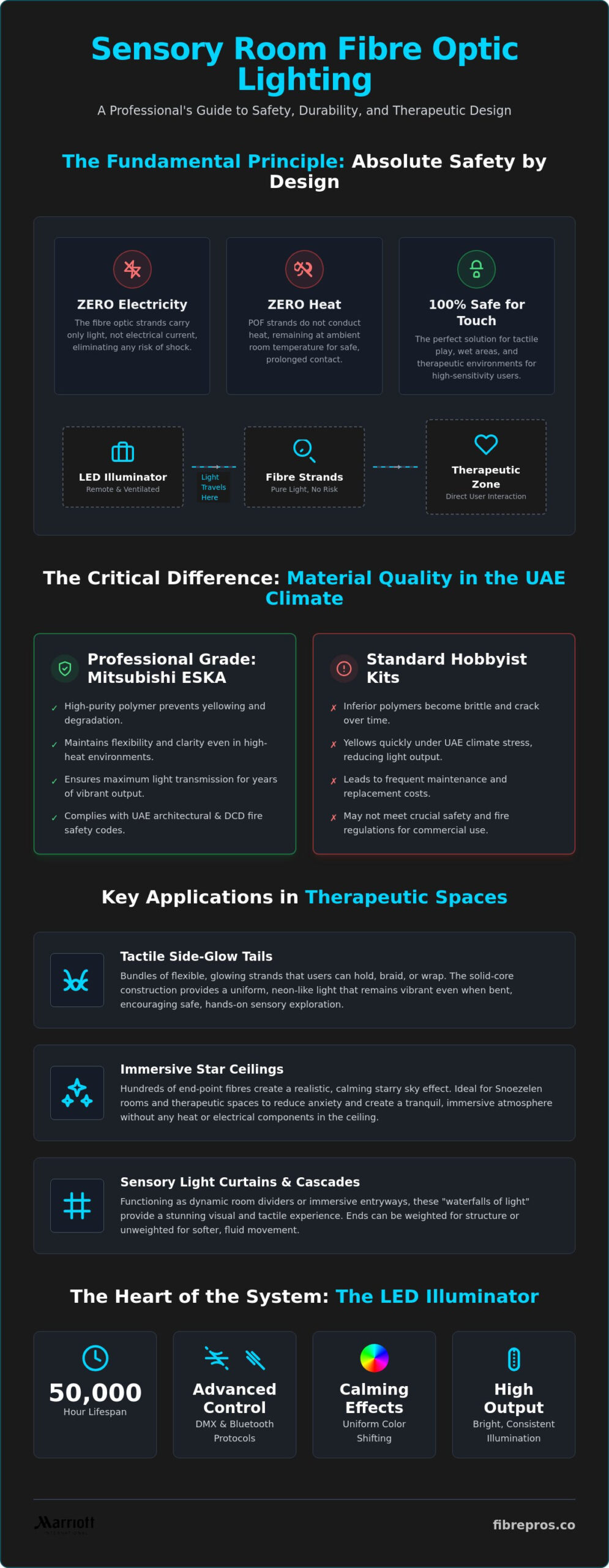
- Understand why separating the LED illuminator from the tactile strands ensures a 100% safe, heat-free experience for direct skin contact and play.
- Discover how Mitsubishi ESKA Plastic Optical Fibre prevents yellowing and brittleness, maintaining high light output in the UAE’s demanding climate.
- Learn the technical requirements for sensory room fibre optic lighting kits, including tactile side-glow tails and immersive star ceiling applications.
- Evaluate control protocols like DMX and Bluetooth to create precise, calming color-shifting effects that meet specific therapeutic goals.
- Gain professional insights into planning accessible maintenance zones and efficient cable runs for luxury and commercial sensory installations.
What is Sensory Room Fibre Optic Lighting?
A professional sensory room fibre optic lighting system is an engineered solution designed to deliver light without heat or electricity to the user. Unlike traditional fixtures where the bulb and power source are contained within the unit, this system uses a remote LED illuminator connected to Plastic Optical Fibre (POF). Light travels through these flexible strands via total internal reflection. This ensures the point of contact remains completely “cold” and safe for direct interaction.
This specific architecture is fundamental to the Snoezelen concept, which focuses on providing a controlled multisensory environment for individuals with ADHD, autism, or dementia. By isolating the electrical components in a ventilated housing away from the user, designers create a space where tactile exploration is encouraged rather than restricted. It’s a highly durable, immersive environment that supports therapeutic goals through safe, hands-on play. The system’s reliability hinges on the quality of the light source and the thermal stability of the fibre itself.
The Role of Side-Glow Technology
In most sensory applications, we utilize side-glow fibre. This specific type of POF is treated to allow light to “leak” uniformly along its entire length, creating a continuous, neon-like glow. While standard PMMA fibres can become brittle or yellow over time, professional-grade materials like Mitsubishi ESKA offer superior flexibility and light transmission. This makes side-glow the preferred choice for tactile “tails” or “strands” that users can hold, braid, or wrap around themselves. The solid core construction ensures the light remains vibrant even when the fibre is bent or manipulated frequently in a commercial setting.
Sensory Light Curtains and Cascades
Light curtains and cascades serve as functional room dividers or immersive entryways in therapeutic settings. These installations consist of hundreds of side-glow strands hanging from a ceiling-mounted track, creating a “waterfall” effect. In commercial environments, choosing between weighted and unweighted ends is a critical design decision. Weighted ends provide a more structured look and prevent tangling, while unweighted ends allow for softer, more fluid movement. For those planning complex installations in the Middle East, our Ultimate Guide to Fiber Optic Lights in Dubai provides deeper insights into architectural integration for these high-performance systems.
Safety and Performance Standards for UAE Sensory Spaces
Safety in clinical and educational environments is non-negotiable. When planning a therapeutic space, the primary technical advantage of sensory room fibre optic lighting is the total separation of electricity from the user. By housing the LED illuminator in a remote, ventilated location, the light-emitting strands carry only photons, not current. This architecture eliminates the risk of electrical shock, making it the only viable solution for wet areas or tactile play zones where children and patients are in direct contact with the light source.
Thermal regulation is equally critical. Traditional lighting solutions often generate significant heat, which can lead to burns or discomfort during prolonged sensory sessions. Because Plastic Optical Fibre (POF) does not conduct heat, the strands remain at ambient room temperature regardless of how long the system has been running. This “cold light” allows for safe, immersive interaction, a key consideration when designing a sensory room for pediatric or high-sensitivity patients.
In the GCC region, material durability is often compromised by the constant cycle of high outdoor heat and indoor air conditioning. Low-quality hobbyist kits typically use inferior polymers that become brittle or yellow within months. Professional-grade systems utilize high-purity materials that resist these environmental stressors, ensuring the strands remain flexible and clear for years. For those managing commercial facilities, we recommend consulting with a specialist to ensure your hardware meets local safety and performance benchmarks.
Mitsubishi ESKA: The Gold Standard for Safety
Mitsubishi ESKA Plastic Optical Fibre is the global benchmark for light transmission efficiency and polymer purity in sensory applications. High-purity PMMA (Polymethyl Methacrylate) prevents the yellowing effect common in budget alternatives, maintaining a crisp, therapeutic light output over time. This material is also phthalate-free, ensuring that the cladding is non-toxic and safe for direct skin contact or accidental mouthing in pediatric settings.
Maintenance and Hygiene in Commercial Settings
Maintaining hygiene in a high-traffic sensory room is straightforward with POF. The strands can be wiped down with standard medical-grade sanitizers without degrading the light-emitting properties of the fibre. This is a significant operational advantage over traditional fixtures that may have hard-to-reach surfaces or sensitive components. From a cost perspective, the long-term benefits are clear. A single high-performance LED illuminator, rated for 50,000 hours, is far easier to maintain than multiple individual lamps, making professional sensory room fibre optic lighting a more sustainable investment for UAE clinics and schools.
Types of Sensory Fibre Optic Kits and Applications
Selecting the right hardware configuration is essential for achieving specific clinical or relaxation outcomes. Most professional sensory room fibre optic lighting installations utilize a combination of tactile and visual components. These systems are modular, allowing designers to scale from a single corner unit in a private villa to a comprehensive multi-sensory environment in a commercial clinic. Understanding the technical differences between these applications ensures the equipment withstands the high-use demands of a professional setting.
- Tactile Fibre Tails: These are bundles of side-glow strands, typically ranging from 2 to 3 meters in length. Unlike hobbyist-grade thin strands, professional solid-core fibres provide a more substantial weight and a uniform neon-like glow. They are designed for direct manipulation, allowing users to experience the therapeutic benefits of sensory rooms through touch and visual tracking.
- Sensory Showers and Tunnels: These installations create a 360-degree light environment. A “shower” consists of a circular ceiling mount where fibres hang down to the floor, creating a safe, enclosed space for deep pressure therapy. Because the strands carry no electricity, they are ideal for creating immersive “waterfall” effects that users can walk through.
- Wall-Mounted Light Panels: These interactive displays often integrate with sound or touch sensors. They provide immediate visual feedback, which is critical for developing cause-and-effect recognition in pediatric patients.
Designing with Star Ceiling Kits
For relaxation zones and quiet rooms, star ceilings provide a soothing celestial effect that significantly reduces anxiety. In luxury UAE interiors, we achieve a realistic “near and far” star field by using varying fibre diameters, such as 0.75mm and 1.5mm strands, within the same panel. This depth of field, combined with a slow “twinkle” effect from the LED illuminator, promotes deep relaxation and helps regulate sleep patterns. Our Star Ceiling Kits in Dubai: The 2026 Buyer’s Guide details the specific panel materials and illuminator wattages required for these architectural installations.
Integrating Crystal End Fittings
Crystal end fittings are specialized hardware components attached to the ends of end-glow fibres. These crystals refract the light, creating intense “sparkle” points on the floor or walls. They are particularly effective for visual tracking exercises, as the concentrated light points draw the eye more effectively than raw fibre ends. When mounting these in schools or public clinics, we use secure, recessed fixtures to ensure the crystals cannot be removed or damaged. You can explore the various styles and refractive properties available in our guide to Crystal End Fittings for Fibre Optic Lighting.
Technical Specification: Choosing the Right LED Illuminator
The LED illuminator serves as the engine of any sensory room fibre optic lighting system. Its performance dictates the brightness, color accuracy, and operational lifespan of the entire installation. Choosing the correct light source requires balancing lumen output with the total number of fibre strands in your bundle. If the illuminator is underpowered, the ends of long side-glow strands will appear dim and ineffective for visual tracking. Conversely, an overpowered unit without proper thermal management can degrade the fibre’s polymer core over time.
Control protocols are the primary tool for tailoring the environment to a user’s specific therapeutic needs. While simple RF remotes work for residential kits, commercial UAE clinics often require DMX or Bluetooth integration. These professional standards allow therapists to synchronize lighting with sound or tactile stimuli, creating a truly multi-sensory experience. Precise dimming capabilities are essential; the ability to drop brightness to 5% for overstimulated users is just as important as high-intensity output for visual engagement. You can explore our specific hardware recommendations in this Dubai buying guide for LED illuminators.
Acoustic performance is a frequently overlooked technical requirement. In autism-friendly spaces, the hum of a cooling fan can be a significant sensory trigger. Professional-grade illuminators utilize passive cooling via robust aluminum heat sinks rather than noisy mechanical fans. This design is particularly vital in the Middle East, where high ambient temperatures demand efficient heat dissipation to prevent the LED chip from flickering or failing prematurely. For specialized projects, contact our technical team to specify the correct light engine for your room dimensions.
Color Theory in Sensory Lighting
Effective sensory environments use color to drive specific psychological outcomes. RGBW (Red, Green, Blue, White) LED chips are superior to standard RGB versions because they include a dedicated white light element. This allows for softer, more natural pastels and a “true white” that is less clinical and more soothing. Slow-fade cycles are typically used to promote calming and parasympathetic nervous system regulation, while high-contrast “twinkle” effects provide the necessary stimulation for visual tracking and engagement exercises. To ensure these visual therapies are most effective, regular checkups with specialists like The Eye Centre can help monitor and support a patient’s overall ocular health.
IP Ratings for Humid Environments
In coastal UAE regions or installations near indoor hydrotherapy pools, the light engine must be protected from humidity and airborne dust. An IP65-rated illuminator provides a sealed housing that prevents moisture from corroding the internal circuitry. Even in standard dry rooms, a high IP rating is vital for the longevity of the LED source as it prevents dust buildup on the optical port, which could otherwise cause localized overheating and reduced light transmission. Protecting the hardware from these environmental factors ensures the system remains operational for its full 50,000-hour rated lifespan.
Planning and Installation for Luxury UAE Sensory Rooms
Successful implementation of sensory room fibre optic lighting requires precise architectural planning before the first strand is ever hung. Unlike generic plug-and-play kits, professional systems must be integrated into the room’s infrastructure to ensure both aesthetic and functional longevity. Siting the LED illuminator is the first technical priority. It’s best practice to house the light source in a ventilated, accessible service hatch or adjacent cupboard. This placement ensures the hardware remains cool and allows technicians to perform maintenance without disturbing the therapeutic environment.
Cable runs must be calculated accurately to prevent unnecessary light loss. While high-quality fibre can travel significant distances, excessive lengths can reduce the vibrancy of the side-glow effect. In luxury UAE villas, where ceiling heights often exceed standard dimensions, custom-length fibres are essential. Off-the-shelf bundles rarely accommodate these architectural nuances, often leading to stretched strands or insufficient coverage in larger rooms. By specifying tailor-made lengths, you ensure every tail and star point receives the maximum lumen output from the illuminator.
Mounting and integration techniques also play a role in the room’s safety profile. We recommend hiding the “infrastructure”-the bundles of fibre before they split into individual strands-behind false ceilings or wall panels. This creates a clean, “invisible” look where the light appears to emanate naturally from the architecture itself. This approach isn’t just about aesthetics; it also protects the core of the fibre bundle from accidental damage or tampering in high-use environments.
Bespoke Solutions for Schools and Clinics
For high-traffic areas like schools or medical clinics, durability is the primary focus. We utilize reinforced jackets for fibre bundles and solid-core strands that withstand frequent, daily manipulation by multiple users. Compliance with local UAE building and safety codes is mandatory for these facilities. By using professional-grade materials, we ensure every installation meets the rigorous fire safety and electrical requirements of Dubai’s commercial therapeutic centers. A professional installation transforms a standard space into a high-performance environment where every light point is intentional and secure.
Expert Consultation in Dubai
Navigating the technical requirements of a multisensory project is more efficient with a local partner. We provide immediate access to genuine Mitsubishi ESKA materials and high-IP rated hardware directly from our Dubai inventory. Our team offers technical site surveys to assess ventilation, mounting points, and control integration before any hardware is specified. This proactive approach prevents common installation errors and ensures a seamless project delivery from design to final testing. Contact our Dubai specialists for a sensory lighting consultation to begin your custom project.
Designing for Safety and Longevity in UAE Sensory Spaces
Creating a successful therapeutic environment requires a shift from hobbyist kits to architectural-grade hardware. By prioritizing high-purity Mitsubishi ESKA Plastic Optical Fibre and remote LED illuminators, you eliminate electrical risks while ensuring the system survives the unique thermal demands of the Middle East. Professional-grade sensory room fibre optic lighting isn’t just about the visual effect; it’s about providing a reliable, “cold” light source that remains safe for direct tactile interaction over years of intensive use. Technical precision during the planning phase prevents the yellowing and brittleness that often plague inferior materials in this region.
Since 1995, we’ve provided Dubai-based technical support and immediate inventory for specialized GCC projects. As an official supplier of genuine Mitsubishi ESKA POF and high-performance LED illuminators, we ensure your installation meets the highest safety and performance standards. Whether you’re designing a private villa relaxation zone or a commercial pediatric clinic, the right hardware makes all the difference in user outcomes. Explore our Professional Sensory Fibre Optic Kits to secure the specialized components your project requires. With the right technical foundation, your sensory space will provide a safe, immersive sanctuary for years to come.
Frequently Asked Questions
Are fibre optic lights safe for children with autism to touch?
Yes, they are 100% safe because they carry zero electricity and generate no heat at the point of contact. This “cold light” allows for direct tactile interaction, which is essential for sensory processing. The electrical components remain isolated in a remote LED illuminator, ensuring children can hold, wrap, or play with the strands without any risk of shock or burns.
Can I install sensory fibre optic lighting in a bathroom or near a pool?
Yes, fibre optic lighting is the safest option for wet environments like bathrooms or hydrotherapy pools. Since the fibre strands are made of high-quality plastic and carry no current, they can even be submerged in water. You must ensure the LED illuminator is installed in a dry, remote location, but the light output itself is completely safe for use around water.
How do I choose the right length for a sensory fibre optic curtain?
You should choose a length that allows the strands to reach the floor with a slight “puddle” effect for maximum tactile engagement. Standard lengths usually range from 2 to 3 meters, but custom lengths are necessary for high-ceiling UAE villas. Measuring from the mounting point to the ground ensures the sensory room fibre optic lighting curtain provides a full immersive experience without leaving gaps.
What is the difference between hobby-grade and professional sensory fibre?
Professional-grade fibre, such as Mitsubishi ESKA, uses high-purity PMMA that resists yellowing and remains flexible over time. Hobbyist kits often use inferior plastics that become brittle and lose light output within months. Professional solid-core side-glow fibre provides a more uniform light distribution and a more substantial weight, making it better suited for therapeutic and commercial applications.
Do sensory fibre optic lights require a specific type of light source?
Yes, they require a specialized LED illuminator designed to couple light efficiently into the fibre bundle. These illuminators often include features like RGBW chips for better color mixing and silent, fan-less cooling systems to prevent sensory overstimulation. Matching the illuminator’s wattage to the number and length of your fibre strands is critical for maintaining consistent brightness across the entire installation.
Will the fibre optics yellow or degrade in the Dubai sun?
High-quality Plastic Optical Fibre is designed for thermal stability, but professional-grade materials like Mitsubishi ESKA are specifically engineered to resist environmental stressors. For indoor sensory room fibre optic lighting in Dubai, degradation isn’t an issue if you use these high-purity polymers. They are built to withstand the ambient heat of the Middle East without losing their clarity or becoming brittle over time.
Can I control the colors and patterns of the sensory lighting?
You can fully customize colors and patterns through the LED illuminator’s control interface. Most professional systems support DMX, Bluetooth, or RF remote controls, allowing you to select static colors, slow-fade cycles, or stimulating “twinkle” effects. This flexibility is vital for therapists who need to adjust the environment’s mood based on a specific patient’s sensory needs or therapeutic goals.
Is there any maintenance required for a sensory fibre optic system?
Maintenance is minimal and typically involves cleaning the fibre strands and ensuring the illuminator’s ventilation ports remain clear. You can wipe down the strands with standard sanitizers to maintain hygiene in clinical settings. Because the system uses a single LED source with a 50,000-hour rated lifespan, you won’t need to worry about frequent bulb changes or complex electrical repairs.