
Can you truly achieve a zero-heat environment when your lighting fixtures are physically located inside the cellar? For luxury hospitality venues and licensed resorts in Riyadh, maintaining the integrity of a premium wine collection requires more than just a robust cooling unit. You understand that even the smallest temperature fluctuation can degrade a vintage. Standard bulbs and even high-end LEDs create localized hot spots that threaten cork health and wine stability. This is why heat-free lighting for wine cellars Riyadh is becoming the technical standard for the city’s emerging high-end commercial developments.
This article explains how to illuminate high-value collections without adding a single degree of heat to your climate-controlled environment. We’ll look at the technical advantages of Mitsubishi ESKA plastic optical fibre and how it physically separates the light source from the storage area. You’ll learn how to achieve a museum-quality display that reduces the energy strain on your cooling systems while providing total protection against UV exposure. By isolating the illuminator outside the thermal envelope, you ensure that only pure, cold light reaches your bottles. This approach represents the pinnacle of specialized craftsmanship in modern cellar design.
Key Takeaways
- Understand the remote-source principle that allows for true thermal isolation by keeping light sources outside the climate-controlled envelope.
- Learn how to eliminate the risk of “light-struck” wine by removing UV and infrared radiation from your storage environment.
- Discover why Mitsubishi ESKA plastic optical fibre is the technical standard for high-fidelity light transmission in luxury commercial cellars.
- See how heat-free lighting for wine cellars Riyadh significantly reduces the energy load and wear on dedicated cooling systems.
- Explore the use of crystal end fittings to create a museum-grade visual display that maintains perfect cellar integrity.
The Challenge of Wine Preservation in Riyadh’s Climate
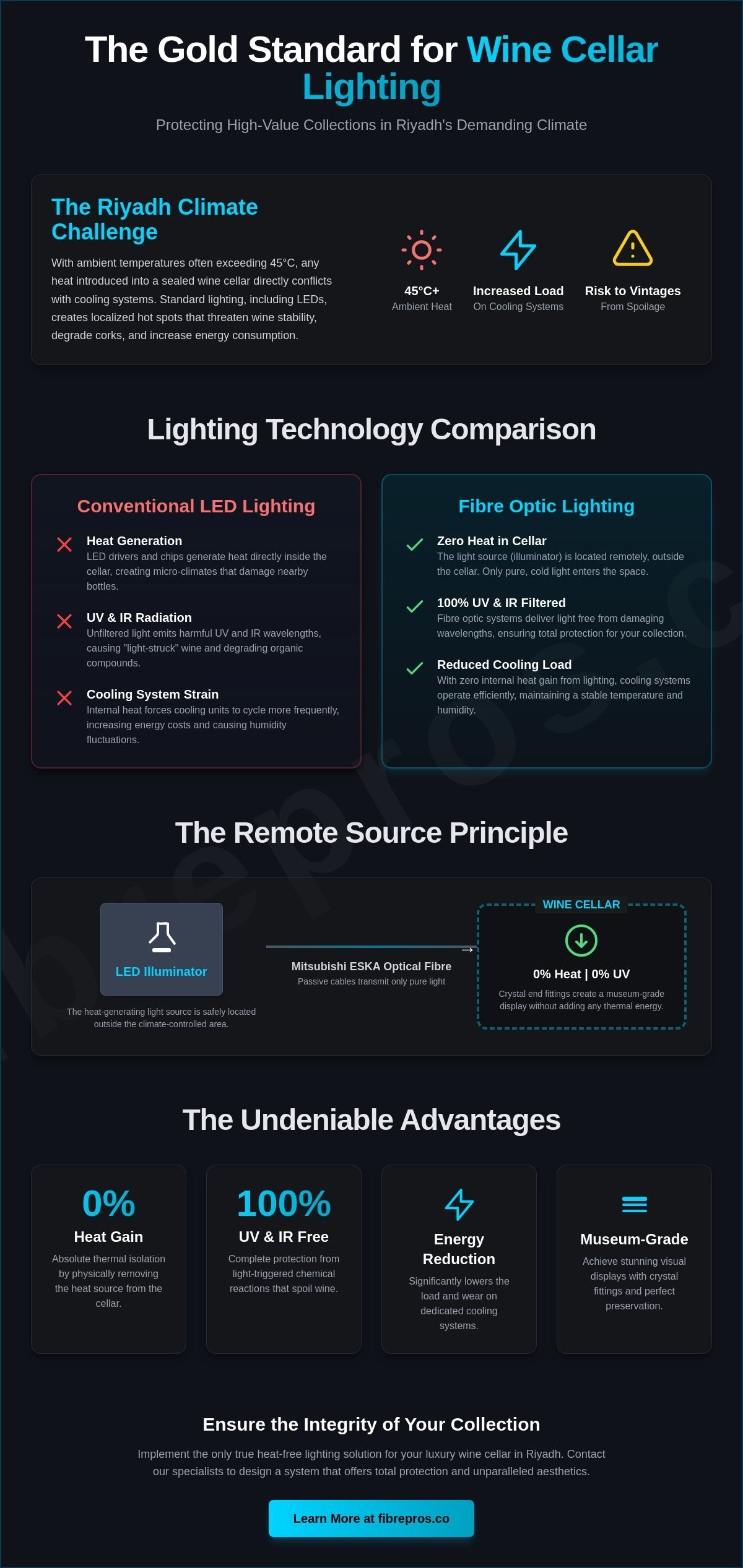
Riyadh’s environmental conditions present a unique set of challenges for precision climate control. With summer ambient temperatures frequently climbing above 45°C, maintaining a consistent 12-14°C inside a wine cellar requires absolute thermal integrity. Any heat introduced into this sealed environment creates a direct conflict with the cooling system. While many designers suggest LEDs as a low-heat alternative, they often overlook the thermal output of the LED driver and the chip itself. In a compact, highly insulated space, these small heat sources create localized temperature spikes. Implementing heat-free lighting for wine cellars Riyadh is not a luxury; it’s a technical necessity to prevent these micro-climates from compromising your collection.
The concept of ‘heat-free’ lighting refers to the total absence of thermal energy within the storage envelope. This is physically impossible with traditional electrical fixtures where the light source and the power supply reside inside the room. By contrast, specialized systems utilize the principle of fibre optics to relocate the heat-generating illuminator to a separate, ventilated area. Only the light itself travels through the passive glass or plastic strands into the cellar. This ensures that the internal thermal load remains at zero, allowing the cooling unit to maintain a steady state without fighting internal heat gain.
Riyadh’s Thermal Load Factors
Saudi architectural standards prioritize heavy insulation to combat desert heat. This insulation traps internal heat effectively. If you install standard lighting, the heat remains trapped. This forces the cooling unit to cycle frequently, causing rapid humidity fluctuations. Frequent cycling leads to cork desiccation. Oxygen then enters the bottle and spoils the vintage. Even high-efficiency LEDs radiate enough heat to raise the temperature of nearby bottles by several degrees.
The Chemistry of Light Damage
Light damage occurs when UV and infrared radiation penetrate the bottle. These wavelengths trigger chemical reactions that break down stable organic compounds and tannins. This alters the wine’s aroma and flavor, often resulting in unpleasant, “light-struck” notes. Clear glass bottles are particularly vulnerable to standard lighting. True heat-free lighting for wine cellars Riyadh uses fibre optic technology to provide 100% UV-filtered light paths. It ensures the light illuminating your display contains no harmful radiation, protecting your investment for decades.
Why Fibre Optics Surpass LEDs for Heat-Free Lighting
The lighting industry often markets LEDs as “cool” light sources. While the light beam itself lacks the intense infrared heat of incandescent bulbs, the electrical components behind the LED chip generate significant thermal energy. In a confined, high-performance wine cellar, this heat must go somewhere. Usually, it dissipates directly into the room, forcing your cooling system to work harder. True heat-free lighting for wine cellars Riyadh requires a physical separation between the light-generating hardware and the storage environment. Fibre optics achieve this through the “Remote Source” principle.
This system utilizes a high-powered illuminator located in a mechanical room or ventilated cabinet outside the cellar. The light travels into the cellar through passive cables that contain no electricity and produce zero heat. This isn’t just “low heat” delivery; it’s a zero-gain solution. By removing the electrical load from the cellar, you eliminate the risk of micro-climates that can prematurely age delicate vintages. This technical distinction makes fibre optics the only viable choice for commercial operators who prioritize absolute climate stability.
Thermal Isolation Explained
Precision light delivery starts with Mitsubishi ESKA Plastic Optical Fibre. These high-performance strands act as high-fidelity conduits, carrying photons across distances without transferring thermal energy. The system relies on advanced LED illuminators positioned outside the thermal envelope. Because the cables are passive, you can run them directly through racking or within custom joinery without worrying about fire hazards or heat transfer to the bottles. It’s the most efficient way to achieve heat-free lighting for wine cellars Riyadh while maintaining a museum-quality aesthetic.
Safety and Maintenance in High-Value Cellars
Maintaining a professional cellar environment involves minimizing traffic. Every time a technician enters to replace a failed LED bulb, the door opens, humidity drops, and the temperature spikes. With fiber optic lights, all maintenance happens at the illuminator box outside the room. The cables inside the cellar have no moving parts and don’t burn out. This setup also removes all electrical wiring from the humid environment of the cellar, significantly reducing the risk of short circuits or electrical fires. For those managing high-value inventories, this specialized approach provides a level of operational security that standard fixtures cannot match. If you’re planning a new facility, you can consult with our technical team to integrate these systems into your architectural plans.
Designing a Luxury Wine Showcase in Riyadh
Beyond the technical necessity of thermal control, the visual presentation of a collection defines the luxury experience. In Riyadh’s premier hospitality zones and high-end developments, the lighting must match the architectural ambition of the space. Achieving a museum-grade aesthetic requires precision. Traditional fixtures often look bulky or create distracting glare. Fibre optics, however, offer a minimalist profile. You can embed the thin strands directly into the stonework or timber of the cellar racks. This creates a seamless look where the light seems to emerge from the structure itself rather than from a visible bulb. It’s the most effective way to implement heat-free lighting for wine cellars Riyadh without compromising on design elegance.
To enhance the visual impact, many designers use crystal end fittings. These components add a sophisticated sparkle to the light output without introducing any heat to the delicate corks or labels. Choosing between fibre types is equally critical for the final look. End-glow fibre is the standard for pinpointing specific labels or creating focused downlighting. If you want to define the perimeter of a shelf or create a linear glow along a glass partition, side-glow fibre is the superior choice. Both options provide the essential thermal isolation required for long-term preservation in the Saudi climate.
Aesthetic Effects with Cold Light
Walk-in cellars in luxury resorts often feature expansive ceilings. A “starry sky” effect using star ceiling kits creates a dramatic atmosphere while maintaining total thermal isolation. By using DMX controls, operators can adjust the intensity or color of the display to suit the mood of an event. Because the light source is remote, these dynamic changes happen without any thermal impact on the cellar’s internal climate. This allows for pinpoint precision when illuminating individual bottles, highlighting the unique character of every vintage in the collection.
Integration with Riyadh Interior Design
Integration into Riyadh’s most prestigious projects, such as those in Al-Nakhil or the new tourist mega-projects, requires early collaboration. We work closely with architects to pre-plan the routing of fibre optic bundles during the initial construction phase. This ensures the technical infrastructure remains invisible. For existing cellars, we provide discreet retrofitting solutions that upgrade the lighting without compromising the established design. This specialized approach ensures the lighting meets the highest standards of Riyadh’s luxury interior design sector. Whether you are building a new showcase or refining an existing one, heat-free lighting for wine cellars Riyadh provides the perfect balance of protection and prestige.
Technical Specs: Mitsubishi ESKA POF for Wine Cellars
Technical precision determines the success of a high-end cellar project. When implementing heat-free lighting for wine cellars Riyadh, the quality of the optical conduit is the most critical variable. We exclusively utilize Mitsubishi ESKA Plastic Optical Fibre (POF) because it represents the highest standard for light transmission efficiency. Unlike generic alternatives, ESKA fibre is engineered with a high-purity polymethyl methacrylate (PMMA) core. This material ensures that the light reaching your wine labels remains crisp and true to color, with an attenuation rate of approximately 0.2dB/m. This level of fidelity is essential for commercial displays where visual accuracy and thermal isolation are equally prioritized.
The durability of the system is another factor that distinguishes professional installations. High-value wine collections are multi-decade investments. The lighting system must match this lifespan. Mitsubishi ESKA features UV-stabilised jackets that prevent the material from becoming brittle or yellowing over time. This is particularly important in climate-controlled environments where humidity levels are kept high. By choosing a system with these specifications, you ensure that the light path remains clear and the thermal barrier stays intact for the life of the cellar. You can view our full range of technical components to see how these specifications fit into a professional build.
The ESKA Advantage
One of the primary benefits of POF is its superior bend radius. In the tight confines of bespoke wine racking, you often need to route light around sharp corners or through narrow joinery. ESKA fibre maintains its transmission efficiency even when bent into small diameters, allowing for discreet placement that glass fibre cannot achieve. It also operates reliably in temperatures ranging from -55°C to 70°C. This wide range ensures that the fibre remains stable even if the external illuminator housing experiences significant ambient heat before the light enters the cooled zone.
System Components for Riyadh Builds
A complete heat-free lighting for wine cellars Riyadh setup requires more than just the fibre itself. The system relies on a high-output LED illuminator tailored to the specific light levels required for your display. We calculate the required fibre diameter based on the distance from the source and the desired intensity on the bottle labels.
- End-glow fibre: Best for focused spotlighting on individual rare vintages.
- Side-glow fibre: Ideal for creating a continuous linear accent along the edge of glass shelving.
- Crystal fittings: Used to focus the light beam and add a luxury finish to the installation point.
This structured approach to component selection guarantees a reliable, high-performance result for every Riyadh hospitality project.
Implementation: Bringing Fibrepros Expertise to Riyadh
Successfully implementing heat-free lighting for wine cellars Riyadh requires more than just high-quality components. It demands a partner who understands the specific technical rigors of the Saudi hospitality and luxury commercial sectors. Fibrepros acts as a specialized bridge between high-performance engineering and architectural vision. We provide the technical infrastructure necessary to protect high-value collections in Riyadh’s extreme climate. Our team focuses on delivering reliable, results-oriented solutions that prioritize collection longevity and operational efficiency. By handling the complex optical calculations and hardware selection, we alleviate the technical anxieties often associated with specialized cellar builds.
Precision is our baseline. We don’t provide generic lighting packages. Every project receives a custom kit tailored to the exact dimensions of the cellar racking and architectural layout. Our engineers calculate the precise lengths of Mitsubishi ESKA fibre needed to ensure uniform light intensity across the entire display. This meticulous preparation prevents light loss and ensures your heat-free lighting for wine cellars Riyadh performs to museum standards from day one. We also provide comprehensive technical support for local contractors. This ensures that the physical installation of the fibre bundles and the remote illuminator placement aligns perfectly with the project’s climate control and automation requirements.
The Fibrepros Process
Our workflow begins with a detailed review of your architectural drawings. We analyze the thermal envelope of the cellar to identify the optimal location for the remote LED illuminators. This ensures the heat source remains completely isolated from the wine. We then specify the exact hardware configuration, including the appropriate crystal end fittings to match your design aesthetic. Once the design is finalized, we deliver a plug-and-play system to your site in Riyadh. This process guarantees compatibility with existing cellar cooling units and smart building automation systems, providing a streamlined experience for project managers and developers.
Next Steps for Your Project
The first step in securing your collection is a technical consultation. We encourage architects and developers to engage with us during the early design phases of new Riyadh hospitality projects. This allows for the seamless integration of fibre runs within the cellar’s structural elements. You can request samples of our Mitsubishi ESKA fibre to verify the light quality and flexibility for yourself. Once we understand your collection’s scale, we’ll finalize a bespoke lighting design that balances high-end aesthetics with absolute preservation standards. Our goal is to ensure your collection remains a pristine asset, protected by the most advanced thermal isolation technology available in the region.
Securing the Future of Your Collection
Protecting a luxury wine collection in the Saudi capital requires a specialized shift from standard fixtures to dedicated infrastructure. By adopting the remote-source principle, you eliminate the technical conflict between illumination and climate control. This approach ensures your storage environment remains thermally stable regardless of the external heat load. Implementing heat-free lighting for wine cellars Riyadh is the definitive method for maintaining collection integrity in high-stakes commercial and hospitality environments. It provides a museum-grade display while removing the risk of UV degradation and heat-induced spoilage.
Fibrepros has delivered zero-heat architectural lighting expertise across the Middle East since 1995. As a specialist supplier of Mitsubishi ESKA POF, we possess the technical mastery required to execute complex cellar projects with absolute precision. Our team is ready to assist you in bridging the gap between sophisticated interior design and rigorous preservation standards. Consult the Fibrepros Experts for Your Riyadh Wine Cellar Project to begin your bespoke design. Your collection deserves a lighting standard that matches its prestige and ensures its longevity for decades to come.
Frequently Asked Questions
Is fibre optic lighting truly heat-free?
Yes, the light delivered into the storage area is 100% heat-free. This is achieved by locating the LED illuminator, which is the heat-generating component, in a separate, ventilated space outside the cellar. Only the light photons travel through the passive Mitsubishi ESKA strands. This physical separation ensures that no thermal energy enters the climate-controlled envelope, making it the premier solution for heat-free lighting for wine cellars Riyadh.
Can I install fibre optic lighting in an existing wine cellar in Riyadh?
Retrofitting is entirely feasible for existing luxury cellars. We use small, flexible fibre bundles that installers can route through existing joinery or ceiling voids with minimal disruption to the room’s structure. Because the fibres are thin and require no electrical conduit inside the cellar, they are much easier to integrate than traditional wiring. This allows established collections to benefit from modern preservation standards without a full reconstruction.
How many light points do I need to showcase 500 bottles?
The number of light points depends on your desired aesthetic and the racking configuration. For a high-impact display of 500 bottles, we typically recommend one end-glow point for every two bottles to provide focused label illumination. If you prefer a general ambient wash, we might suggest using side-glow accents along the shelving perimeters. Our technical team calculates these requirements based on your specific architectural drawings.
Do fibre optic lights require special electrical work in Saudi Arabia?
No specialized electrical infrastructure is required within the cellar itself. The LED illuminator plugs into a standard power outlet located outside the climate-controlled zone. Inside the cellar, the system is completely passive and carries no current. This simplifies compliance with local electrical safety standards and removes the risk of electrical short circuits in the high-humidity environments typical of precision wine storage.
Will the light from fibre optics fade my wine labels over time?
Your wine labels are completely safe from fading with this technology. Fibre optic strands naturally filter out UV and infrared radiation, which are the primary causes of label degradation and “light-struck” wine. By using heat-free lighting for wine cellars Riyadh, you provide a museum-quality display that preserves the visual and chemical integrity of your collection for decades of storage.
What is the lifespan of a Mitsubishi ESKA fibre optic system?
A Mitsubishi ESKA system is engineered for long-term reliability. The plastic optical fibre itself is incredibly durable and won’t yellow or degrade for 20 years or more in a controlled environment. The only component that requires eventual attention is the LED illuminator engine. These units generally have a service life of 50,000 hours, after which the light source can be easily replaced without entering the cellar.
How do I control the brightness of the cellar lights?
You can control brightness through standard building automation interfaces. Most professional LED illuminators support DMX, 0-10V, or Dali dimming protocols. This allows you to integrate the cellar lighting into your existing smart home or hotel management system. You can set specific moods or dim the lights automatically when the cellar is not in use to further protect the wine from unnecessary light exposure.
Is fibre optic lighting more expensive than high-end LED?
The initial investment for a fibre optic system is typically higher than a standard LED installation due to the specialized materials involved. However, the total cost of ownership is often lower. You’ll see reduced energy strain on your cooling units because they don’t have to combat internal heat gain. Additionally, maintenance costs are lower since all servicing happens at a single point outside the cellar without disturbing the temperature-sensitive inventory.