
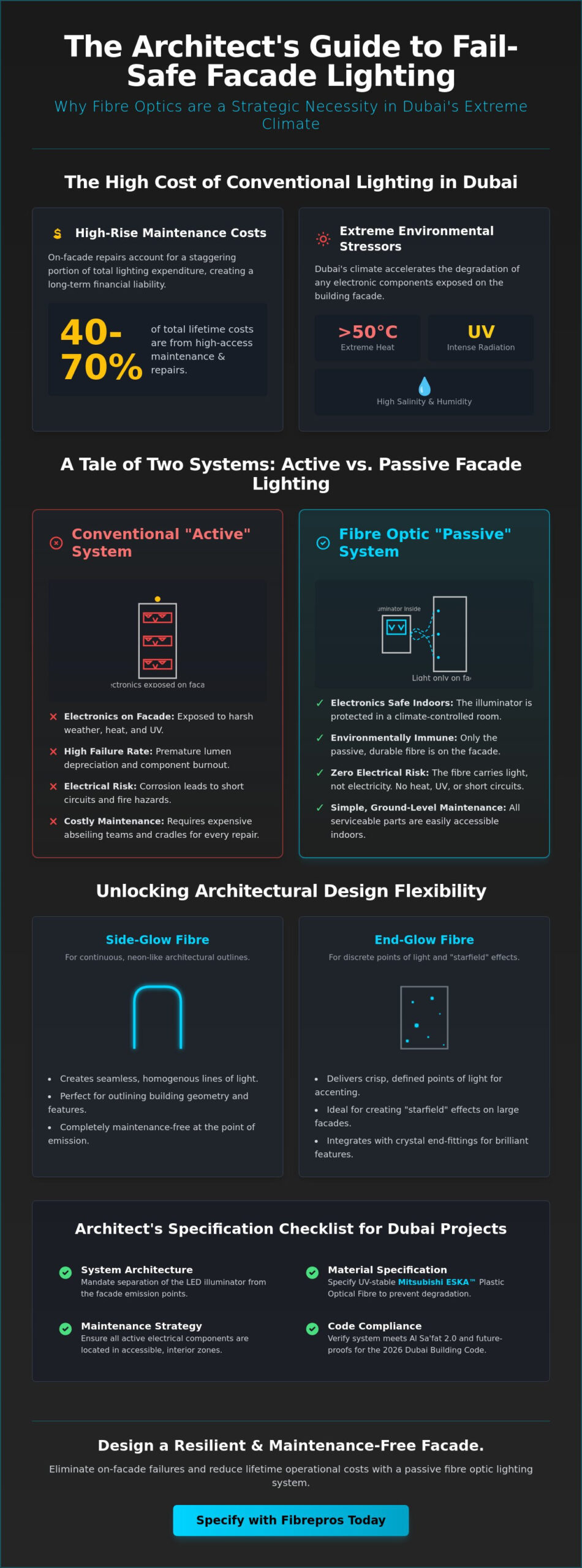
High-rise access costs for facade maintenance in Dubai account for 40% to 70% of total expenditure. For architects, specifying a lighting system that requires frequent on-facade repairs isn’t just a technical risk; it’s a long-term financial liability for the developer. As the Dubai Building Code 2026 introduces stricter energy and safety standards, the demand for fibre optic facade lighting for architects Dubai has shifted from a luxury choice to a strategic necessity. You understand that the extreme Middle Eastern climate, with UV radiation and temperatures exceeding 50°C, is unforgiving to exposed electronics and sensitive components.
This guide helps you master the technical specifications required to deliver a fail-safe, high-performance lighting solution. You’ll learn how to separate the light source from the delivery point using Mitsubishi ESKA plastic optical fibre and remote LED illuminators to bypass heat-related degradation. We’ll outline how to achieve unique architectural effects using side-glow and end-glow fibre while ensuring your project complies with Al Sa’fat 2.0 Silver standards and reduces the need for costly high-access maintenance mobilizations.
Key Takeaways
- Identify why separating the light source from the emission point is the only sustainable strategy for high-heat facade environments.
- Learn to specify fibre optic facade lighting for architects Dubai using UV-stable Mitsubishi ESKA fibre to prevent material yellowing and degradation.
- Master the aesthetic differences between side-glow and end-glow fibre to achieve neon-like outlines or crystal-accented star effects without on-facade maintenance.
- Verify the essential IP ratings and DMX control specifications for LED illuminators to ensure compliance with the 2026 Dubai Building Code.
- Discover how to reduce high-rise operational costs by placing all active electrical components in accessible, climate-controlled interior zones.
The Strategic Shift to Fibre Optic Facade Lighting in Dubai Architecture
Dubai’s skyline is transitioning toward a more resilient lighting philosophy. While integrated LEDs have long been the default, the harsh environmental reality of the UAE is forcing a strategic shift. Architects now prioritize systems that minimize on-facade maintenance. This is where fibre optic facade lighting for architects Dubai becomes a critical specification. Unlike standard LED fixtures where the light source and electronics are typically housed together on the building’s exterior, fibre optic systems utilize a remote source delivery model. This separation is the foundation of “passive” light delivery, ensuring that delicate electronics remain protected while only the light itself reaches the architectural surface.
The aesthetic result is fundamentally different from a standard linear LED wash. Fibre allows for “point-source” precision, creating crisp, defined accents that don’t bleed into the surrounding architecture. It’s about control and longevity. By removing the heat-generating components from the facade, you eliminate the primary cause of premature fixture failure in high-ambient-temperature environments.
Passive vs. Active Facade Systems
Standard “active” facade lighting requires running electrical current directly to every fixture on the building’s envelope. In Dubai, this exposes cables and connections to high salinity and humidity, which accelerates corrosion and electrical failure. Fibre optics operate on the principles of optical fiber, where light is transmitted through a core via total internal reflection. Because the fibre carries light rather than electricity, there is zero risk of short circuits or electrical degradation on the facade itself.
The LED illuminator acts as the “engine” of the system. It sits safely inside a climate-controlled plant room or accessible interior space. This setup allows for rapid maintenance without the need for expensive abseiling teams or cradles. When you specify a system using Mitsubishi ESKA Plastic Optical Fibre, you’re choosing a material designed to withstand the intense UV exposure typical of the Gulf region without yellowing or becoming brittle.
Architectural Versatility in Modern UAE Design
Fibre optic technology offers a level of versatility that integrated LEDs cannot match. It’s particularly effective for sensitive or high-profile projects where the visual footprint must be minimal. This includes:
- Heritage Structures: Discreetly illuminating traditional Arabian elements like Mashrabiya without bulky fixtures or visible wiring.
- Modern Steel-and-Glass Towers: Creating a “starfield” effect across vertical external surfaces using end-glow fibre.
- Intricate Outlines: Using side-glow fibre to create neon-like architectural borders that are entirely maintenance-free at the point of emission.
This flexibility allows architects to integrate light into the very fabric of the building. By using crystal end fittings, you can transform simple light points into brilliant architectural features. The core benefit remains constant: zero heat and zero UV at the point of emission, protecting both the building materials and the lighting’s visual integrity for years to come.
Technical Performance: Overcoming Dubai’s Environmental Challenges
Dubai’s environment is the ultimate stress test for architectural lighting. While some manufacturers claim standard LEDs operate well at 50°C, field data shows that sustained summer heat leads to rapid lumen depreciation and component failure. Effective fibre optic facade lighting for architects Dubai relies on a fundamental shift in thermal management. By moving the heat-generating LED illuminator into climate-controlled interiors, you eliminate the primary cause of system burnout and ensure the light output remains stable throughout the year.
Material science plays an equally vital role in high-performance specifications. Standard plastics degrade under the UAE’s intense UV radiation, leading to the “yellowing” effect that ruins architectural intent. High-grade PMMA (Acrylic) is the only viable core material for long-term clarity. When specifying, ensure the fibre includes a UV-stabilized jacket. This protective layer acts as a barrier, preserving the core’s refractive index and ensuring the light remains crisp and white for the life of the building.
Heat Resistance and the Remote Source Advantage
Standard LED fixtures on skyscraper facades rely on aluminum heat sinks to dissipate heat. In Dubai, these sinks often become clogged with fine desert sand and dust, rendering them ineffective. This leads to “thermal throttling,” where the system automatically dims to prevent melting, or total failure of the driver. Remote source fibre optic systems bypass this entirely. Because the light emission point on the facade is purely passive, it doesn’t generate heat or require cooling. This ensures a consistent light output regardless of external temperatures, significantly extending the fixture lifespan compared to traditional exterior-mounted electronics.
Mitsubishi ESKA POF Standards
For high-end developments, Mitsubishi ESKA Plastic Optical Fibre is the recognized industry standard. It’s engineered for superior light transmission efficiency over long distances, which is critical for the supertall towers defined in the Dubai Building Code 2026. Key performance benefits include:
- Bend Radius: Superior flexibility allows for tight integration into complex architectural details without luminosity loss.
- Transmission Efficiency: Minimal light drop-off ensures consistent brightness from the first floor to the penthouse.
- Saline Resistance: The specialized cladding is immune to the corrosive saline air found in Dubai’s coastal districts like the Marina or Palm Jumeirah.
If you’re currently drafting a specification for a high-exposure project, selecting the right LED illuminator is the first step in safeguarding your design against the local climate.
Design Flexibility: Side-Glow vs. End-Glow for Facade Effects
Architects in the UAE often face a binary choice between linear definition and point-source brilliance. High-performance fibre optic facade lighting for architects Dubai provides the unique ability to achieve both within a single, integrated system. By utilizing different fibre types, you can create multi-layered narratives that define a building’s silhouette while adding intricate detail to its podium or entrance. This versatility is essential for meeting the aesthetic demands of luxury developments where standard LED solutions lack the necessary finesse.
Side-glow fibre serves as a superior alternative to traditional neon or LED strips. It provides a continuous, homogenous line of light without the distracting “dots” or hotspots associated with diode-based systems. For projects requiring a more celestial aesthetic, end-glow fibre paired with crystal end fittings allows for the creation of “starry” accents. These points of light can be scattered across a vertical external surface to create a sense of depth and movement that is impossible to replicate with bulkier traditional fixtures.
Maintaining uniform brightness across long distances is a common technical hurdle. To ensure a consistent glow across a 20-meter run, we recommend dual-end illumination. By connecting both ends of the fibre to the LED illuminator, you balance the light intensity and prevent the “fade” often seen in lower-quality installations. This technical precision ensures the architectural intent remains intact from the first meter to the last.
Side-Glow for Linear Definition
Side-glow fibre is ideal for edge-lighting balconies, rooflines, and architectural fins. Because the light is emitted along the entire length of the cable, it creates a sleek, sophisticated border that emphasizes the building’s geometry. The installation process typically involves hidden profile mounting, which keeps the hardware invisible during the day while delivering a punchy, neon-like effect at night. It’s a low-maintenance solution that doesn’t require the complex wiring of traditional linear LEDs.
End-Glow for Point-Source Accents
End-glow fibre excels at creating “twinkle” effects on skyscraper podiums and integrating light into signage or logos. By focusing the light through specialized architectural fittings, you can achieve a sharp, intense point of light that remains visible even against the high ambient light levels of Downtown Dubai. These points can be programmed to shimmer or change color, providing a dynamic element to the facade without placing any active electrical components in hard-to-reach areas.
The Architect’s Specification Checklist for Dubai Projects
Planning for long-term operational success requires more than just an aesthetic vision. Specifying fibre optic facade lighting for architects Dubai involves a rigorous technical assessment of the system’s “engine” and its environmental housing. A robust specification ensures that the project remains compliant with the Dubai Building Code (DBC) 2026 while minimizing the lifecycle costs that often plague high-rise developments. Because high-rise access for maintenance accounts for 40% to 70% of total lighting expenditure, the goal is to eliminate the need for exterior repairs entirely.
The remote source advantage is most evident when planning for 20-year serviceability. By placing the light engines in accessible, climate-controlled zones, you ensure that technicians can perform upgrades or repairs without mobilizing expensive abseiling teams. This approach aligns with the mandatory Al Sa’fat 2.0 Silver green building standards, which prioritize energy management and resource efficiency. Any specification must also account for BS 7671 electrical safety standards and the UAE Fire and Life Safety Code of Practice to pass Dubai Municipality inspections.
Illuminator Selection and Control
The LED illuminator is the only active component in the system. For large-scale facades, DMX512 integration is mandatory to allow for synchronized light shows and dimming schedules. Architects should specify a high Color Rendering Index (CRI) to ensure the building materials appear as intended under artificial light. Given the regional power grid specifics, the illuminator must include robust surge protection and be compatible with the building’s central Building Management System (BMS), a requirement for commercial buildings over 5,000 square meters under the 2026 code.
Environmental Protection Standards
Even though the fibre itself is passive, the fixtures and housing must withstand Dubai’s coastal salinity. IP68 is the necessary standard for any facade element to prevent moisture ingress during humid summer nights. Architects should prioritize:
- Stainless Steel Fixtures: Grade 316 stainless steel is essential for corrosion resistance in coastal areas like Jumeirah or Dubai Islands.
- UV-Resistant Jacketing: All exposed fibres must use UV-stabilized PVC or PE jacketing to prevent the material from becoming brittle.
- Fire Safety: Components must meet the flame-retardant requirements specified in the UAE Fire and Life Safety Code.
To ensure your project meets these technical benchmarks from the initial tender, you can view our specialized technical specifications for UAE architectural projects.
Fibrepros: Specialized Fibre Optic Solutions for the UAE
Fibrepros brings over 30 years of specialized expertise to the Dubai and GCC lighting market. In a high-stakes industry where technical precision and uptime are critical, we position ourselves as a dependable expert for architects and project managers. We aren’t generalists; we’re specialists who focus on the vital infrastructure required for luxury developments. As exclusive suppliers of high-grade Mitsubishi ESKA Plastic Optical Fibre, we provide the core materials that ensure long-term performance in the region’s most demanding environments. Our capabilities extend across the full spectrum of architectural needs, from high-rise fibre optic facade lighting for architects Dubai to precision-engineered underwater lighting fixtures for elite residential and commercial pools.
Our commitment to professional standards is reflected in our holistic approach to infrastructure. We don’t just supply components; we deliver comprehensive, start-to-finish service packages that alleviate the technical anxieties of our B2B clients. By anchoring our services to specific regional coverage, we offer a level of accountability and responsiveness that distinguishes us from less integrated competitors. We take pride in the craftsmanship of every system we specify, ensuring that the final installation meets both aesthetic goals and strict operational requirements.
Our Regional Project Experience
Our presence in Dubai, Abu Dhabi, and the wider GCC is built on a proven track record in high-stakes architectural environments. We understand the logistical pressures of the local market, which is why we maintain significant local stock to support fast-tracked Dubai projects. This physical presence allows us to respond quickly to site-specific needs and ensure that project timelines are met without compromising on material quality. Our experience includes some of the most iconic vertical external surfaces in the region, where reliability and low-maintenance solutions are the primary KPIs for success.
Partnering for Specification
We actively assist architects in drafting technical lighting specifications that navigate the complexities of the 2026 Dubai Building Code. Our team provides customized kit solutions tailored to unique architectural challenges, ensuring that every element is optimized for the UAE climate. We offer detailed design consultations to help you select the right combination of side-glow fibre, end-glow fibre, and high-output LED illuminators. This collaborative process ensures that your luxury facade remains a fail-safe asset for years to come. Contact our Dubai team today to begin a technical consultation for your next project.
Securing Longevity for the Dubai Skyline
Specifying the right lighting system is a decision that impacts a building’s operational budget for decades. By separating the light source from the delivery point, you effectively eliminate the heat-related failures and high-access maintenance costs that challenge traditional LED installations. The transition to passive light delivery isn’t just a design preference; it’s a technical necessity for compliance with the Dubai Building Code 2026 and Al Sa’fat sustainability standards. Utilizing UV-stable materials like Mitsubishi ESKA fibre ensures your vision remains clear and vibrant despite intense solar exposure.
Established in 1995, we are an official Mitsubishi ESKA supplier and specialists in high-heat environmental solutions. We provide the technical precision required to deliver fibre optic facade lighting for architects Dubai that stands the test of time. Our team is ready to assist with technical specifications and customized kit solutions for your next high-profile project. Consult with our Dubai architectural lighting specialists today to ensure your facade lighting is as resilient as it is beautiful. We look forward to helping you build the next iconic landmark.
Frequently Asked Questions
Is fibre optic lighting bright enough for large-scale building facades?
Yes, modern high-output LED illuminators provide sufficient intensity for even the most ambitious supertall projects. The brightness depends on the wattage of the light engine and the quality of the fibre core. When you use high-grade Mitsubishi ESKA fibre, the light transmission is efficient enough to create sharp, visible accents that compete with the high ambient light levels of Downtown Dubai.
How long does fibre optic facade lighting last in the Dubai climate?
A properly specified system using UV-stabilized PMMA fibre is engineered for a service life of 20 years or more. Because the fibre itself contains no electronics, it doesn’t suffer from the thermal degradation that typically kills standard LED fixtures in the UAE heat. Only the interior-mounted LED illuminator requires periodic component updates, which are performed in climate-controlled environments.
Can fibre optic lighting be integrated with DMX building management systems?
Yes, all professional-grade LED illuminators are fully compatible with DMX512 protocols and central Building Management Systems (BMS). This integration is a mandatory requirement for commercial buildings over 5,000 square meters under the Dubai Building Code 2026. It allows architects to program complex light shows, color changes, and energy-saving dimming schedules from a single interface.
What is the maximum run length for a side-glow fibre optic cable?
Maximum run lengths for side-glow fibre typically reach 20 to 30 meters when using a dual-end illumination strategy. By connecting both ends of the fibre to a single or double illuminator, you ensure uniform brightness across the entire length. For runs exceeding this, we recommend placing multiple illuminators at strategic intervals to maintain the architectural intent without luminosity drop-off.
How do you maintain a fibre optic facade on a high-rise building?
Maintenance is performed almost exclusively at the interior light engine, eliminating the need for expensive abseiling or cradle access. Since the light emission points on the facade are passive, there are no bulbs or drivers to replace on the building’s exterior. This remote source advantage reduces long-term operational costs by 30% to 50% compared to traditional high-access lighting systems.
Are fibre optic systems more expensive than standard LED facade lighting?
While the initial capital expenditure for fibre optic facade lighting for architects Dubai can be higher than standard LED, the total cost of ownership is significantly lower. You avoid the recurring high-rise access fees that account for up to 70% of traditional maintenance budgets. The energy efficiency and lack of exterior electrical failures provide a faster return on investment for luxury developments.
Do fibre optic cables require special fire-rated conduits for facades?
Yes, all architectural lighting components must adhere to the UAE Fire and Life Safety Code of Practice. You should specify fibres with flame-retardant, Low Smoke Zero Halogen (LSZH) jacketing. While the fibre itself doesn’t carry electricity or generate heat, the protective cladding must meet local civil defence standards to ensure the safety of the building’s envelope.
Can I use fibre optics for underwater facade features like water walls?
Fibre optics are the safest and most reliable solution for underwater facade features because they carry zero electricity to the point of emission. This makes them ideal for water walls, infinity edges, and fountain integrations where traditional electrical fixtures pose a safety risk. You can achieve brilliant, color-changing effects within the water without the need for complex waterproof electrical housing.