
The greatest threat to a priceless artifact in the UAE isn’t just the external climate, it’s often the very light source designed to showcase it. Traditional lighting generates localized heat and UV radiation that can cause irreversible degradation to delicate pigments and organic materials. You’re likely already familiar with the struggle of balancing world-class visual impact with the strict conservation standards required by regional galleries. Finding effective museum lighting solutions Dubai curators can rely on means moving beyond standard LEDs and looking toward precision fibre optics.
By physically separating the light source from the exhibit, you can create a zero-UV and zero-IR environment that protects your collection for generations. This article explains how specialized Mitsubishi ESKA plastic optical fibre and remote LED illuminators provide the technical precision needed for high-stakes displays. We’ll explore how bespoke crystal end fittings highlight intricate textures while remote maintenance capabilities eliminate the costs and risks of accessing sealed showcases. You’ll discover a streamlined approach to lighting that prioritizes both artifact longevity and operational efficiency.
Key Takeaways
- Learn why separating the light source from the exhibit is the only way to achieve a zero-UV and zero-IR environment for delicate artifacts.
- Explore why high-performance museum lighting solutions Dubai galleries implement require the technical precision of Mitsubishi ESKA plastic optical fibre.
- Understand how crystal end fittings provide precise beam control to highlight textures and details without exposing items to electrical heat.
- Discover the operational benefits of remote LED illuminators, allowing for maintenance without ever opening or compromising sealed display cases.
- See how local stock and regional expertise enable galleries to meet strict exhibition deadlines while maintaining world-class conservation standards.
Why Museum Lighting Solutions in Dubai Demand Technical Precision
Museum curators in the UAE face a unique environmental paradox. They must deliver a high-impact visual experience for a sophisticated global audience while protecting priceless artifacts from an aggressive external climate. High ambient temperatures in the GCC put significant strain on building HVAC systems. When lighting fixtures are placed inside sealed display cases, they create localized microclimates. Even efficient LEDs generate heat at the diode level; in a confined glass space, this thermal energy has nowhere to escape, causing rapid fluctuations in relative humidity and temperature that can crack wood or embrittle parchment. Specialized museum lighting solutions Dubai galleries require must address these physical constraints through technical separation.
The industry is moving away from traditional track lighting and internal case lamps toward remote-source fibre optics. This shift isn’t merely a design trend but a fundamental requirement for preventive conservation for artifacts. By utilizing Mitsubishi ESKA plastic optical fibre, designers can keep the electrical components and heat-generating LED illuminators outside the display volume entirely. This ensures that the only thing entering the showcase is pure, controlled light. It’s a results-oriented approach that prioritizes the long-term stability of the collection without compromising on the brilliance of the display.
The Threat of UV and IR Radiation
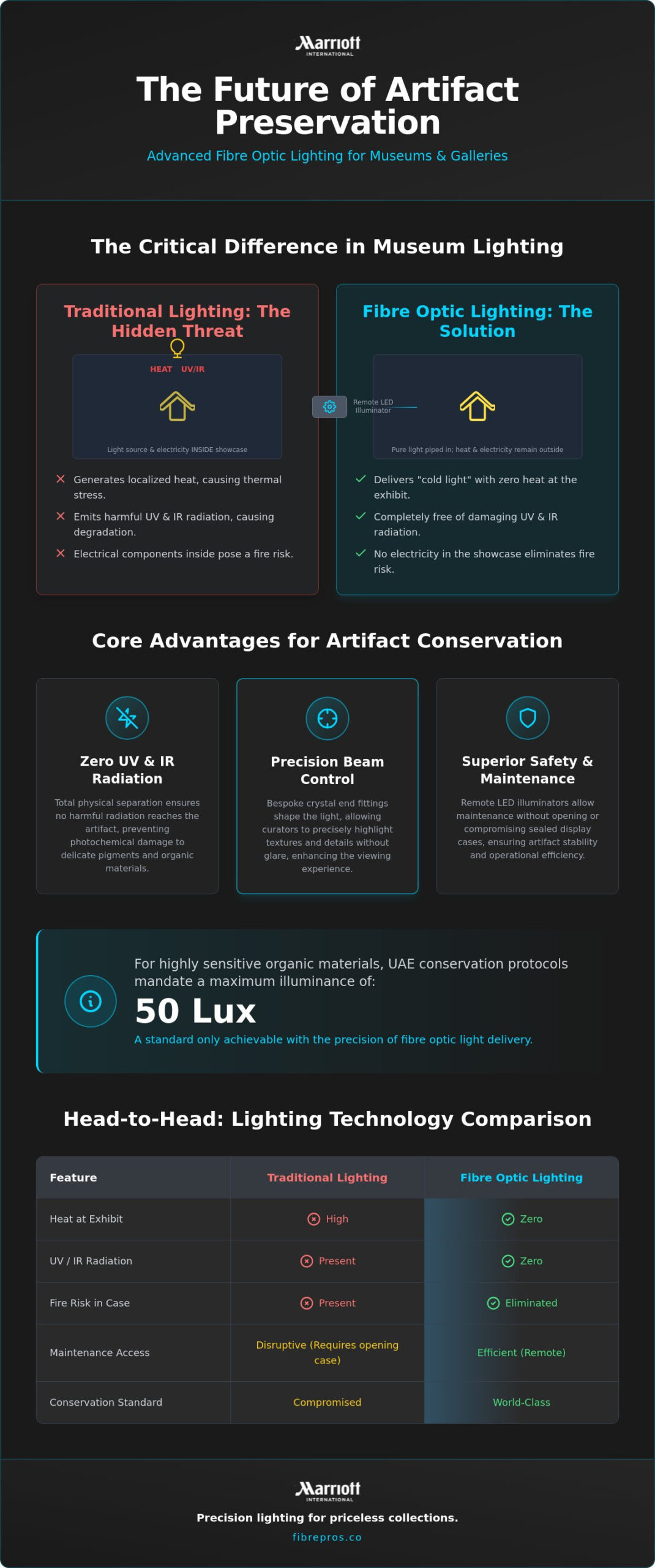
Light damage is cumulative and irreversible. Organic materials like ancient textiles, Islamic manuscripts, and natural history specimens are particularly vulnerable to photochemical degradation. While high-quality LED sources have low UV output, they aren’t entirely benign. Trace amounts of infrared radiation and heat at the point of illumination can accelerate chemical aging. For highly sensitive organic materials, UAE conservation protocols typically mandate a maximum illuminance of 50 lux to mitigate cumulative photochemical damage. Using end-glow fibre allows for precise light delivery that remains completely free of heat and UV, meeting these strict standards with total technical accuracy.
Aesthetic Standards for World-Class Exhibits
Visual excellence is non-negotiable in Dubai’s luxury cultural sector. Achieving a high Color Rendering Index (CRI) is essential for representing the true pigments of a painting or the subtle luster of gold artifacts. Fibre optic systems using advanced LED illuminators provide exceptional color fidelity and tunable white light. This technology also solves the problem of glare and reflection. By using crystal end fittings, designers can shape the beam to highlight specific textures and details from multiple angles, all while keeping the light source hidden. This creates a seamless architectural environment where the lighting guides the visitor’s journey through the gallery without the distraction of visible fixtures or intrusive shadows.
When the lighting is this precise, it creates the perfect opportunity to capture the exhibit’s beauty for archival or promotional use; curators and media teams often explore Professional Video Cameras to ensure these visual details are recorded with the same high standards as the lighting itself.
The Advantages of Fibre Optics for Artifact Conservation
The primary advantage of advanced fibre optics is the total physical isolation of the light source from the display environment. In the context of museum lighting solutions Dubai curators manage, this isolation is the most effective way to maintain a stable microclimate. Traditional lighting systems, even those using modern LEDs, introduce thermal energy and electrical components directly into the showcase. Fibre optics function differently by transmitting light through a flexible cable while keeping the heat-generating illuminator in a separate, ventilated location. This results in “cold light” at the point of display, which prevents the rapid expansion and contraction of materials. By implementing these specialized museum lighting solutions Dubai institutions can preserve their collections while meeting international exhibition standards.
Beyond temperature control, removing electricity from the display volume eliminates fire risks within high-value showcases. Many artifacts are highly flammable, such as ancient textiles, dry wooden sculptures, or historical manuscripts. By ensuring no live current enters the case, you provide a level of security that traditional internal wiring simply cannot match. This technical setup is particularly useful for the “sealed case” designs common in high-end GCC galleries, where maintaining a constant gas or humidity level is critical for long-term preservation. The versatility of fibre also allows for a range of effects, from microscopic pinpoint highlights for jewelry to broad wall washing for large-scale tapestries.
Mitsubishi ESKA POF: The Professional’s Choice
For high-performance applications, Mitsubishi ESKA Plastic Optical Fibre is the industry standard. Unlike glass fibre, which can be brittle and difficult to install in tight spaces, plastic optical fibre (POF) offers superior flexibility and a tighter bend radius. This allows designers to integrate light into microscopic architectural details or narrow display shelves without the risk of fibre breakage. It’s a durable solution that maintains high light transmission efficiency over long distances, ensuring that exhibits remain vibrant and well-defined. If you’re designing a new gallery space, it’s often best to consult with a specialist to determine the ideal fibre diameter for your specific display requirements.
Eliminating UV and Infrared Interference
Plastic optical fibre acts as a natural filter for harmful radiation. The material properties of the fibre core effectively block ultraviolet (UV) and infrared (IR) wavelengths before they ever reach the artifact. This inherent filtering capability simplifies the design process, as it removes the need for additional external filters that can degrade over time. The science is straightforward: photonic energy travels from the LED illuminator through the internal reflection of the fibre core to the end-fitting, ensuring that only visible light reaches the artifact. This process delivers “cold light” that protects the integrity of pigments and organic fibers, making it the safest choice for high-stakes conservation projects.
Illuminating Displays: End-Glow Fibre and Crystal End Fittings
Precision in a museum setting requires more than just a light source; it demands total control over how that light interacts with the object. While the previous sections established the conservation benefits of remote-source lighting, the actual visual impact is determined by the hardware at the termination point. Using end-glow fibre allows designers to deliver concentrated beams of light exactly where they are needed. This is a critical component of the high-standard museum lighting solutions Dubai institutions expect, where every shadow and highlight must be intentionally placed to tell the artifact’s story.
Traditional spotlights often take up significant volume within a display case and generate unwanted heat. In contrast, fibre optic terminations are incredibly compact. By incorporating crystal end fittings, you can manipulate the beam angle with surgical precision. These fittings function as miniature lenses, allowing for a range of effects from tight 10-degree spots that emphasize a single gemstone to wider 40-degree floods that illuminate a larger surface area. This level of control ensures the focus remains entirely on the art, while the technology itself remains invisible to the visitor.
Showcase and Display Case Lighting Techniques
Effective display lighting often uses a combination of top-down and side-lighting to reveal the three-dimensional form of sculptures and historical artifacts. Fibre optics are uniquely suited for this because the cables can be integrated directly into the cabinetry or shelving during the fabrication process. This eliminates the need for bulky fixtures that clutter the visual field. For large-scale display volumes, multiple fibre points can be fed from a single LED illuminator, ensuring uniform light distribution and consistent color temperature across the entire exhibit. This integrated approach maintains the sleek, minimalist aesthetic favored by modern UAE galleries.
Enhancing Detail with Bespoke Fittings
Bespoke hardware is essential for galleries with rotating exhibits. Adjustable ferrules allow curators to change the direction of the light as new items are introduced, providing long-term flexibility for the space. High-quality finishes in stainless steel or crystal ensure that even the visible parts of the system reflect the luxury standards of the region. Beyond standard illumination, these systems can create immersive environments. For example, Star ceiling kits are frequently used in cultural dioramas to simulate historical night skies, adding a layer of storytelling that engages visitors on a deeper level. This combination of technical accuracy and creative versatility makes these museum lighting solutions Dubai‘s preferred choice for world-class exhibition design.
Strategic Implementation: Remote Illuminators and Maintenance Efficiency
Maintenance is often the hidden cost of gallery management, particularly when dealing with high ceilings or airtight displays. By implementing museum lighting solutions Dubai institutions can centralize their light sources in accessible service areas. This remote-source approach means that LED illuminators are located in ventilated cupboards or corridors rather than inside the exhibit itself. Technicians can perform routine checks or swap out light engines without ever entering the gallery space or bringing ladders near fragile collections.
The most significant operational benefit is the ‘Sealed Case’ advantage. High-security showcases are often designed to maintain a specific internal atmosphere, such as low-oxygen or precisely controlled humidity. Opening these cases for a simple bulb change is a logistical risk that compromises the artifact’s environment. Fibre optic systems eliminate this necessity entirely. Because the light is piped in through passive cables, the display volume remains undisturbed for years, significantly reducing the Total Cost of Ownership (TCO) for large-scale museums.
Integration with modern building management systems is now a standard requirement. Most high-end illuminators support DMX, DALI-2, or Bluetooth protocols like Casambi for wireless control. This allows curators to adjust brightness levels or create dynamic lighting scenes for special events from a central tablet. It’s an efficient way to manage energy consumption, as 29% of commercial buildings now utilize lighting automation to conserve energy, according to 2026 industry data. If you’re looking to upgrade your gallery’s control systems, you can consult with Fibrepros for a technical infrastructure audit.
Planning the Lighting Infrastructure
Successful installation requires careful calculation of fibre run lengths to minimize light loss. For expansive heritage sites or outdoor museum courtyards, managing IP ratings is essential to protect the system from dust and moisture. If your project includes external water features or historical reflecting pools, integrating underwater lighting fixtures into the same control backbone ensures a cohesive aesthetic across the entire property. This holistic approach ensures every element of the museum’s infrastructure meets the same high standards of performance and reliability.
Future-Proofing Museum Lighting
Technology in the LED sector moves fast, but your physical infrastructure shouldn’t have to. The beauty of a fibre optic system is its scalability; you can upgrade the light source engine as more efficient diodes become available without replacing the cables embedded in your walls. Mitsubishi ESKA plastic optical fibre boasts a functional lifespan exceeding 20 years, easily outlasting several generations of standard LED fixtures. This long-term reliability makes it the most sustainable choice for the UAE’s growing cultural infrastructure, allowing galleries to expand their points of light as their collections grow.
Designing World-Class Exhibits with Fibrepros in the UAE
Successful exhibition design in the Middle East requires more than just high-end hardware; it demands a partner who understands the logistical and environmental pressures of the region. Fibrepros has served the architectural and cultural sectors since 1995, providing a 30-year legacy of technical precision. When implementing museum lighting solutions Dubai curators and architects need a streamlined process from the initial concept to the final delivery. This localized expertise ensures that every project meets the high-standard qualitative descriptors expected in the UAE’s luxury cultural sector, where performance and reliability are non-negotiable.
One of the most significant advantages of working with a regional specialist is the availability of local stock. Exhibition deadlines in the GCC are often compressed, leaving little room for the long lead times associated with international shipping. By maintaining a deep inventory of Mitsubishi ESKA plastic optical fibre and LED illuminators in Dubai, we ensure that project managers can meet strict installation schedules without compromising on material quality. This physical presence adds a layer of accountability and responsiveness that distinguishes a specialist partner from a generalist supplier.
Local Expertise and Support
Major museum tenders in Abu Dhabi and Dubai involve complex technical requirements and strict safety regulations. Our team provides comprehensive technical consulting to ensure that lighting designs comply with all regional standards, including the necessary energy efficiency certifications. We work directly with local contractors to oversee the integration of fibre optic systems into the building’s core infrastructure. This collaborative approach minimizes installation errors and ensures that the final visual impact aligns perfectly with the architect’s original vision. Whether it’s a high-profile national gallery or a private boutique collection, we provide the industrial focus needed for a successful outcome.
Consult with a Specialist
Optimizing an existing gallery or planning a new cultural landmark starts with a thorough technical lighting audit. This process identifies potential risks to your collection, such as heat-load issues or insufficient beam control, and outlines the specific museum lighting solutions Dubai projects require for long-term success. We customize our fibre optic kits to meet the unique dimensions and conservation needs of your specific exhibits, ensuring a bespoke fit every time. If you’re ready to enhance your display’s visual impact while prioritizing artifact safety, contact the Fibrepros team for a professional consultation and technical audit of your space.
Advancing Cultural Preservation Through Precision Lighting
Implementing the sophisticated museum lighting solutions Dubai galleries require is a matter of technical precision and long-term reliability. By physically isolating light sources from delicate exhibits, you eliminate the thermal and UV risks that threaten organic materials like textiles and ancient manuscripts. This remote-source approach doesn’t just protect your collection; it streamlines your operations by allowing for maintenance in accessible service areas without ever disturbing a sealed display case environment. You gain total control over beam angles and intensity while ensuring the artifact remains in a stable microclimate.
As an authorized Mitsubishi ESKA supplier with specialized UAE lighting expertise since 1995, we provide bespoke GCC project support from the initial design phase through to final installation. We understand the high-stakes nature of cultural infrastructure and deliver the technical mastery needed to safeguard the region’s heritage for future generations. Our local stock and deep industry knowledge make us a dependable partner for the most ambitious exhibition schedules. We’re committed to delivering results that prioritize both aesthetic brilliance and artifact longevity.
Request a Technical Consultation for Your Museum Project today to ensure your next exhibition meets the highest global standards of conservation and visual excellence. We look forward to supporting your vision with precision engineering and specialized regional support.
Frequently Asked Questions
Why is fibre optic lighting better than LED for museum displays?
Fibre optics physically separate the light source from the artifact, which is the most effective way to eliminate heat and UV radiation within a display case. While even high-quality LEDs generate trace heat at the diode level, fibre optic systems transmit “cold light” through passive cables. This technical isolation makes them the preferred choice for high-stakes museum lighting solutions Dubai institutions use to protect delicate organic materials from degradation.
Can fibre optic lighting be dimmed or controlled via DMX?
Yes, modern LED illuminators are fully compatible with professional control protocols including DMX, DALI-2, and Casambi. This allows curators to integrate exhibit lighting into the building’s central management system for precise dimming and scheduled scenes. It’s a standard requirement for world-class galleries that need to balance visitor experience with strict energy efficiency and conservation standards.
How far can the light source be located from the museum display?
Light sources can typically be situated up to 15 to 20 meters away from the point of illumination, depending on the fibre diameter and required lux levels. While longer runs result in some light attenuation, using high-performance Mitsubishi ESKA plastic optical fibre ensures maximum transmission efficiency. This flexibility allows technicians to place illuminators in ventilated service corridors for easier maintenance without disturbing the exhibits.
Is Mitsubishi ESKA fibre suitable for outdoor heritage site lighting?
Mitsubishi ESKA fibre is exceptionally durable and performs well in the UAE’s high-heat environment when installed within appropriate protective conduits. It’s frequently used for illuminating architectural details on heritage buildings or within outdoor archaeological sites. For projects involving water features or reflecting pools, the fibre can be paired with specialized underwater lighting fixtures to create a cohesive night-time aesthetic.
Does fibre optic lighting require specialized maintenance?
Fibre optic systems actually reduce maintenance requirements because there are no lamps or electrical components inside the display cases. The only part that requires attention is the remote LED illuminator, which is housed in an accessible location. You’ll never need to open a sealed, climate-controlled showcase just to change a bulb, which significantly lowers the risk to the artifacts and reduces operational costs.
How do I choose the right LED illuminator for a museum exhibit?
Selecting the correct illuminator depends on the total number of fibre tails, the desired light intensity, and the specific control requirements of the gallery. You should prioritize units with a high Color Rendering Index (CRI) to ensure the art’s pigments are represented accurately. Technical precision in the light engine ensures consistent color temperature across all points of light in a single display volume.
Are crystal end fittings necessary for display case lighting?
While not strictly mandatory, crystal end fittings are essential for achieving precise beam control and a professional finish. These fittings act as miniature lenses, allowing you to focus the light into tight spots for jewelry or wider floods for larger artifacts. Without them, the light emerges in a fixed cone that may not highlight the intricate textures and details of the exhibit effectively.
Can I upgrade my existing museum lighting to fibre optics?
Yes, most existing galleries can be retrofitted with fibre optic systems, particularly during showcase refurbishments. Because the fibre cables are thin and flexible, they can be integrated into existing cabinetry and shelving with minimal structural changes. This is a common strategy for galleries looking to improve their conservation standards and implement more effective museum lighting solutions Dubai curators can rely on for long-term preservation.