
The most significant risk to a high-end architectural project isn’t the design itself, but the hidden electrical and thermal liabilities of traditional wiring. You’ve likely faced the frustration of protecting sensitive museum displays from heat damage or worrying about the long-term maintenance of fixtures buried in inaccessible architectural voids. These are valid technical anxieties in an industry where precision and reliability are non-negotiable.
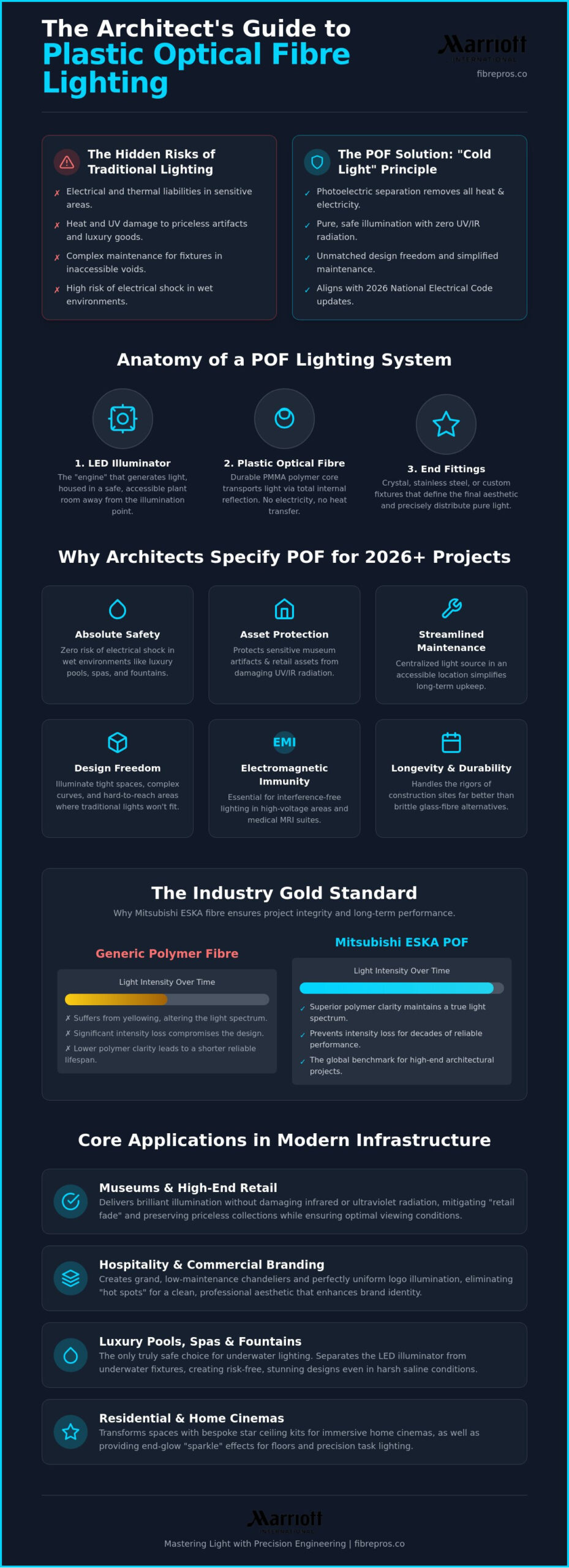
By mastering plastic optical fibre lighting applications, you’ll learn how to leverage photoelectric separation to remove electricity and heat from the point of illumination entirely. This approach aligns with the 2026 National Electrical Code updates for limited-energy systems while offering unmatched design freedom. This professional guide provides a deep dive into the technical mastery of Mitsubishi ESKA fibre, identifies specific industrial use cases, and explains how to specify a low-maintenance system that ensures operational success. We’ll move from the broad value of polymer clarity to the specific engineering required for safety-critical environments, including the specialized fixtures necessary for saline pool conditions and luxury infrastructure.
Key Takeaways
- Learn how the “Cold Light” principle eliminates electrical and thermal risks in high-stakes environments like museums and hazardous zones.
- Identify specific plastic optical fibre lighting applications for defining architectural perimeters and protecting delicate retail assets from UV damage.
- Understand the safety advantages of separating the LED illuminator from underwater fixtures to create risk-free luxury pool designs.
- Recognize the necessity of electromagnetic immunity for lighting systems in high-voltage areas and medical MRI suites.
- Specify Mitsubishi ESKA fibre to maintain light clarity and prevent intensity loss over the lifespan of your infrastructure project.
What is Plastic Optical Fibre (POF) and Why Does it Matter?
Understanding What is Plastic Optical Fibre starts with its material composition. Unlike traditional glass fibres, POF is constructed from high-grade polymers, most commonly Polymethyl methacrylate (PMMA). This large-core construction makes the fibre incredibly durable and flexible. It handles the rigours of a construction site far better than brittle glass alternatives. In the context of 2026 infrastructure, these characteristics make it the superior choice for complex architectural runs where tight bends are unavoidable.
The primary advantage of plastic optical fibre lighting applications is the “Cold Light” principle. This technology transports visible light while keeping heat and electrical current at the source. By separating the light source from the point of emission, you eliminate the thermal stress that often degrades sensitive building materials or luxury finishes. The system relies on total internal reflection to deliver uniform light over long distances. This engineering ensures that the final output is as crisp and vibrant as the light entering the fibre.
Mitsubishi ESKA is the global gold standard for clarity and durability in the POF industry. Its superior polymer clarity ensures that the light spectrum remains true throughout the run. Cheap polymer fibres often suffer from yellowing or significant intensity loss over time, which can compromise the integrity of a high-end project. Choosing a benchmark material like ESKA ensures that the system performs reliably for decades, not just years.
The Anatomy of a POF Lighting System
A professional installation is a complete system, not just a bundle of cables. First, high-performance LED illuminators act as the engine, generating the light that enters the fibre. Second, the fibre itself uses a core and cladding engineered to guide light efficiently along the path. Finally, end fittings define the aesthetic. Using crystal or stainless steel fixtures allows for precise light distribution. This integrated approach addresses the common industry gap where individual components are often sold without a cohesive system design.
Why Architects Specify POF for 2026 Projects
Safety and efficiency drive specification in modern projects. In humid or wet environments like luxury spas and fountains, POF offers zero risk of electrical shock because there are no live wires at the output. Maintenance is equally streamlined. The light source is housed in an accessible plant room, while the fibres remain hidden in architectural voids. This design freedom allows for light placement in narrow gaps or hard-to-reach areas where traditional LED tape or bulbs simply won’t fit.
Core Plastic Optical Fibre Applications in Modern Lighting
Plastic optical fibre lighting applications extend far beyond simple decoration; they offer technical solutions for environments where traditional lighting fails due to heat, UV exposure, or electrical constraints. In museum and high-end retail sectors, protecting delicate artifacts and luxury leathers is a primary operational requirement. Fibre optic systems deliver illumination without the damaging infrared or ultraviolet radiation inherent in standard LEDs. This ensures that priceless collections remain preserved while being showcased under optimal light conditions. Specialists specify these systems because they mitigate the risk of retail “fade” on high-ticket items, projecting an image of total competence in asset protection.
In the hospitality sector, the focus shifts to aesthetics and brand identity. Hotel lobbies often utilize grand fibre optic chandeliers to create a sense of arrival without the weight or maintenance issues of glass-heavy fixtures. For commercial branding, plastic optical fibre provides perfectly uniform illumination for logos. It eliminates the “hot spots” often seen in backlit signage, maintaining a clean, professional appearance. Residential projects also benefit from this technology, particularly through bespoke star ceiling kits that transform home cinemas into immersive environments.
End-Glow Applications: Precision and Sparkle
End-glow fibre focuses light at the tip, making it ideal for point-source effects. You’ll find these systems creating starry sky ceilings or floor “sparkle” points in luxury Dubai villas. Beyond decoration, end-glow fibres provide effective task lighting when integrated into bespoke cabinetry or joinery. Pairing these fibres with crystal end fittings elevates the output, adding a refractive brilliance that mimics a modern chandelier aesthetic.
Side-Glow Applications: Linear Brilliance
Side-glow fibre functions as a durable, low-maintenance alternative to traditional neon or LED tape. It emits light along its entire length, making it perfect for defining building perimeters or creating subtle “light leaks” in modern concrete facades. Because the fibre carries no electricity, it remains the safest choice for underwater perimeter lighting in infinity pools and wellness spas. This is particularly relevant in Dubai, where saline environments can quickly corrode standard electrical fixtures. If you’re looking to specify a system for a high-stakes project, consulting with a technical expert can ensure the hardware matches the environmental demands. Architects use these linear runs to define landscape contours, where the polymer’s flexibility allows for organic shapes that rigid LED channels cannot replicate.
Industrial and Specialized POF Applications
In hazardous zones, such as oil and gas facilities, the safety advantages are even more pronounced. Traditional electrical bulbs and wiring represent a potential ignition source in the presence of volatile gases. POF removes this risk entirely by transporting light from a remote LED illuminator to the hazardous area. This same principle applies to liquid level sensing. Light is used to detect fluid changes in fuel tanks or chemical storage without the possibility of electrical sparking, providing a fail-safe solution for volatile environments.
In addition to lighting and sensing, complex industrial systems often require robust electrical solutions for moving parts. For those seeking reliable hardware, TME Systems Pty Ltd supplies industrial slip rings and rotary electrical connectors designed to withstand demanding operational environments, providing a benchmark for reliability in industrial infrastructure.
The medical and aerospace sectors also depend on the unique properties of PMMA. High-clarity polymer is a critical component in endoscopes and surgical light guides, where flexibility is necessary for navigating the human body. In aerospace, engineers specify POF for cabin lighting to achieve significant weight reduction. Replacing heavy copper wiring with polymer fibre improves fuel efficiency while maintaining a high standard of illumination across the aircraft interior.
Sensory and Therapeutic Environments
Sensory fibre optic kits are widely used in Dubai schools and clinics to create safe, tactile environments. Unlike standard lighting, these fibres can be handled and touched safely by users of all ages because they carry no heat or electricity. This durability makes them ideal for therapeutic settings. Colour-changing fibre provides psychological benefits, helping to reduce stress and improve focus for individuals with sensory processing needs.
Automotive Ambient Lighting
Modern transport relies on POF for dashboard and cabin ambient lighting. The polymer withstands the constant vibrations and temperature fluctuations found in vehicles. Its thin diameter allows for uniform light distribution in tight, curved interior spaces where traditional bulbs are impractical. By switching to POF, manufacturers reduce overall vehicle weight, directly supporting energy efficiency goals in the next generation of electric vehicles.
Why POF is the Only Safe Choice for Underwater Lighting
Water and electricity are a lethal combination. In luxury aquatic design, plastic optical fibre lighting applications eliminate the fundamental risk of electrocution by ensuring no current ever enters the water. The system relies on a complete separation of power. You house the LED illuminator in a dry, accessible plant room, while the fibre optic cable carries only light to the pool or spa. This engineering choice removes the need for submersible electrical cables, which are prone to insulation failure or hazardous leaks over time.
Corrosion resistance is another critical factor for long-term operational success. Using underwater lighting fixtures manufactured from 316-grade stainless steel ensures the system survives the harsh chemical environments of modern pools. Standard fittings often pit or rust when exposed to saline water, but high-grade stainless steel maintains its structural integrity. Maintenance becomes a minor task rather than a major construction project. You change a single bulb in the comfort of a plant room. There’s no need to drain a luxury pool or hire divers to replace faulty submersible LEDs. This efficiency is why project managers prioritize POF for high-stakes infrastructure where downtime is unacceptable.
Pool and Spa Lighting in the GCC
Dubai’s luxury residential pools face unique environmental challenges. High salinity and chlorine levels accelerate the degradation of standard lighting hardware. POF systems are inherently resistant to these conditions because the polymer fibre doesn’t corrode. Designers often use end-glow fibre bundles to create a “Starry Pool” effect on the floor, providing a high-end aesthetic that traditional bulbs can’t replicate. These systems also demonstrate excellent thermal stability. They maintain performance even in extreme 50°C+ summer temperatures, where submerged electrical components might overheat or fail.
Fountains and Water Features
Illuminating moving water requires technical precision. POF allows you to light vertical water jets without unsightly or dangerous electrical wiring visible to the public. You can place the fibre ends directly within the water stream to achieve a glowing effect that travels with the spray. By using DMX-controlled illuminators, you can sync light patterns with music for complex public displays. Longevity is the final hallmark. POF systems consistently outlast traditional submersible LEDs in harsh environments because the sensitive electronics are never exposed to moisture. If you’re designing a high-end water feature, contact Fibrepros for a technical consultation on complete system integration.
Selecting the Right POF: Why Mitsubishi ESKA is the Industry Standard
High-performance plastic optical fibre lighting applications require materials that maintain spectral integrity over time. Cheap polymer fibres often suffer from molecular degradation, leading to yellowing and significant light intensity loss within months of installation. Mitsubishi ESKA eliminates these technical anxieties through superior polymer purity. This ensures high light uniformity even over extended runs, protecting the visual quality of your architectural investment. ESKA’s bend radius is another critical advantage. It allows for tight integration into architectural voids without the risk of fibre fracture or light leakage that compromises lower-grade materials.
Diameter selection is a functional decision based on the desired aesthetic. You might specify 0.25mm strands for fine, realistic star ceiling effects, while 3mm fibres are better suited for bold architectural accents and side-glow runs. Fibrepros serves as your authorized partner for Mitsubishi ESKA Plastic Optical Fibre in Dubai. We tailor fibre bundles to the specific lumen requirements of each project. This customization ensures the system delivers the exact visual impact intended by the design team without over-specifying hardware.
Technical Specifications to Look For
Success in the field depends on understanding attenuation rates. While standard PMMA attenuation is often cited around 150 dB/km, high-performance ESKA maintains consistent brightness across complex routes. Jacket materials are equally vital for project longevity. Choose Polyethylene (PE) for superior outdoor durability or PVC for specific indoor safety standards. For Middle Eastern applications, always verify the operating temperature range. Your fibre must withstand the extreme thermal loads of direct UAE sunlight during peak summer months without losing structural integrity.
How to Order for Your Dubai Project
Accuracy in the planning phase prevents costly delays during installation. You must calculate exact fibre lengths and bundle counts for complex star ceiling installations to ensure uniform light distribution. Choosing the right illuminator wattage is the final step. It must match the total diameter and quantity of your chosen POF run to avoid dimming at the furthest points. Local Dubai expertise is indispensable for project success. Consulting with a specialist ensures your lighting infrastructure is engineered to withstand regional stressors like heat and salinity, providing a reliable, low-maintenance solution for years to come.
Advancing Architectural Precision with Integrated POF Systems
The evolution of plastic optical fibre lighting applications in 2026 represents a critical shift toward technical safety and long-term operational success. By implementing photoelectric separation, you eliminate electrical risks in saline pool environments and prevent thermal damage to sensitive retail or museum displays. Specifying high-performance Mitsubishi ESKA polymer ensures that your project maintains its visual integrity without the yellowing or light loss associated with inferior materials. These systems offer a reliable, low-maintenance solution for the most demanding architectural voids.
As an official supplier of Mitsubishi ESKA in the UAE, Fibrepros delivers more than just components. We provide complete systems that include high-output LED illuminators and IP-rated 316 stainless steel fixtures. With over 25 years of specialized lighting experience in the Middle East, our team understands the engineering required to withstand extreme regional temperatures and humidity. We invite you to Consult with our Dubai-based experts for your next POF project to ensure your infrastructure meets the highest professional standards. We look forward to helping you elevate your next high-stakes design with precision and reliability.
Frequently Asked Questions
What are the most common applications for plastic optical fibre?
Common plastic optical fibre lighting applications include architectural accents, starry sky ceilings, museum showcases, and hazardous zone lighting. These systems are also increasingly utilized for automotive ambient lighting and sensory therapy kits because they deliver “cold light” without electrical risks or heat at the output. This versatility makes them essential for high-end projects where safety and precision are the primary requirements.
Is plastic optical fibre better than glass for architectural lighting?
Plastic optical fibre is generally superior for architectural lighting due to its larger core and polymer flexibility. Glass fibre is brittle and can shatter during tight installations; whereas PMMA-based fibre can handle significant bending without losing light transmission. This durability makes it much easier to install in complex architectural voids where rigid glass or LED channels simply won’t fit.
Can plastic optical fibre be used for data transmission in Dubai homes?
While the material itself is technically capable of high-speed data transmission over short distances, this guide focuses specifically on lighting and illumination systems. For home network infrastructure, you should consult a dedicated telecommunications specialist. Fibrepros focuses exclusively on decorative, architectural, and industrial lighting solutions using high-performance Mitsubishi ESKA polymer.
Is POF safe for use in swimming pools and saline wet areas?
Yes, POF is the safest lighting choice for swimming pools because it carries no electricity into the water. The light source remains in a dry, accessible plant room, and only the light travels through the fibre to the underwater fixtures. This photoelectric separation eliminates the risk of electrical leakage or shock in saline or chlorinated environments common in Dubai luxury pools.
How long does plastic optical fibre last in hot climates like the UAE?
High-quality fibres like Mitsubishi ESKA are engineered for durability in extreme environments. When properly installed with UV-resistant jackets, these systems can last for decades in the UAE. Our 25 years of Middle East project experience shows that the fibre itself requires zero maintenance if the LED illuminator is housed in a ventilated, shaded area away from direct thermal loads.
Do I need a special light source for POF applications?
Yes, you must use a dedicated LED illuminator designed specifically for fibre optics. These units are engineered to focus light into the narrow diameter of the fibre bundle using specialized optical coupling. Standard LED bulbs or tape cannot be used to power a POF system effectively as they lack the necessary focus to drive light through the polymer core.
Can I cut plastic optical fibre myself for DIY star ceiling projects?
You can cut the fibre yourself, but it requires a very sharp, professional-grade blade to ensure a clean, perpendicular end-face. For the best results, the ends should be polished to maximize light output. Poorly cut or crushed ends will result in significant light loss and reduced brightness at the fixture point, compromising the final aesthetic of the star ceiling.
What is the maximum recommended length for a POF lighting run?
For most decorative lighting applications, we recommend a maximum run of 15 to 20 metres to maintain optimal brightness. While light can travel further, attenuation becomes more noticeable on longer runs. If your project requires distances beyond 20 metres, we specify higher-wattage illuminators or multiple light sources to ensure the light intensity remains uniform across the entire installation.