
In the intense heat of the GCC, your lighting fixtures are often the primary threat to the very assets they’re meant to showcase. Conventional internal lighting generates trapped heat that accelerates the degradation of organic materials and delicate finishes. You understand that maintaining a stable, cool environment is non-negotiable for high-value preservation. This is why fibre optic display case lighting has become the industry standard for 2026, offering a definitive solution for total thermal isolation.
By reading this guide, you’ll learn how to implement zero-heat, UV-free illumination strategies that protect your inventory while ensuring full compliance with Dubai’s Law No. (2) of 2026. We’ll explore the technical superiority of Mitsubishi ESKA plastic optical fibre and the logistical benefits of remote LED illuminators. This approach doesn’t just safeguard your artifacts; it significantly reduces AC load and maintenance requirements in demanding retail and museum settings. We’ll cover everything from lux level standards for sensitive works to the latest in DALI-2 control integration, providing a clear path to museum-grade lighting performance.
Key Takeaways
- Understand how decoupling thermal radiation from light delivery prevents the irreversible degradation of sensitive artifacts and organic materials.
- Discover the “Remote Source Principle,” which houses heat-generating engines in ventilated voids to ensure total thermal isolation within the display cabinetry.
- Learn why fibre optic display case lighting outperforms traditional LEDs in sealed environments by eliminating internal electrical risks and direct heat buildup.
- Identify specialized regional applications, such as protecting luxury perfumes from evaporation and preserving high-value heritage assets in the GCC’s demanding climate.
- Gain technical insights into designing precision light paths using Mitsubishi ESKA POF to achieve museum-grade clarity and reduced maintenance costs.
The Science of Light Damage: Why Traditional Display Lighting Fails
Light is a potent form of energy that, if left unmanaged, becomes a destructive force within a sealed environment. When specialists discuss “cold light,” they aren’t referring to the color temperature of the bulb. True cold light is illumination that’s physically decoupled from thermal and spectral radiation. Achieving this requires a system where the light source is separated from the delivery point, a feat uniquely possible through fibre optic display case lighting. By isolating the visible spectrum, you eliminate the primary drivers of material decay.
Infrared (IR) radiation is the primary culprit for direct surface heating. In the confined spaces of a glass case, this energy creates a “greenhouse effect” where heat builds up with no route for escape. This trapped energy raises the temperature of the air and the objects themselves, accelerating chemical reactions. Simultaneously, Ultraviolet (UV) radiation triggers photochemical degradation. This process breaks the molecular bonds in organic dyes and polymers, leading to irreversible fading, yellowing, and structural brittleness. The core technology of optical fibers facilitates the separation of these harmful wavelengths, ensuring only safe, visible light reaches the asset.
Identifying High-Risk Materials in the GCC
In the Middle East, environmental factors amplify the risks to sensitive assets. For museum curators in Abu Dhabi or Dubai, historical silk, parchment, and oil paintings represent high-risk categories where UV exposure can cause centuries of damage in just a few months. Luxury retail environments face similar challenges. Artisanal chocolates and high-end perfumes are extremely sensitive to thermal flux; even a minor temperature rise can cause evaporation or spoil a scent profile. In industrial and medical settings, volatile chemicals and laboratory samples require absolute temperature stability that traditional internal lighting cannot provide.
The Limits of Conventional LED Solutions
A common misconception is that LEDs solve all thermal issues because they’re “cool to the touch.” While the light beam itself contains less IR than halogen, the rear of the LED diode generates significant heat. In Dubai’s high ambient temperatures, dissipating this heat from tight cabinetry voids is often impossible. Metal fixtures then act as conductors, transferring this heat directly into the enclosed case. This thermal conduction creates a hidden risk for enclosed cabinetry that doesn’t exist with passive fibre systems. Because the “engine” or LED illuminator is located elsewhere, the display remains entirely free from electrical heat and conductive risks.
How Fibre Optics Provide 100% Thermal Isolation
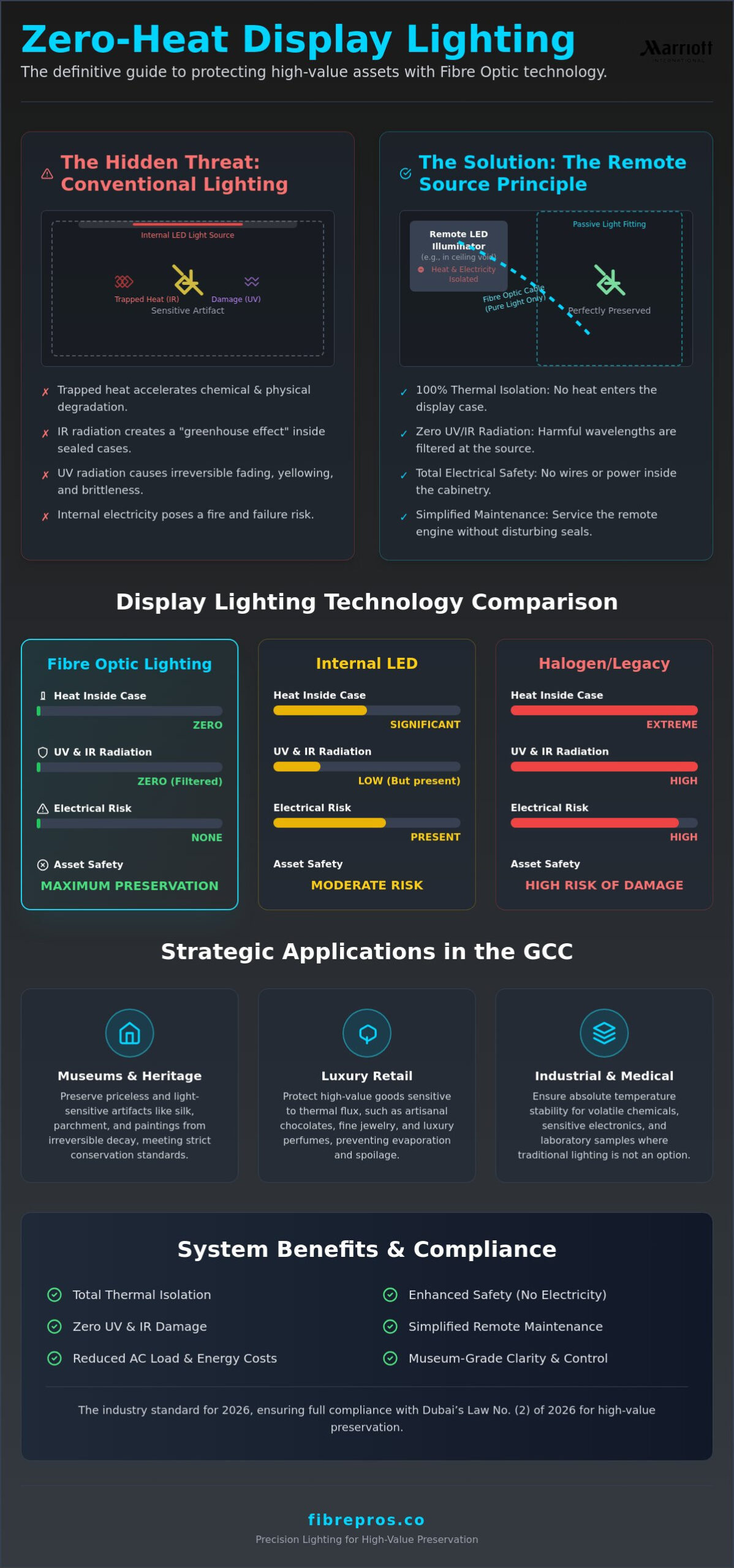
The fundamental advantage of fibre optic display case lighting lies in the Remote Source Principle. This engineering approach physically separates the light-generating engine from the point of illumination. In conventional setups, even high-efficiency LEDs generate heat at the diode level, which can cause permanent and irreversible damage to delicate artifacts. By moving the light source to a ventilated ceiling void or a remote service cupboard, you ensure that no heat energy enters the sealed display environment.
Optical fibre acts as a passive conduit. It carries only visible light, naturally filtering out the Infrared (IR) and Ultraviolet (UV) wavelengths that lead to material decay. Because there are no electrical components, wires, or drivers within the case itself, the risk of electrical fire or localized “hot spots” is completely eliminated. This total isolation is critical for maintaining the tight environmental controls required in modern conservation. It also simplifies logistics; maintenance teams can service or replace the light source without ever disturbing the airtight seals or security sensors of the display case.
The LED Illuminator: The Engine of the System
The modern LED illuminators used in these systems are designed for high-performance thermal management. These units can be positioned up to 20 metres away from the sensitive display area, allowing for centralized maintenance in a controlled environment. High-quality illuminators offer advanced control protocols, including DMX and Bluetooth, which allow for precise dimming. This ensures that curators can achieve the exact lux levels required for sensitive textiles or manuscripts without any shift in colour temperature or increase in thermal output.
Mitsubishi ESKA POF: The Professional Standard
When precision is the priority, Mitsubishi ESKA Plastic Optical Fibre is the industry benchmark. POF is a PMMA-based conduit that transmits light via total internal reflection without thermal transfer. Its unique composition provides exceptional clarity and durability, making it the preferred choice for museum-grade installations. The inherent flexibility of this material is particularly useful for luxury retail designers. It allows the fibre to navigate the complex corners and tight tolerances of high-end cabinetry without losing light intensity or compromising the structural integrity of the display.
Implementing these systems requires technical expertise to ensure the light path is optimized for both aesthetics and preservation. If you are planning a high-stakes installation in the UAE, you can consult with our technical team to map out a zero-heat lighting strategy tailored to your specific environment.
Comparing Display Lighting Technologies for Thermal Control
Selecting the right technology for high-value displays requires an understanding of how different light sources interact with sealed environments. Halogen bulbs are largely obsolete for conservation due to extreme radiant heat and high UV output. While LEDs represent a significant improvement, they introduce a specific challenge: conducted heat. In an airtight display, the heat generated at the rear of an LED diode has no escape route. This creates a “Heat Sink” problem where the fixture itself becomes a radiator, slowly elevating the internal temperature of the cabinet and threatening the stability of the items inside.
Fibre optic display case lighting eliminates this variable by removing the electrical “engine” from the display entirely. This results in spectral purity where you achieve high Colour Rendering Index (CRI) values without the accompanying thermal load. When calculating the “Value at Risk,” curators must weigh the initial investment against the potential for irreversible damage. For a multi-million dollar artifact or a high-end retail product, the cost of a fibre system is a small premium for guaranteed preservation. Passive fibre conduits don’t degrade like internal LED strips, which often suffer from lumen depreciation due to heat trapped within the cabinetry.
LED vs. Fibre Optic: The Thermal Reality
The distinction between radiant heat and conducted heat is vital for asset protection. LEDs are often marketed as “cool” because they emit less Infrared radiation in the light beam. However, the heat conducted through the metal housing of an internal LED fixture can still damage sensitive items in direct contact or close proximity. Physical distance remains the most effective insulator. By using a remote illuminator, you utilize air as a natural barrier. This separation also extends the lifespan of the installation. While internal LED fixtures may fail after 20,000 hours in a hot, enclosed space, a fibre optic system is virtually permanent; only the remote, easily accessible illuminator requires eventual servicing.
Glass vs. Plastic Optical Fibre (POF)
Choosing between glass and plastic fibre often comes down to the specific needs of the application. For the majority of showcase projects, Mitsubishi ESKA POF is the more cost-effective and practical choice. Unlike glass bundles, which are fragile and prone to “dead” fibres if bent too sharply, POF is incredibly durable and flexible. This makes it ideal for navigating the complex internal structures of luxury retail cabinetry. In high-traffic environments like Dubai malls, safety is a primary concern. Plastic fibre is preferred in these public spaces because it doesn’t pose the risk of glass splintering if a fixture is damaged. It delivers museum-grade performance with the ruggedness required for modern commercial use.
Strategic Applications in Dubai and the GCC
Dubai’s environmental conditions demand lighting solutions that account for extreme ambient heat and high humidity. In museum and gallery settings across Abu Dhabi and Dubai, the preservation of UAE heritage requires strict climate control. Traditional lighting adds an unnecessary thermal load to HVAC systems already working at capacity. By implementing fibre optic display case lighting, institutions can achieve precise illumination without contributing to internal cabinet temperature rise. This is particularly vital for the display of organic materials like ancient manuscripts or historical textiles where even a one-degree fluctuation can be catastrophic.
Luxury retail in locations like Dubai Mall faces a different challenge. High-end perfumes are particularly vulnerable to thermal flux, which can trigger evaporation or alter delicate scent profiles. Fibre optics allow for high-intensity display without the heat that spoils premium inventory. This safety extends to specialized environments like sensory fibre optic kits used in healthcare or educational calm spaces. Because the light is “cold,” these kits allow for safe, heat-free tactile play. In coastal regions, this technology also provides a spark-free, non-conductive solution for high-humidity environments. Luxury humidors and wine cellars require constant moisture levels that would quickly corrode standard electrical fixtures. Fibre optic systems use stainless steel or plastic terminals that remain unaffected by moisture, ensuring long-term reliability where electrical failure is a significant risk.
This commitment to quality and safety is a standard across the UAE’s premium retail landscape; for those seeking the best in vaping products from Vape Here Store, you can click here.
Showcase Lighting for High-End Boutiques
Luxury boutiques often use crystal end fittings to create a high-sheen, sparkling effect on jewellery and watches. Unlike traditional bulbs, these fittings deliver brilliant light without any thermal risk to the assets. This is essential for protecting delicate leather goods, where heat can lead to drying and cracking over time. Maintaining product integrity in high-ambient temperature retail zones requires this level of technical precision. It allows designers to focus on aesthetics without compromising the lifespan of the merchandise on display.
Architectural Integration in UAE Villas
Residential projects in the GCC also benefit from the separation of light and heat. Home cinema designers frequently install star ceiling kits to create immersive luxury interiors. These systems provide aesthetic value without increasing the AC load of the room. For residential galleries, fibre optics offer heat-free accent lighting for art niches. This technology is also the safest option for underwater lighting fixtures in luxury pools, where electricity must be completely isolated from the water for total peace of mind.
If you are looking to secure your assets with expert-led illumination, contact Fibrepros for a technical consultation today.
Implementing Precision Lighting with Fibrepros
Success in fibre optic display case lighting depends on a rigorous design phase where the light path is mapped for zero-heat delivery. We’ve specialized in this technical mapping for decades, ensuring that every project in the GCC meets international conservation standards. For a complete solution, integrating these advanced systems into professional display frameworks from Coker Exhibition Systems Ltd (CokerExpo) ensures that the physical housing is as high-performance as the lighting itself. Our team calculates light loss over distance and selects the optimal LED illuminator based on specific lumen requirements and fibre length. This precision prevents the common pitfalls of under-lit displays or systems that fail to meet strict lux level mandates for sensitive artifacts.
We prioritize the use of authentic Mitsubishi ESKA POF to guarantee long-term performance and optical clarity. In the high-stakes environments of museum galleries and luxury boutiques, using generic fibre often leads to premature yellowing and significant light attenuation. By providing a comprehensive, start-to-finish service package, we manage the technical complexities of system integration. Our technical support network operates across the UAE, Saudi Arabia, Qatar, and the wider GCC, offering local expertise and accountability for every installation we undertake.
From Design to Delivery in the Middle East
Managing the logistics for large-scale architectural and museum projects requires a deep understanding of regional site conditions. We ensure technical precision in fibre termination, which is the most critical factor in maximizing light output. A poorly terminated fibre bundle results in light scatter and localized heat buildup at the illuminator interface. Our POF systems are engineered for long-term reliability in harsh Middle Eastern environments, maintaining their optical efficiency despite the ambient temperature fluctuations typical of the region.
Why Fibrepros is the Specialist Choice
Since 1995, Fibrepros has focused exclusively on decorative and functional fibre optics, building an authoritative reputation for technical excellence. Our portfolio includes high-profile projects across Dubai and Abu Dhabi, ranging from luxury retail flagships to national heritage sites. We don’t just supply parts; we deliver engineered solutions that prioritize asset safety and operational uptime. We invite you to consult with a Fibrepros expert to develop a custom cold-light solution tailored to your specific project requirements.
Securing High-Value Assets with Precision Cold Light
Preservation in 2026 requires more than just efficient bulbs; it demands a complete physical separation of the light source from the artifact. You’ve seen how the “Remote Source Principle” effectively eliminates the greenhouse effect within sealed cabinetry by housing the heat engine in a ventilated void. By utilizing passive conduits, you remove the thermal, UV, and electrical risks that frequently compromise delicate organic materials and high-end luxury inventory.
Implementing fibre optic display case lighting is a strategic investment in the long-term integrity of your collection. As a specialist supplier of Mitsubishi ESKA POF, we deliver proven thermal isolation solutions designed specifically for the unique environmental challenges of the GCC market. Our team has provided technical expertise across Dubai and Abu Dhabi since 1995, ensuring every installation meets the highest professional standards of precision and reliability.
Request a Technical Consultation for Your Heat-Sensitive Project to integrate professional-grade cold light into your next showcase. We’re ready to help you safeguard your most significant assets with confidence and technical mastery.
Frequently Asked Questions
Is LED lighting truly safe for heat-sensitive museum artifacts?
LEDs are significantly safer than halogen, but they aren’t without risk. While the light beam contains less infrared radiation, the rear of the LED diode generates substantial conducted heat. If the fixture is mounted inside a sealed case, this heat builds up and can damage organic materials. Fibre optics remain the only solution that removes 100% of the electrical heat from the display environment.
Can fibre optic lighting melt chocolate or damage luxury perfumes?
No, fibre optic systems deliver “cold light” that’s physically incapable of melting heat-sensitive products. Because the infrared energy is filtered out at the remote source, the surface temperature of artisanal chocolates or premium perfumes remains stable. This prevents the spoilage and evaporation often caused by the localized hot spots found in traditional internal cabinet lighting.
How far can the light source be placed from the actual display case?
Standard LED illuminators are typically positioned up to 20 metres away from the discharge point. This distance allows you to house the heat-generating “engine” in ventilated ceiling voids or dedicated service cupboards. It ensures the display area remains thermally isolated while allowing maintenance teams to access the equipment without disturbing the sealed case or security sensors.
Does fibre optic lighting filter out UV radiation automatically?
The PMMA core of high-quality optical fibre naturally filters out the majority of Ultraviolet radiation. Most harmful wavelengths are absorbed by the material during transmission before the light ever reaches the asset. This makes fibre optic display case lighting an inherently safer choice for preserving light-sensitive organic dyes, historical manuscripts, and delicate textiles.
Why is Mitsubishi ESKA POF better than generic optical fibre for lighting?
Mitsubishi ESKA is the industry benchmark because it offers superior optical clarity and higher heat-deflection capabilities. Generic fibres often yellow or become brittle when exposed to the intense ambient temperatures of the GCC. ESKA’s precision manufacturing ensures consistent light transmission and long-term durability, which are essential for maintaining the visual integrity of museum-grade installations.
What is the maintenance requirement for a fibre optic display system?
Maintenance is minimal because the only active component is the remote illuminator. You’ll never need to open the display case to replace a bulb or repair internal wiring. You simply service the LED illuminator in its accessible, remote location. This approach protects the airtight seals of your display and eliminates the risk of accidental damage to the assets during routine checks.
Is fibre optic lighting more energy-efficient than traditional LEDs?
Fibre systems are often more efficient at a system level for complex, multi-point displays. A single high-output illuminator can power dozens of individual light points, reducing the number of individual drivers and power supplies required. Additionally, because no heat is introduced into the display cabinet, your HVAC system doesn’t have to work as hard to maintain stable internal temperatures.
Can I use fibre optics for outdoor display lighting in the high heat of Dubai?
Yes, fibre optics are ideal for outdoor use in the UAE because the cables contain no electricity or heat-sensitive electronics. The fibre can withstand extreme surface temperatures while the sensitive LED illuminator remains protected in a climate-controlled indoor environment. This makes fibre optic display case lighting the most reliable choice for exterior architectural niches and high-end residential garden galleries.