
In the high-salinity and extreme heat of the UAE, even the most ambitious architectural lighting designs often fail due to fixture corrosion and thermal degradation. You know that maintaining luxury standards in a project requires more than just aesthetic appeal. It demands engineering that survives 45°C temperatures and provides reliable performance in inaccessible installation points like high-reach ceilings or saline pool environments. When traditional LEDs struggle with heat management, specialized fibre optic lighting for architects Dubai offers a definitive solution.
This 2026 specification guide provides the technical framework you need to master high-end applications for the UAE’s unique climate. We’ll show you how to specify systems that are virtually maintenance-free and fully compliant with the latest Dubai Law No. (2) of 2026 on public safety. You’ll gain a comprehensive understanding of Mitsubishi ESKA plastic optical fibre durability, underwater fixture standards, and the precision required for side-glow and star ceiling effects in the region’s most demanding sectors. We’ll cover everything from heat dissipation strategies to the integration of 316 marine-grade stainless steel components in luxury builds.
Key Takeaways
- Understand why Mitsubishi ESKA Plastic Optical Fibre (POF) remains the global technical standard for preventing material degradation and yellowing in high-heat environments.
- Discover how specifying fibre optic lighting for architects Dubai eliminates maintenance risks by placing LED illuminators in accessible, air-conditioned areas away from hazardous zones.
- Master the application of underwater lighting fixtures and star ceiling kits to achieve high-end aesthetic effects while ensuring total electrical safety in saline or humid conditions.
- Learn the engineering requirements for remote-source systems to protect your project from the UAE’s extreme thermal and corrosive challenges.
- Identify the critical standards for choosing specialized partners with established regional expertise and direct access to genuine high-quality components.
The Evolution of Fibre Optic Lighting in Dubai’s Architectural Landscape
Architectural lighting in the UAE has reached a turning point where durability is as critical as design. For many years, integrated LED fixtures were the default choice for luxury developments. However, the harsh reality of Dubai’s climate has led to a resurgence of remote-source systems. Specifying fibre optic lighting for architects Dubai provides a robust alternative to traditional methods. By separating the light source from the point of emission, you create a system that’s inherently more reliable and easier to maintain in high-stakes environments.
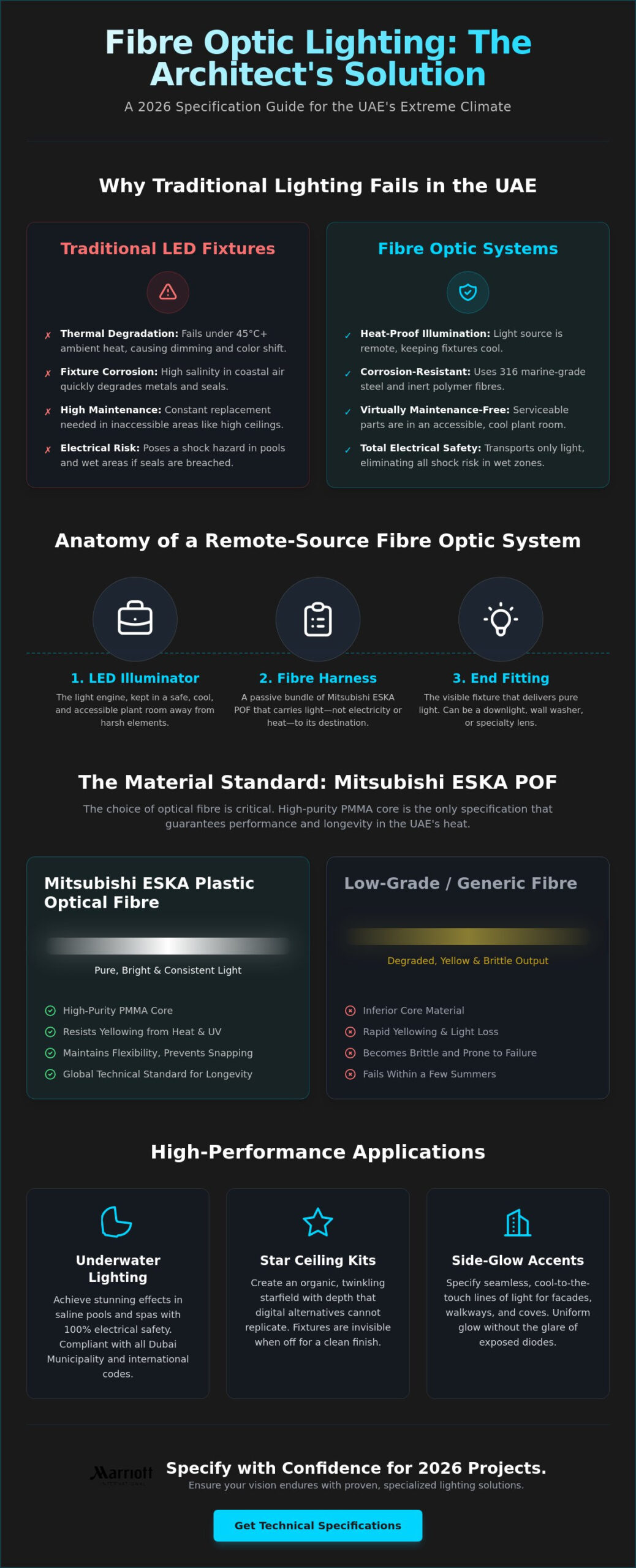
A core principle in understanding optical fiber technology is the total isolation of light from electricity. Unlike conventional lighting, where the bulb and wiring sit together, fibre optics use a distributed architecture. This setup allows you to place sensitive electronics in a ventilated, accessible location while the light itself performs in challenging spaces. A standard system includes three main elements:
- LED Illuminators: The remote power source, usually housed in an air-conditioned plant room.
- Fibre Harness: The conduit for the light, typically utilizing high-purity Mitsubishi ESKA Plastic Optical Fibre.
- End Fittings: The termination point, ranging from marine-grade stainless steel fixtures to decorative crystals.
Safety and Compliance in Wet Environments
Zero-voltage at the point of illumination is the gold standard for luxury spas and wellness centres. In saline pool environments, even a minor breach in a traditional fixture’s seal can lead to electrical leakage. Fibre optic systems eliminate this risk entirely. Because the underwater lighting fixtures carry only light, there’s no possibility of electrical shock. This design philosophy ensures full compliance with Dubai Municipality safety regulations and international pool codes without the need for complex grounding or heavy-duty conduits.
The Aesthetic Advantage: Beyond Traditional LED
Fibre optics allow for a point-source light that’s virtually invisible when turned off. Traditional LEDs require bulky heat sinks and drivers that can clutter a clean architectural line. With fibre, you can achieve incredibly precise accents. For example, star ceiling kits provide a depth and organic twinkle effect that digital alternatives can’t replicate. You can also specify side-glow fibre to create seamless architectural lines along facades or walkways. These lines remain cool to the touch and provide a uniform glow that enhances the building’s form without the glare of exposed diodes.
Technical Precision: Why Mitsubishi ESKA POF is the Architect’s Standard
Specifying the right material is the difference between a project that lasts decades and one that fails within two summers. Technical precision starts with the choice of transmission medium. Mitsubishi ESKA Plastic Optical Fibre (POF) has established itself as the global benchmark because of its high-purity PMMA core. While generic glass or low-grade plastics might seem cost-effective initially, they often lack the molecular stability required for the UAE climate. Over time, inferior materials undergo thermal degradation. This results in a noticeable yellowing of the light output and brittle fibres that eventually snap.
In the field of fibre optic lighting for architects Dubai, durability is a non-negotiable standard. High-performance systems rely on the Mitsubishi ESKA Plastic Optical Fibre to maintain consistent lumen output over the life of the building. This material is engineered to resist the intense heat of the Middle East. It ensures that the light quality doesn’t degrade even in unconditioned service voids where temperatures can exceed standard operating limits. It’s a reliable choice for specialists who value long-term infrastructure integrity over short-term savings.
Material Specifications for Specifiers
Architects must account for the core and cladding materials to ensure maximum transmission. High-grade POF uses a fluorinated polymer cladding that traps light within the PMMA core through total internal reflection. This construction allows for a tight bend radius. It’s essential when navigating the complex geometry of modern Dubai interiors or tight architectural corners. By following energy-efficient lighting design principles, you can optimize the system to reduce heat load on the building’s HVAC system. ESKA fibres maintain their mechanical strength and optical clarity even when installed in ceiling voids where ambient temperatures fluctuate significantly.
Light Transmission and Attenuation
Planning the placement of illuminators requires a clear understanding of light loss over distance. While high-grade POF minimizes these losses, you must still calculate the distance from the source to the end point to maintain design intent. Attenuation is the gradual loss of light intensity over the fibre length. In luxury villas or commercial lobbies, using high-grade POF ensures that the light remains crisp and bright at every termination point. This outperforms generic alternatives that often suffer from high scatter loss and inconsistent performance. For architects who need a proven partner for these technical requirements, consulting with a regional specialist ensures your specifications meet the highest performance standards.
From Infinity Pools to Star Ceilings: High-Performance Applications
The application of fibre optic lighting for architects Dubai extends far beyond simple aesthetics. High-performance systems solve specific environmental challenges while achieving visual effects that are impossible with standard LED strips. According to standards promoted by the International Association of Lighting Designers, the integration of light should enhance the architectural form without introducing technical vulnerabilities. In the Middle East, this means selecting systems that can withstand high salinity, UV exposure, and constant thermal stress.
Beyond decorative uses, these systems are vital for sensory room applications in educational and healthcare projects across the UAE. Fibre optic kits provide safe, tactile light that’s essential for therapeutic environments. For exterior facades, side-glow fibre creates precise linear highlights that define a building’s silhouette. These lines remain uniform over long distances, providing a crisp architectural edge that traditional neon or LED rope lights often fail to maintain over time.
Luxury Pool and Spa Lighting
Specifying underwater lighting fixtures for infinity pools requires a deep understanding of material science. Architects often integrate end-glow fibre into pool floors to create a “starry night” effect that mimics the desert sky. Side-glow fibre serves a different purpose, defining the perimeter of infinity edges with a continuous, soft glow. To ensure longevity in chlorinated or salt water, always specify 316 marine-grade stainless steel fixtures. These components resist corrosion and maintain their finish despite the harsh chemical and saline conditions common in Dubai’s coastal developments.
Indoor Decorative and Task Lighting
In high-end interiors, star ceiling kits provide an immersive experience for home cinemas and luxury hotel lobbies. These systems are frequently integrated into acoustic stretch ceiling systems to create a seamless, realistic night sky. For task lighting or bespoke chandeliers, crystal end fittings add a layer of luxury while focusing the light precisely. This technology is particularly useful for showcase lighting. Because the fibre carries no heat or UV radiation, you can illuminate delicate artifacts or high-value retail displays without the risk of thermal damage or color fading, ensuring the long-term preservation of the items on display.
Engineering for Longevity: Heat, Salinity, and Maintenance in the UAE
Dubai’s environmental stressors demand a specialized approach to infrastructure. Standard LED systems often fail prematurely because the heat-sensitive electronics are exposed to ambient temperatures that can reach 50°C. By specifying fibre optic lighting for architects Dubai, you move the failure points into controlled environments. This engineering strategy isolates the light emission from the electrical components, ensuring that the visible lighting remains unaffected by the external climate.
The primary advantage lies in the remote-source configuration. You can place LED illuminators in accessible, air-conditioned plant rooms or MEP cupboards. This keeps the heat-generating driver and light engine away from the architectural feature. While the illuminator is ventilated and cooled, the fibre itself remains entirely cool to the touch. This is critical for installations in sensitive areas like wooden joinery or stretch ceilings where heat accumulation would otherwise cause material warping or fire risks.
Longevity also depends on material selection for exposed components. For Dubai’s coastal developments, the use of 316-grade stainless steel for all end fittings and fixtures is a necessity. This marine-grade material resists the corrosive effects of salt-laden air, preventing the unsightly pitting and oxidation that plague standard aluminum or lower-grade steel fixtures. Maintenance becomes a streamlined process rather than a logistical challenge. Facilities managers only need to access a single illuminator to change a light source, rather than deploying scaffolding to reach hundreds of individual points in a high-reach lobby or drained pool. To ensure your next project is engineered for these conditions, consult with our technical specialists for a detailed system review.
Illuminator Placement and Access
Strategic placement of the light source is vital for system performance. Locate illuminators in dedicated MEP rooms or ventilated cupboards to allow for easy inspection and heat dissipation. High-output LED illuminators require adequate airflow to prevent thermal throttling, especially during the peak of the UAE summer. Architects must balance these locations with cable run lengths. While high-grade fibre minimizes loss, keeping harnesses within recommended distance limits ensures the desired lux levels are achieved at every termination point.
Control Systems and Integration
Modern luxury projects require seamless integration with building management systems. Fibre optic systems sync effortlessly with smart home platforms like Lutron or Control4. For more dynamic applications, such as colour-changing facades or realistic “twinkle” effects, DMX control is the industry standard. DMX512 protocols allow for individual control of light intensity and colour. This flexibility enables architects to program sophisticated lighting scenes that respond to the time of day or specific event requirements, all managed from a centralized interface.
Specifying Fibrepros: Specialized Lighting Solutions for 2026 Projects
Fibrepros has operated as a specialized supplier in the Middle East since 1995. This long-standing presence provides us with a deep understanding of the regional infrastructure and the specific demands of high-end developments. When specifying fibre optic lighting for architects Dubai, reliability is the primary metric for success. We ensure this by providing direct access to genuine Mitsubishi ESKA Plastic Optical Fibre and high-performance LED components. Our team doesn’t simply deliver parts. We assemble custom kits, tailoring star ceiling harnesses and pool lighting configurations to match your specific architectural floor plans.
Technical support is a core part of our service package. We assist architects from the initial design consultation through to final local delivery. This holistic approach ensures that the technical specifications outlined in your drawings translate perfectly into the physical installation. By partnering with a regional specialist, you mitigate the risks associated with generic components and inexperienced suppliers. We take pride in building the vital infrastructure that defines the UAE’s most iconic interiors and exteriors. For broader project consultancy, you can visit Global Engineering Office to see how multidisciplinary engineering firms support these high-end developments.
Why Local Supply Matters in Dubai
Construction cycles in Dubai move at a rapid pace. Local supply ensures the immediate availability of critical components, preventing delays in fast-track projects. We maintain a local presence that allows for responsive support during the fit-out phase. Our engineers understand the nuances of Dubai’s safety standards and the environmental challenges previously discussed. We work directly with installers and MEP contractors to ensure the system is integrated correctly, providing the technical oversight necessary for complex architectural lighting.
The Process: From Concept to Spec
The transition from a design concept to a technical specification is a structured process. You can engage our team for a comprehensive design consultation to determine the best fibre types and illuminator placements for your project. We provide physical samples of side-glow and end-glow fibre for your client mood boards, allowing stakeholders to experience the light quality firsthand. Once the design is finalized, we assist in completing the Bill of Quantities (BoQ). This ensures a seamless procurement process and guarantees that every component meets the high durability standards required for fibre optic lighting for architects Dubai in 2026.
Future-Proof Your Architectural Designs with Technical Precision
Specifying lighting for the UAE’s most ambitious projects requires a commitment to material science and technical precision. You now understand how remote-source systems solve the chronic issues of thermal degradation and saline corrosion that often compromise traditional LED installations. By utilizing high-purity Mitsubishi ESKA plastic optical fibre, you ensure that your design maintains its clarity and intensity for decades. This engineering approach transitions lighting from a recurring maintenance liability into a permanent architectural asset. It’s a choice that prioritizes long-term performance.
Fibrepros has served the Middle East lighting market since 1995 as an authorized supplier of Mitsubishi ESKA. We provide specialized solutions for the luxury hospitality and residential sectors, ensuring that every component survives the region’s environmental stressors. Our team offers the specialized expertise required to make fibre optic lighting for architects Dubai a seamless part of your next project. We handle the technical complexities so you can focus on the aesthetic vision.
Take the next step in securing the longevity of your high-end UAE project. Request a Technical Consultation for Your Next Dubai Project to discuss your specific requirements. We look forward to supporting your vision with reliable, world-class infrastructure.
Frequently Asked Questions
Why is fibre optic lighting preferred over LED for Dubai pool floors?
Fibre optic lighting is preferred because it eliminates all electrical components from the water, providing total safety from electrical leakage. In Dubai’s saline pool environments, traditional LED fixtures often suffer from seal failure and corrosion due to the harsh chemical balance. By using a remote light source, only the light travels through the fibre to the pool floor fixtures. This makes it the safest and most durable choice for luxury aquatic projects in the region.
What is the maximum length a fibre optic cable can run from the illuminator?
Maximum run lengths typically reach up to 20 meters when using high-quality PMMA fibre before light attenuation becomes noticeable. While longer runs are technically possible, they require higher-output LED illuminators to maintain consistent brightness at the termination points. Architects should plan illuminator locations centrally to minimize harness lengths. This ensures that the light remains crisp and vibrant across the entire architectural feature without losing intensity.
Do fibre optic lights require regular maintenance in the UAE climate?
Fibre optic systems require significantly less maintenance than traditional lighting because the visible components are passive and contain no electronics. There are no bulbs or drivers to replace at the light point, which is ideal for high-reach ceilings or underwater areas. You only need to maintain the remote LED illuminator in its air-conditioned location. This accessibility reduces long-term operational costs and eliminates the need for scaffolding to reach difficult fixtures.
Is Mitsubishi ESKA POF resistant to the high heat of Dubai ceiling voids?
Mitsubishi ESKA POF is engineered with high thermal stability specifically to withstand the intense heat found in Dubai ceiling voids. It maintains its optical clarity and structural integrity at temperatures that would cause generic plastics to yellow or become brittle over time. This heat resistance is a primary reason why it’s the industry standard for fibre optic lighting for architects Dubai. It ensures the system performs reliably throughout the building’s lifecycle.
Can I control fibre optic lighting through a DMX smart home system?
You can fully integrate fibre optic systems with DMX512 protocols and major smart home platforms like Lutron or Control4. This allows for precise control over dimming, colour changes, and dynamic effects like twinkling star ceilings. Modern LED illuminators are designed with these interfaces built-in, making them a seamless addition to any high-end residential or commercial automation network. It’s a standard requirement for most 2026 luxury specifications in the UAE.
What is the difference between end-glow and side-glow fibre for architectural use?
End-glow fibre transmits light only to the very tip, creating a distinct point-source effect perfect for star ceilings or floor accents. Side-glow fibre is treated to emit light along its entire length, mimicking the look of neon or linear LED strips. Architects use end-glow for focused decorative details and side-glow for defining architectural lines, facades, or perimeter lighting in spas and infinity pools where a continuous glow is required.
Are fibre optic star ceilings energy efficient compared to traditional lighting?
Fibre optic star ceilings are highly energy efficient because a single LED illuminator can power hundreds of individual light points simultaneously. Instead of installing and powering multiple small lamps, you use one centralized light source with low power consumption. This reduces the total electrical load and heat gain within the room. It aligns with Dubai’s green building regulations by minimizing energy use for decorative lighting applications in luxury interiors.
Do I need a specialized contractor to install Fibrepros systems in Dubai?
While standard MEP contractors can handle the physical placement, employing a specialist ensures the technical precision required for high-end results. Specialized installers understand the nuances of fibre polishing, harness tension, and illuminator ventilation. Fibrepros provides comprehensive support to local contractors to ensure that every installation of fibre optic lighting for architects Dubai meets our rigorous durability standards. This collaboration guarantees that the final architectural effect matches the original design intent.