
Why does a “cheap” lighting repair in Dubai often end up costing three times the price of the actual hardware? It’s a common frustration for property managers who find that standard LED strips frequently fail under the intense UAE summer heat. You’ve likely experienced the logistical headache of coordinating scaffolding and specialized labor just to fix a single flickering light. When you calculate the recurring expenses of replacements and technical call-outs, the long-term cost of fibre optic vs LED strip Dubai shifts dramatically in favor of the more durable solution.
We understand that reliability is your primary metric for success. This 2026 TCO analysis demonstrates how the initial price of fibre optic lighting translates into significant savings over a ten-year horizon. You’ll discover how Mitsubishi ESKA plastic optical fibre removes electrical hazards from wet areas and slashes maintenance needs by centralizing light sources. We provide a clear breakdown of energy efficiency, cooling load impacts, and the specialized benefits of side-glow and end-glow systems for the unique Middle Eastern climate. By the end of this guide, you’ll see why investing in high-quality fibre infrastructure is the only way to ensure a decade of uninterrupted performance.
Key Takeaways
- Understand why treating lighting as an infrastructure asset rather than a consumable is critical for reducing the long-term cost of fibre optic vs LED strip Dubai installations.
- Identify how the UAE’s extreme ambient heat accelerates lumen depreciation in traditional LED strips and why fibre optic cables remain unaffected.
- Learn how to eliminate “scaffolding taxes” by utilizing centralized LED illuminators that allow for ground-level servicing without complex equipment.
- Evaluate the safety advantages of removing electrical components from wet areas, specifically through the use of specialized underwater lighting fixtures.
- Access a decision matrix to determine exactly when a project requires the durability of Mitsubishi ESKA plastic optical fibre versus standard lighting.
Initial Investment vs. Total Cost of Ownership (TCO)
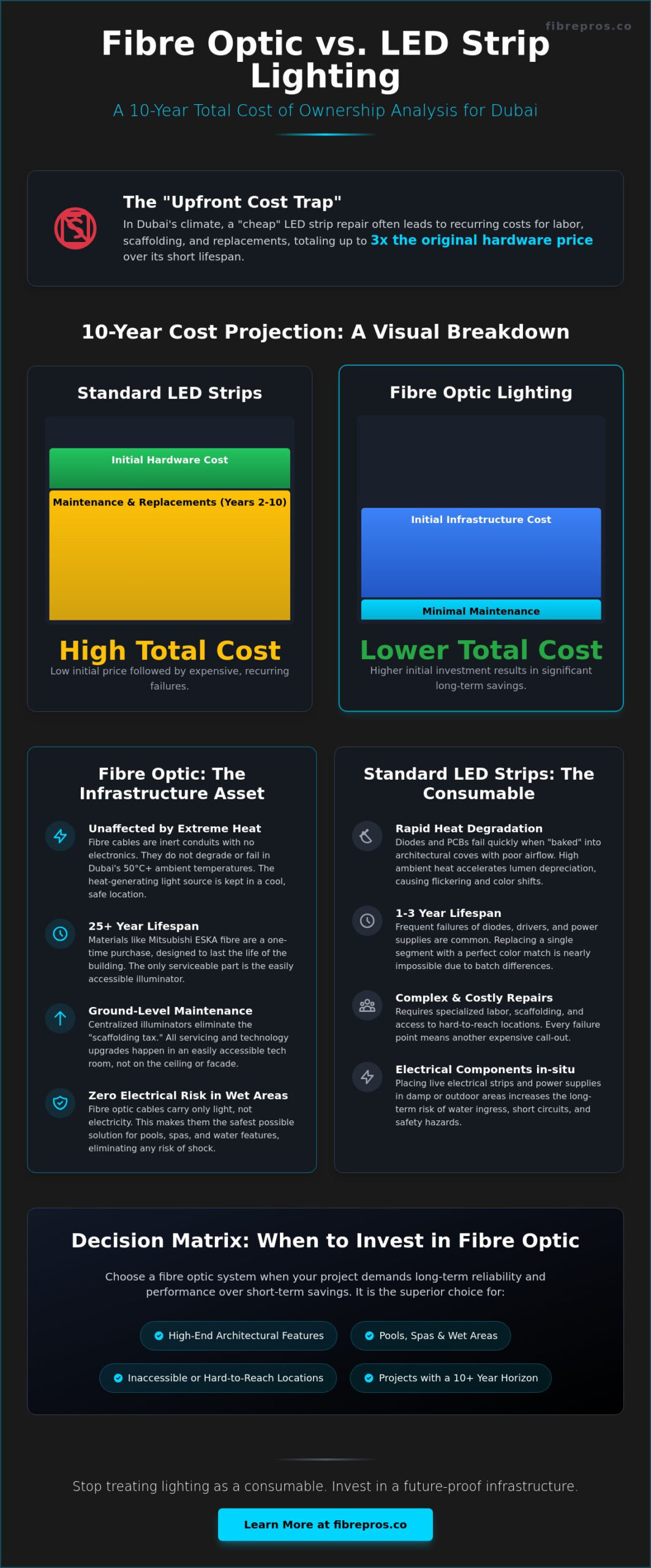
Decision-makers often focus on the initial quotation, overlooking the reality of the long-term cost of fibre optic vs LED strip Dubai projects. While a budget LED installation might appear cost-effective on day one, it functions as a consumable rather than a permanent asset. This “upfront cost trap” ignores the rapid degradation of electronic components in the UAE’s high-ambient-heat environment. You aren’t just buying lights; you’re committing to a lifecycle of maintenance, power supply replacements, and eventually, total system overhauls.
The Hidden Expenses of Cheap LED Strips
Budget LED quotes frequently omit the high-quality drivers and heavy-duty heat sinks necessary for survival in Dubai’s climate. Without these, diodes fail prematurely. Voltage drop is another technical hurdle; long runs of LED strip require multiple power supplies and complex cabling to maintain uniform brightness. When a single segment fails, finding an exact color match from a different production batch is nearly impossible. This creates a “patchwork” aesthetic that forces owners to replace entire rooms of lighting just to maintain visual consistency.
Fibre Optic: The One-Time Infrastructure Buy
Fibre optic systems represent a fundamental shift in how we view architectural lighting. By using materials like Mitsubishi ESKA Plastic Optical Fibre, the lighting becomes a permanent part of the building’s infrastructure. To understand the technology better, one might ask, What is fiber optic lighting? Essentially, it’s the process of decoupling the light source from the point of illumination. The fibre itself contains no electronics, no gases, and no filaments to burn out. It’s an inert conduit that delivers light exactly where it’s needed without generating heat at the output point.
The economics of a single-source LED illuminator are compelling. Instead of managing hundreds of individual diodes spread across a ceiling or pool, you maintain one high-efficiency driver located in an accessible, ventilated area. Over a 10-year horizon for a typical Dubai villa, the long-term cost of fibre optic vs LED strip Dubai favors the fibre system. While the initial hardware investment is higher, you eliminate the recurring “scaffolding tax” and replacement hardware costs that plague traditional LED setups. You gain the ability to upgrade your light source to the latest technology in minutes, without ever opening a ceiling or draining a pool. This is true future-proofing for high-end assets.
The Climate Factor: Heat, Humidity, and LED Lifespan in Dubai
Dubai’s ambient environment is a hostile landscape for sensitive electronics. Peak summer temperatures exceeding 50°C create a thermal ceiling that most standard lighting solutions simply cannot handle. While the energy efficiency of LED lighting is an industry standard, the physical diodes are highly susceptible to heat-induced lumen depreciation. When ambient air is already hot, the passive heat sinks on LED strips lose their effectiveness. The heat stays trapped within the PCB, accelerating diode failure and shifting the color temperature of the light. This degradation is a primary driver behind the high long-term cost of fibre optic vs LED strip Dubai projects when frequent replacements become necessary.
In many luxury villas, LED strips are “baked” into tight architectural coves or recessed profiles. This design choice severely restricts airflow. In the Middle East, this creates a micro-environment where temperatures far exceed the manufacturer’s safe operating limits. Fibre optic systems solve this by separating the heat from the light. By housing the LED illuminators in air-conditioned indoor spaces, you ensure the electronics operate at a constant, optimal temperature. The light is then piped through the fibre to the exterior or pool area without any heat transfer.
Thermal Management in the Middle East
Passive cooling systems that work in Europe or North America often fail during a Dubai July. The extreme thermal cycling, which is the massive swing between daytime heat and nighttime cooling, puts immense stress on solder joints. This leads to intermittent flickering or dead segments in LED runs. Fibre optics eliminate this risk entirely because the delivery medium is a passive conduit. There are no electrical components at the point of emission to fail, ensuring the architectural finishes remain protected from heat damage.
UV Stability and Material Degradation
Coastal locations like Jumeirah and Palm Jebel Ali present additional challenges. Salt-saturated air and high UV indices degrade the silicone jackets used to waterproof LED strips. Within 24 months, these jackets often yellow, crack, or become opaque, ruining the lighting effect. In contrast, Mitsubishi ESKA Plastic Optical Fibre is engineered for long-term clarity. It doesn’t yellow or go brittle under UV exposure. It remains a clear, non-electric conduit for decades. If you want a system that survives the coast, you should consider how high-performance fibre systems outperform traditional alternatives in these demanding conditions.
Maintenance and Accessibility: The Labor Cost Reality
Maintenance is the silent budget killer in Dubai’s high-end property sector. While hardware costs are visible on a quote, the logistical expenses of a repair often remain hidden until a failure occurs. In the context of the long-term cost of fibre optic vs LED strip Dubai, labor and accessibility are the primary differentiators. Standard LED strips are distributed systems; the electronics are spread across the entire length of the installation. When a single segment fails in a high-reach cove or a double-height foyer, you aren’t just paying for a new strip. You’re paying for the “Scaffolding Tax.”
A failed 50 AED LED component in a ceiling can easily require 5,000 AED in labor and equipment hire. Coordinating specialized technicians and erecting scaffolding in a finished interior is a massive undertaking. Fibre optic systems eliminate this recurring financial drain through single-point maintenance. All electronic components are housed within a single LED illuminator located in an accessible area, such as a plant room or a service cupboard. The light is then delivered through passive fibre conduits that require zero maintenance for the life of the building. You service one box at floor level instead of checking miles of strip at height.
The Logistics of Lighting Repair in Dubai
Labor costs for specialized electrical work in luxury residential sectors remain high. In commercial environments like hotels and malls, the cost of disruption is even more significant. Closing a retail floor or a hotel suite for lighting repairs results in immediate revenue loss. Remote illuminators allow facilities managers to perform predictable maintenance cycles without ever entering the guest space. This ensures zero-downtime lighting and preserves the privacy and operational flow of the property.
Reliability in High-Reach Applications
High-reach installations, such as decorative star ceiling kits, present a unique challenge for traditional LEDs. If an individual LED node fails in a star ceiling, the repair often involves damaging expensive finishes like custom plaster or designer wallpaper. Fibre optic systems are a “set it and forget it” solution. Because the fibre ends are just polished plastic or glass, they can’t burn out or fail. This reliability is why the long-term cost of fibre optic vs LED strip Dubai is significantly lower for complex architectural features. You invest in the infrastructure once and avoid the risk of damaging your interior’s aesthetic integrity during future repairs.
Safety and Durability in Specialized Applications
Safety is not a negotiable metric in luxury developments. When evaluating the long-term cost of fibre optic vs LED strip Dubai, you must account for the liability and risk associated with electrical systems in wet or high-touch areas. Traditional LED systems require copper wiring and electrical drivers to be placed in close proximity to water or human contact. Fibre optics eliminate this risk entirely. By using underwater lighting fixtures powered by remote sources, you ensure that no electricity ever enters the pool structure. There is no risk of current leakage, even if a seal eventually fails.
Durability in Dubai’s coastal environments requires materials that resist aggressive corrosion. Standard LED strips rely on copper traces and solder points that oxidize rapidly when exposed to saline air or pool chemicals. Fibre optic systems utilize stainless steel fixtures and plastic fibre conduits that are chemically inert. This resistance to environmental degradation ensures the system maintains its integrity for decades, whereas copper-based systems often require complete replacement within three to five years.
Pool and Spa Lighting TCO
The total cost of ownership for pool lighting includes the significant expense of draining and refilling the water for repairs. Replacing a failed LED niche light in a full pool is often impossible, and the water loss alone in a large Dubai villa can cost thousands. Fibre optic side-glow systems provide a 20-year solution for pool perimeters. Because the light source is located in a dry plant room, you never need to drain the pool to service the electronics. This logistical advantage significantly reduces the long-term cost of fibre optic vs LED strip Dubai in aquatic applications.
Sensory and Decorative Reliability
In high-touch environments like children’s playrooms or home cinemas, tactile safety is paramount. Star ceilings and sensory kits using Mitsubishi ESKA plastic optical fibre are designed for direct interaction. Because these systems carry no heat or electricity at the point of contact, they remain perfectly safe for children to touch. Fibre optics carry only light, making them inherently safe for any touch-sensitive application. This durability ensures that even in high-use areas, the infrastructure remains maintenance-free and functional for the life of the interior. If you are planning a specialized lighting project, contact our technical team for a precise infrastructure assessment.
Final ROI Analysis: When to Invest in Fibre
Determining the long-term cost of fibre optic vs LED strip Dubai projects requires a shift in perspective from simple procurement to strategic facilities management. While LED strips serve well for short-term decorative needs, they lack the structural permanence required for high-value assets. When you calculate the long-term cost of fibre optic vs LED strip Dubai, the return on investment becomes clear after the third year of operation. This is the point where the cost of LED replacement cycles and labor typically overtakes the initial capital expenditure of a fibre system.
To help project managers decide, we utilize a specific decision matrix based on environmental risk and accessibility. Fibre optic lighting is considered mandatory in the following scenarios:
- Underwater Applications: Any pool, spa, or fountain where electrical safety and water-tight integrity are non-negotiable.
- High-Reach Architecture: Ceilings or facades exceeding three meters where maintenance requires specialized equipment.
- Thermal Stress Zones: External coves or signage exposed to direct Dubai sunlight and 50°C+ ambient temperatures.
- High-Traffic Commercial: Hotels and retail spaces where lighting downtime directly impacts brand perception and revenue.
Energy Efficiency and Sustainability
The energy profile of a single-source system is significantly more efficient than distributed diodes. For example, illuminating 50 meters of perimeter with high-output RGBW LED strips can draw upwards of 700W of power. In contrast, a single 100W LED illuminator can achieve a similar visual effect through side-glow fibre. This represents an 85% reduction in direct energy consumption. Beyond the electricity bill, this lower wattage reduces the internal heat gain of the building, placing less strain on the HVAC system. Sustainability in the UAE is also about reducing electronic waste; a fibre system stays out of the landfill for decades, whereas cheap LED strips often require total disposal every few years.
Choosing the Right Partner in the UAE
High-end Dubai developers specify fibre optics because it aligns with the “Luxury Standard” of zero-interference maintenance. Achieving this requires technical precision during the design phase. Specialized supply from Fibrepros ensures long-term system integrity by matching the right illuminator to the specific light-transmission requirements of your project. We emphasize the importance of using genuine Mitsubishi ESKA plastic optical fibre to ensure maximum light output and color consistency over the system’s life. Don’t leave your infrastructure to chance with generic alternatives. Contact Fibrepros for a technical consultation on your lighting TCO and secure a professional audit for your next project.
Securing Your Infrastructure for the Next Decade
Transitioning from consumable lighting to a permanent infrastructure asset is the only way to eliminate the “scaffolding tax” and premature system failure. By centralizing electronics in climate-controlled environments and utilizing passive conduits like Mitsubishi ESKA plastic optical fibre, you ensure your lighting survives the UAE’s extreme thermal cycling. This strategic approach fundamentally changes the long-term cost of fibre optic vs LED strip Dubai; it turns a recurring maintenance headache into a durable, one-time investment that adds genuine value to your asset.
We’ve provided Dubai-based technical expertise and high-durability solutions since 1995. Our team specializes in the precision application of Mitsubishi ESKA POF and stainless steel fixtures designed specifically for the region’s aggressive environmental challenges. We deliver the reliability that project managers expect in high-stakes developments, ensuring your lighting remains functional long after standard alternatives have failed. Request a Long-Term Cost Comparison for Your Dubai Project to see how a professional infrastructure audit can protect your budget. Your lighting deserves to be a permanent design statement that stands the test of time.
Frequently Asked Questions
Is fibre optic lighting more energy-efficient than LED strips?
Fibre optic lighting is significantly more efficient when you consider the total system power draw and the secondary impact on cooling. A single high-efficiency LED illuminator often consumes less wattage than the cumulative power required for multiple runs of RGBW LED strip. Since the fibre itself emits no heat, your air conditioning system doesn’t have to work harder to compensate for internal heat gain.
How long does a fibre optic lighting system last in the Dubai heat?
A well-installed system can last 20 years or more in the Dubai climate. The fibre optic cables are passive conduits that don’t degrade in the heat. By placing the LED illuminators in air-conditioned plant rooms or service cupboards, you protect the sensitive electronics from the 50°C temperatures that typically destroy standard LED strips.
Can I replace my existing LED strips with a fibre optic system?
You can transition to fibre, but it requires a different installation approach than simply sticking on a strip. Fibre optic cables require dedicated pathways and a central location for the light source. While the retrofitting process is more involved, it eliminates the need for future ceiling or cove repairs. This shift is a key factor in reducing the long-term cost of fibre optic vs LED strip Dubai.
What is the maintenance requirement for a fibre optic star ceiling?
Maintenance for star ceiling kits is minimal and centralized. Because the “stars” are just the ends of the fibres, there are no bulbs or diodes to replace in the ceiling itself. You only need to service the single LED illuminator located in an accessible area. This eliminates the risk of damaging expensive plasterwork or wallpaper during routine repairs.
Why is fibre optic safer for swimming pools in the UAE?
Fibre optics are the safest choice for UAE pools because they carry no electricity to the water. The light is generated by a remote source and piped through the fibre to stainless steel fixtures. This setup completely removes the risk of electrical current leakage into the pool, even if a seal is compromised by saline water or chlorine.
Does the light from fibre optic cables fade over time?
High-quality fibre does not fade or yellow significantly over time. While budget plastic fibres can lose clarity, Mitsubishi ESKA plastic optical fibre is engineered for long-term light transmission. It maintains its spectral integrity and brightness for decades, ensuring your architectural lighting looks as intended from day one through year ten.
Is Mitsubishi ESKA fibre better than standard plastic optical fibre?
Mitsubishi ESKA is the industry gold standard due to its superior light transmission and durability. It offers better flexibility and resistance to UV degradation compared to generic plastic optical fibre. This higher material standard ensures that the light remains bright over longer distances, which is critical for maintaining the aesthetic quality of luxury installations.
How much more does fibre optic lighting cost to install initially?
The initial investment for fibre optic lighting is typically higher than budget LED strips. This is due to the specialized hardware, such as high-output illuminators and precision-engineered fibre, and the technical labor required for installation. However, when you factor in the zero-replacement cost and lower energy bills, the total cost of ownership is significantly lower over a five to ten-year period.