
In the high-salinity environment of a Riyadh luxury pool, a “waterproof” rating is often the first step toward a total hardware failure. Most standard fixtures aren’t engineered to survive the 45°C summer peaks and the 12mm daily evaporation rates that concentrate corrosive minerals in your water. If you’ve already dealt with unsightly rust streaks on your tiles or fixtures that die after one season, you know that finding genuine corrosion resistant pool lights Riyadh requires looking beyond basic retail specifications. It’s frustrating to invest in a premium outdoor space only to have the aesthetic ruined by failing hardware and recurring maintenance costs.
This guide provides the technical clarity you need to select lighting that withstands Riyadh’s unique environmental stressors. You’ll discover how to protect your investment with high-grade, corrosion-immune solutions that prioritize both safety and longevity. We’ll examine the critical shift toward 316L stainless steel and advanced fibre optic systems that eliminate electrical risks while ensuring full compliance with the strict SASO 2026 energy efficiency standards. From heat-resistant LED illuminators to permanent underwater fixtures, we’ll outline the path to a zero-maintenance pool environment that remains safe and beautiful year-round.
Key Takeaways
- Identify the environmental factors in Riyadh, such as extreme thermal expansion and high salinity, that cause standard lighting seals to fail within a single season.
- Learn why 316L marine-grade stainless steel is the technical minimum for luxury pools to prevent chloride-induced pitting and rust stains.
- Explore how fibre optic technology offers a permanent, corrosion-immune solution by isolating the light source and electrical components from the water.
- Discover the essential installation strategies for corrosion resistant pool lights Riyadh to ensure optimal thermal management and 2026 SASO compliance.
- Access specialized hardware specifications, including Mitsubishi ESKA fibre and custom 316 stainless steel fixtures designed for the GCC climate.
Why Standard Pool Lights Fail in Riyadh’s Environment
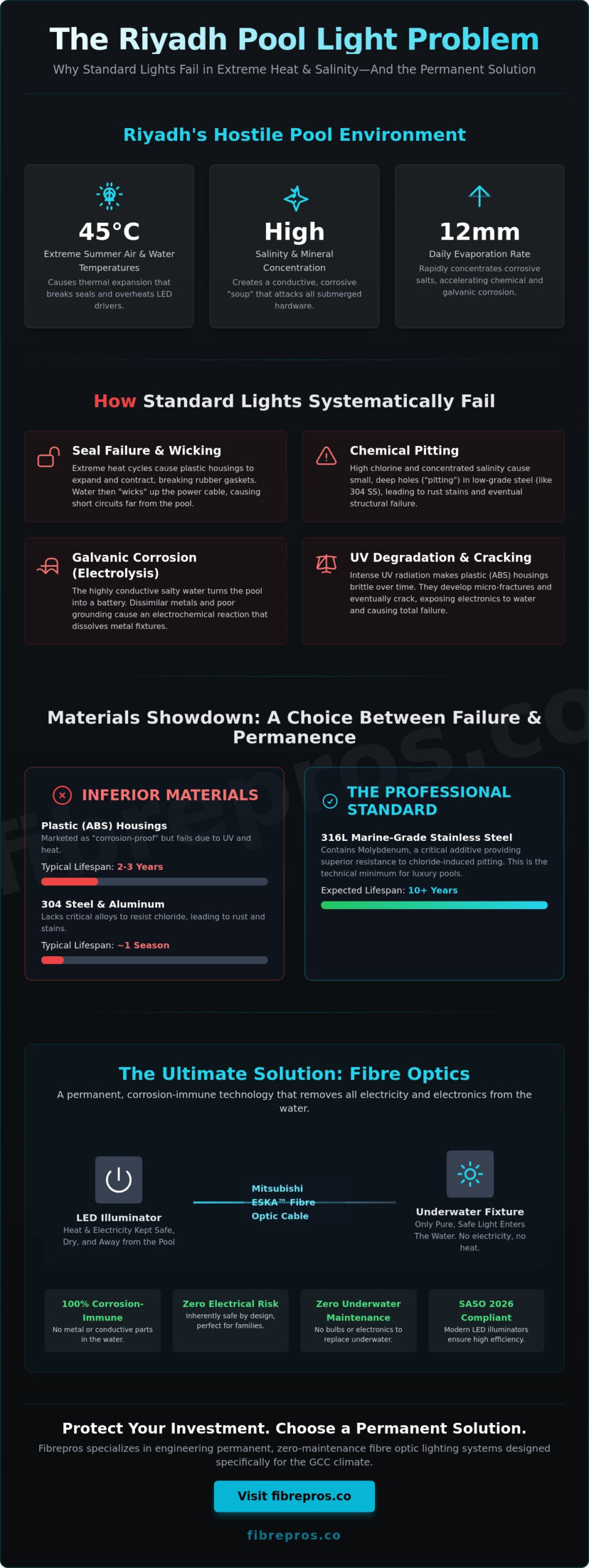
Standard pool hardware often fails because it’s designed for temperate climates, not the extreme thermal and chemical stresses of the Saudi capital. In Riyadh, daily evaporation rates of 8 to 12mm during summer months rapidly concentrate dissolved solids and salts. This process transforms standard pool water into a highly conductive and aggressive “soup” that attacks inferior materials. True corrosion resistance is defined as a material’s inherent ability to withstand these oxidative chemical reactions without structural or aesthetic degradation. Without specialized corrosion resistant pool lights Riyadh property owners frequently observe their “IP68 rated” fixtures failing or developing rust streaks within a single season.
The Impact of Riyadh’s Heat on Underwater Seals
Riyadh’s climate presents a dual-threat to underwater seals. Summer water temperatures in shallow zones can exceed 35°C, while ambient air temperatures frequently hit 45°C. This extreme thermal load causes significant expansion and contraction cycles in standard plastic housings. These microscopic shifts eventually compromise rubber gaskets and silicone seals. Once a seal fails, capillary action, or “wicking,” can pull water directly up the internal copper of the power cable, leading to short circuits in remote junction boxes. Many traditional LED fixtures also rely on the surrounding water for heat dissipation. In Riyadh’s warm, shallow steps, these units often overheat, causing the LED drivers to burn out because the water is too warm to effectively draw heat away from the electronics.
Chemical Corrosion vs. Electrolysis in Saudi Pools
The decay of pool fixtures in the GCC is rarely a simple case of surface rust. While high chlorine levels and acid washes cause “pitting”—small, deep holes that penetrate low-grade steel—the most severe structural failures often stem from Galvanic corrosion. This electrochemical process occurs when dissimilar metals are submerged in a conductive electrolyte, such as the high-salinity water found in local pools. In many older Riyadh villas, insufficient electrical grounding accelerates this decay. The electrical potential difference effectively turns the pool into a large battery, sacrificing the metal components of the lights. High-performance corrosion resistant pool lights Riyadh must utilize marine-grade alloys or non-conductive materials to survive these harsh electrochemical attacks. Using fixtures with high molybdenum content helps mitigate these risks by providing a stable barrier against chloride-induced decay.
Materials Matter: 316 Stainless Steel vs. Plastic Fixtures
Selecting the right material is a choice between a permanent installation and a recurring maintenance expense. While many suppliers in the region offer aluminum or 304-grade steel, these materials lack the chemical stability required for Riyadh’s high-salinity pools. Aluminum, specifically, is highly reactive in chlorinated environments and will degrade rapidly. For a truly durable installation, 316L marine-grade stainless steel is the technical minimum. This specific alloy includes molybdenum, a critical additive that provides superior resistance to the chloride-induced pitting that destroys lesser metals. Understanding how pool water chemistry causes corrosion helps property managers see why 316L is non-negotiable for long-term hardware survival.
Plastic alternatives like ABS are often marketed as “corrosion-proof” simply because they don’t rust. However, Riyadh’s intense UV radiation and extreme thermal cycling make plastic brittle over time. As these housings crack under stress, the internal electronics are exposed to the water. In contrast, solid-cast 316L fixtures offer a lifespan exceeding 10 years, significantly outperforming the 2-3 years typical of consumer-grade plastics. When specifying corrosion resistant pool lights Riyadh, the structural integrity of the housing is just as vital as the light source itself.
Identifying Genuine Marine-Grade Hardware
Distinguishing between 304 and 316 steel is difficult by sight alone, but the performance difference is massive. 304 steel will inevitably develop surface rust in chlorinated environments, leading to ugly stains on pool tiles. High-end underwater lighting fixtures undergo a passivation process. This chemical treatment removes free iron from the surface and reinforces the protective oxide layer. Don’t be misled by vague marketing terms like “rust-resistant.” Always demand technical confirmation of 316L standards to ensure your hardware survives the harsh local water chemistry.
The Failure Points of Traditional LED Housings
Most failures occur at the glass-to-metal bond or the cable entry gland. Stamped sheet metal housings often warp under thermal pressure, creating microscopic gaps for water ingress. Solid-cast housings are far superior, providing a rigid frame that maintains seal integrity despite Riyadh’s heat. Internal condensation is another common killer. As the light heats and cools, moisture can form inside a poorly sealed unit, eventually shorting the circuitry. For those seeking long-term reliability, investing in precision-engineered stainless steel fixtures ensures your pool remains illuminated without the need for frequent underwater repairs.
Fibre Optics: The Ultimate Corrosion-Proof Solution
Traditional LED systems, even those with high IP ratings, carry an inherent vulnerability: the presence of electricity and electronics in a corrosive environment. Fibre optic technology represents a paradigm shift by physically separating the light source from the water. In these systems, a high-output LED illuminator sits in a dry, ventilated plant room or equipment cabinet. Only the non-conductive cables and fixture heads enter the pool. This architecture eliminates the primary causes of failure for corrosion resistant pool lights Riyadh, as there are no internal circuits, gaskets, or power cables submerged in the high-salinity water.
Safety remains the most compelling reason for commercial and luxury residential properties to adopt this technology. Because no electricity enters the water, there is zero risk of shock, even if a fixture head is damaged. This makes it the safest possible choice for families and high-traffic resort pools. Maintenance also becomes a simplified, dry-land task. Instead of hiring divers or draining the pool to replace a failing LED, technicians simply swap the bulb or service the LED illuminator in the equipment room. This logistical advantage significantly reduces long-term operational costs and ensures the pool remains illuminated without downtime.
Mitsubishi ESKA POF: Engineering for Longevity
The durability of a fibre optic system depends entirely on the quality of the light guides. Mitsubishi ESKA Plastic Optical Fibre is the industry benchmark for Riyadh’s harsh conditions. Unlike standard glass fibre, which can become brittle and lose clarity, this high-performance polymer is chemically inert. It resists the aggressive calcification and high chlorine levels common in local pools. Investing in ESKA fibre provides a superior ROI because the material doesn’t degrade under intense UV exposure or the 45°C thermal peaks that cause standard plastic components to fail.
Design Flexibility with Side-Glow and End-Glow
Beyond its technical resilience, fibre optics allow for architectural lighting effects that are impossible with standard fixtures. Side-glow fibre can be installed along the entire perimeter or under the coping to create a continuous “halo” effect without any visible hardware. For the pool floor, end-glow fibre and crystal end fittings can create a “starry night” effect that is 100% immune to corrosion. These systems provide uniform light distribution across large villa pools, ensuring there are no dark spots or glare. When specifying corrosion resistant pool lights Riyadh, fibre optics offer the only solution where the hardware touching the water is literally incapable of rusting or short-circuiting.
Installation and Maintenance for Riyadh Pools
Precision in installation is as critical as the hardware itself. Even the highest quality corrosion resistant pool lights Riyadh can succumb to premature failure if the surrounding infrastructure isn’t designed for the local climate. Proper airflow for LED illuminators is paramount. These units generate internal heat that must be dissipated, and in Riyadh’s 45°C summers, a poorly ventilated equipment room quickly becomes a kiln. Technicians must ensure that illuminators are positioned in shaded, fan-cooled areas to prevent thermal throttling or driver burnout.
Infrastructure materials must remain chemically inert to prevent systemic failure. Using standard metal conduits often leads to corrosion that can travel through the wiring directly to the fixture. We specify non-corrosive PVC or high-grade stainless steel conduits to maintain a sealed, protected system. For cable entries, use high-temperature potting compounds rather than standard silicone, which can degrade and shrink under intense heat. Additionally, the high evaporation rate in Riyadh leads to rapid mineral scaling. Property owners should implement a monthly cleaning schedule for underwater lenses using a soft cloth and a mild descaling agent to prevent calcification from dimming the light output.
Retrofitting vs. New Build Specifications
Upgrading an existing pool often involves replacing old, rusted niche lights with modern stainless steel units. This process requires careful inspection of the existing conduit to ensure it hasn’t been compromised by salt or chemicals. For new builds, planning for fibre optic runs during the concrete pour phase allows for a cleaner installation without visible conduits. Selecting the right LED illuminators is vital during this stage to ensure the light source can handle the outdoor ambient temperatures of the Middle East. If you’re planning a project, it’s best to consult with a lighting specialist during the design phase.
The Role of IP Ratings in Saudi Arabia
In the Riyadh market, IP68 is the bare minimum requirement for any submerged fixture, but it’s not the final goal. The “8” in IP68 denotes a depth and pressure rating that varies by manufacturer. For deep pools, you must verify that the fixture is rated for the specific depth of your floor. It’s also a common mistake to overlook external junction boxes. While these aren’t submerged, they’re exposed to dust storms and high-pressure pool cleaning. These components should carry an IP67 rating or higher to ensure the electrical connections remain bone-dry and free from the corrosive mineral dust common in the Nejd region.
Expert Lighting Solutions by Fibrepros in Riyadh
Fibrepros operates as a specialized partner for developers and homeowners who require high-performance hardware that exceeds standard market offerings. Our inventory is specifically curated for the environmental rigors of the Nejd region, featuring 316 stainless steel fixtures that provide the chemical immunity discussed throughout this guide. As a direct supplier of Mitsubishi ESKA fibre, we ensure that every project benefits from the technical precision of the industry’s gold standard. These components allow us to deliver corrosion resistant pool lights Riyadh that maintain their structural and aesthetic integrity despite the aggressive water chemistry found in local luxury developments.
Beyond underwater applications, we provide customized star ceiling kits for indoor pools, spas, and sensory rooms. These systems utilize the same high-grade fibre technology to create immersive environments that are entirely free from electrical components. For Riyadh-based contractors, we offer comprehensive technical support and design consultation. This ensures that every lighting layout is optimized for both visual impact and long-term operational reliability. We focus on providing a holistic approach to infrastructure, ensuring that our corrosion resistant pool lights Riyadh integrate seamlessly with your existing pool management systems.
Why GCC Architects Choose Fibrepros
Architects across the Middle East specify our systems because of our decade-long experience managing the region’s unique climate challenges. We’ve established a proven track record within the luxury hospitality and private villa sectors, where equipment downtime isn’t an option. Our commitment to technical precision means we don’t just supply parts; we provide integrated infrastructure solutions that meet the highest performance standards. This specialized focus distinguishes us from general lighting suppliers who lack the technical mastery required for high-salinity aquatic environments.
Get a Professional Lighting Specification
Securing the right hardware starts with a precise technical specification. We assist project managers by providing a detailed bill of quantities (BOQ) tailored to the specific dimensions and salinity levels of their pool. Our team offers bespoke consultation services for underwater lighting designs, ensuring that every crystal end fitting and side-glow run is positioned for maximum efficiency. If you’re ready to secure a permanent, high-performance solution, contact Fibrepros for your Riyadh pool lighting project to receive a professional assessment of your requirements.
Secure Your Lighting Investment for the Long Term
Protecting your pool from the aggressive Riyadh climate requires a shift from standard waterproof ratings to technical material immunity. As outlined, the combination of 316L marine-grade stainless steel and advanced fibre optic technology provides the only viable defense against high salinity and extreme thermal loads. By isolating electrical components and utilizing non-reactive alloys, you eliminate the risks of structural pitting and electrical failure. Investing in high-performance corrosion resistant pool lights Riyadh is a strategic move that ends the costly cycle of seasonal hardware replacements and frequent underwater maintenance.
Fibrepros has served the technical lighting needs of Riyadh, Dubai, and the wider GCC since 1995. As specialists in 316 stainless steel fixtures and the exclusive supplier of Mitsubishi ESKA POF, we provide the precision engineering required for the region’s most demanding aquatic environments. Our systems are designed to deliver reliable, high-output illumination while ensuring total compliance with 2026 safety standards. It’s time to move beyond temporary fixes and implement a permanent lighting infrastructure. Upgrade your pool with Fibrepros’ corrosion-proof lighting and enjoy a safe, pristine environment for years to come.
Frequently Asked Questions
What is the best material for pool lights in Riyadh?
316L marine-grade stainless steel is the professional standard for corrosion resistant pool lights Riyadh. This alloy contains molybdenum, which specifically resists the pitting caused by high chlorine and salinity levels common in the region. For the most durable installation, combine these fixtures with Mitsubishi ESKA fibre optic cables to ensure the submerged components remain chemically inert and structurally sound over time.
Can I replace my existing rusted pool lights with fibre optics?
Yes, retrofitting fibre optics into an existing pool is a standard procedure for luxury renovations. Technicians can often use the existing conduits from old niche-mounted lights to pull new fibre optic cables through to the equipment room. This upgrade permanently removes all electrical risks from the water and moves the primary maintenance point to a dry, accessible plant room.
Is 316 stainless steel completely rust-proof in chlorinated water?
316 stainless steel is exceptionally resistant to rust but requires balanced water chemistry to remain pristine. While it’s the highest standard for aquatic environments, neglected pH levels or extreme salt concentrations can still cause surface staining. Utilizing fixtures with passivated finishes and maintaining proper pool chemistry are essential steps to ensure the metal retains its aesthetic and structural integrity.
How long do fibre optic pool lights last compared to LEDs?
Fibre optic systems generally outlast submerged LEDs by a significant margin. While a standard submerged LED might fail within two to three years due to seal degradation and heat stress, high-quality fibre optic cables can remain functional for over 15 years. The light source is located in a dry, ventilated environment, protecting the electronics from the moisture that kills traditional fixtures.
Why do my pool lights keep filling with water in the summer?
This failure is typically caused by extreme thermal expansion and contraction cycles. Riyadh’s summer heat causes the housing materials to shift, eventually compromising the rubber gaskets and silicone seals. Once the seal is broken, water enters the housing. In many cases, water can even travel up the internal copper of the power cable via capillary action, leading to remote short circuits.
Do I need a special transformer for corrosion-resistant lights?
Fibre optic systems require a dedicated LED illuminator rather than a standard pool transformer. This illuminator acts as the engine for the entire system, converting electrical power into light that travels through the fibre cables. For traditional submerged LED fixtures, you must ensure the transformer is specifically rated for the voltage and wattage requirements of the new 316 stainless steel units.
Are fibre optic lights bright enough for large swimming pools?
Modern high-output LED illuminators provide more than enough intensity for large commercial and residential swimming pools. By using crystal end fittings, the light is magnified and dispersed effectively across the pool floor. This creates a uniform glow and architectural impact that rivals the performance of traditional high-wattage niche lights without the associated maintenance or safety risks.
Where can I buy professional-grade pool lighting in Riyadh?
Professional-grade corrosion resistant pool lights Riyadh are best sourced from specialists who focus on Middle Eastern climate challenges. Fibrepros provides direct access to 316 stainless steel fixtures and Mitsubishi ESKA fibre across Riyadh and the wider GCC. Working with a specialist ensures you receive hardware that is technically specified for the high-salinity and high-heat environments typical of the region.