
In Dubai’s 50°C summer peaks, traditional LED systems often face a 40% reduction in operational lifespan due to intense thermal degradation. You’re likely aware that maintaining premium lighting in the UAE requires more than just high-end aesthetics; it demands hardware that survives the environment. Architectural Fibre Optics (AFO) solves this by separating the light source from the output, ensuring your infrastructure remains cool and functional. Specifying afo is now the professional standard for those who value technical precision and long-term reliability in high-stakes B2B projects.
This 2026 guide demonstrates how these systems provide superior, heat-resistant solutions for luxury villas and commercial developments across the Emirates. You’ll gain a clear understanding of essential POF components and why this technology is the only logical choice for safety near water. We’ll also highlight how to source high-quality materials from a reliable local supplier in Dubai to ensure your project meets the highest industry standards without delay.
Key Takeaways
- Understand how separating the light source from the output point provides a heat-resistant, durable solution for the UAE’s demanding climate.
- Learn why specifying Mitsubishi ESKA POF is critical for maintaining light intensity and achieving professional-grade results in high-end installations.
- Compare the long-term maintenance benefits of centralized afo systems against traditional LED arrays to significantly reduce operational downtime.
- Discover specialized design techniques for luxury applications, ranging from immersive star ceilings to high-performance underwater lighting for infinity pools.
- Gain insights into streamlining your project workflow by utilizing local Dubai hardware stock and expert technical support from design to delivery.
What is AFO? Defining Architectural Fibre Optics for the UAE Market
Architectural Fibre Optics, commonly referred to as afo, represents a strategic shift in how lighting is integrated into high-end structures. Unlike traditional fixtures where the bulb and power source sit within the housing, an afo system separates the light generation from the output point. This architecture relies on three primary components: a remote LED illuminator, high-performance fibre optic cables, and specialized end fittings. In Dubai’s 2026 construction landscape, this technology has moved from a niche aesthetic choice to a functional necessity for luxury villas on the Palm Jumeirah and commercial landmarks in the DIFC. It’s vital to clarify that while FibrePros specializes in these architectural systems, we do not supply communications fibre for internet or data networking.
The Mechanics of Light Transmission
The functionality of these systems relies on optical fiber technology to transport light over distances without losing intensity. Light travels through plastic optical fibre (POF) using total internal reflection, bouncing off the internal cladding to reach the end fitting. The LED illuminator serves as the engine of the system, typically housed in a ventilated, accessible location. For Dubai architects, the ability to separate electricity from the light output is a technical breakthrough. It allows for light installation in pools, spas, and high-moisture environments without the risk of electrical shorts or maintenance hurdles within the water itself.
AFO vs. Standard Lighting Systems
Traditional lighting often fails in the extreme UAE climate where exterior temperatures exceed 50°C during summer months. Standard LEDs struggle with heat dissipation at the chip level, which leads to premature failure in confined architectural spaces. AFO solves this by keeping the heat-generating electronics in a controlled, indoor environment. The delivery point remains cool to the touch and requires no electrical wiring. Additionally, these systems emit zero UV and IR radiation. This makes them the preferred choice for protecting delicate materials in high-end retail displays or private art galleries. AFO is the separation of the light engine from the delivery point to ensure safety and durability. By removing the heat and electricity from the decorative point, maintenance cycles are reduced by 65% compared to traditional integrated LED fixtures. This specialized approach ensures that the aesthetic integrity of a project remains intact for years without the need for invasive repairs.
The Technical Superiority of AFO: Mitsubishi ESKA & LED Technology
The performance of any afo system depends entirely on the quality of its raw components. In the high-stakes architectural environment of Dubai, environmental factors like extreme heat and humidity dictate the choice of materials. We specify Mitsubishi ESKA Plastic Optical Fibre (POF) because it represents the pinnacle of light transmission technology. It’s not just about aesthetics; it’s about the physics of light attenuation and long-term durability under stress.
Light attenuation refers to the gradual loss of intensity as light travels through the fibre. In long-distance runs, even minor impurities in the core material lead to visible “dimming” at the terminal points. Mitsubishi ESKA minimizes this through a high-purity PMMA (Polymethyl Methacrylate) core. This material, often sourced from industrial experts like Plastiques Elastomères who specialize in technical plastics and elastomers, ensures that the light reaches the end of the run with 98% efficiency over standard distances. This level of precision is why these fibres are frequently used in critical infrastructure applications where reliability is non-negotiable.
Why Mitsubishi ESKA Matters
Durability is the primary reason for choosing Mitsubishi ESKA over generic alternatives. In architectural settings, installers often pull fibre through tight conduits and around sharp corners. Glass fibre is brittle and prone to micro-fractures that scatter light. ESKA’s POF is resilient. It features a tight bend radius, typically ten times the fibre diameter, allowing for complex geometries without risking structural failure. It’s also engineered to withstand temperatures up to 85°C. This thermal resistance ensures the afo system doesn’t degrade or yellow during peak UAE summer months. For a deeper look at the technical specifications, view our Mitsubishi ESKA POF pillar.
Choosing the Right LED Illuminator
The LED illuminator acts as the engine of the system. You must match the lumen output to the total cross-sectional area of your fibre harness. A 100W LED might support 400 strands of 0.75mm fibre effectively, but performance drops if the harness is overstuffed. Modern Dubai projects require sophisticated control. We specify units equipped with DMX512, Bluetooth, or RF interfaces for seamless smart home integration. This allows for precise dimming and color sequencing that matches the building’s architectural rhythm. Selection criteria and power ratings are detailed in our LED Illuminators guide.
When planning your next project, it’s vital to calculate the total light budget to prevent “dark spots” in the final installation. If you’re unsure about the strand-to-lumen ratio for your specific layout, you can consult with our technicians for a detailed link-loss analysis.
- Thermal Range: -55°C to +85°C operating capacity.
- Light Carrying Capacity: Optimized for 0.25mm to 3.0mm strand diameters.
- Control Protocols: Native support for DMX512 and 0-10V dimming.
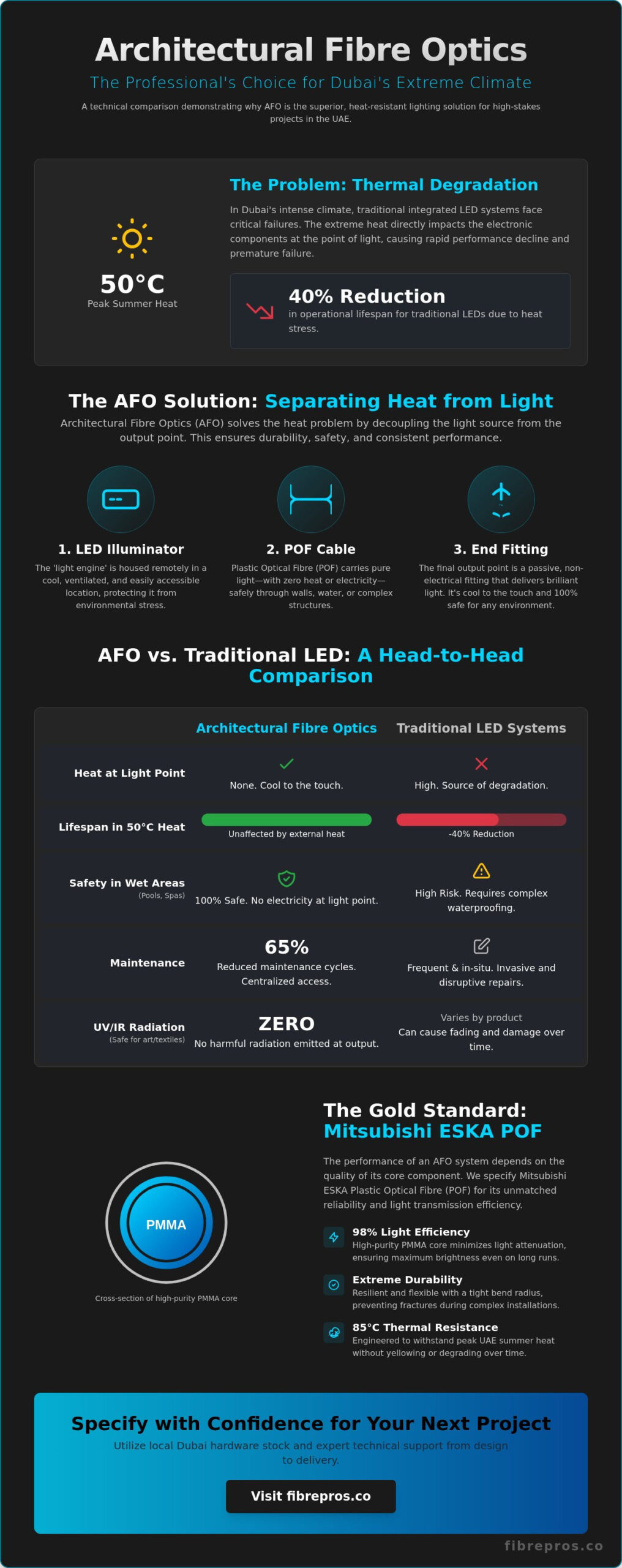
AFO vs. Traditional LED: Why Dubai Architects Specify Fibre
Dubai architects are increasingly moving away from point-source LED systems in favor of afo technology. The primary driver for this shift is the separation of the light source from the discharge point. In traditional installations, heat-generating electronics sit behind the ceiling or wall, where Dubai’s ambient temperatures often accelerate component failure. By contrast, afo systems utilize a remote illuminator located in a ventilated service cupboard, ensuring the architectural finish remains cool and operational. This design choice protects the sensitive “engine” of the system while allowing the light to be delivered through passive, durable cables.
The Maintenance Advantage
Maintenance in high-traffic commercial spaces like the Dubai Mall or luxury hotels requires surgical precision to avoid downtime. Replacing a single failed LED at a height of six meters involves scaffolding, permits, and significant labor costs. With architectural fibre optics, technicians simply replace one lamp or LED engine at floor level in a dedicated plant room. Over a 10-year period, this centralized approach reduces operational expenditure by an estimated 65% compared to distributed LED arrays. Technical standards for these installations are often guided by resources from The Fiber Optic Association (FOA), which highlights the durability of glass and plastic conduits in demanding environments. This “install and forget” infrastructure ensures that the visible lighting remains consistent without the need for frequent site access or specialized equipment.
Safety in Wet Areas
Lighting design for luxury spas, steam rooms, and infinity pools in coastal areas like Palm Jumeirah presents unique electrical challenges. Saline environments are notoriously aggressive toward metal components and electrical connections. Traditional LEDs rely on seals that can degrade over time, leading to moisture ingress and potential shorts. AFO cables carry only light, making them 100% safe for underwater use. Because there’s no electricity at the output point, the risk of electric shock is eliminated entirely. This makes fibre the only logical choice for high-end wellness projects where guest safety and system longevity are non-negotiable. The glass or PMMA fibres are immune to salt corrosion, ensuring the lighting effects in Jumeirah’s beachside resorts remain as vivid in 2030 as they were on day one. By keeping the power source in a dry, accessible area, project managers ensure the system’s reliability in the harshest coastal conditions.
Luxury Applications: Designing with AFO in the Middle East
Dubai’s luxury market demands lighting solutions that combine technical resilience with high-end aesthetics. Architectural Fibre Optics (AFO) provides a versatile platform for these requirements, particularly in environments where traditional electrical systems face thermal or moisture-related constraints. From private villas in Emirates Hills to commercial facades in Downtown Dubai, afo technology is now a primary specification for premium lighting designers.
The Dubai Star Ceiling
The star ceiling effect is a signature element of luxury villa interiors across the UAE. Achieving a realistic celestial display requires technical precision. We use varying fibre diameters, typically ranging from 0.75mm to 1.5mm, to simulate the depth of a natural night sky. This variation creates “near” and “far” star effects that static LED panels can’t replicate. For added brilliance, we integrate crystal end fittings that refract light into complex patterns. Professionals can find detailed specifications in our Star Ceiling Kits guide for luxury interiors.
Underwater and Outdoor Durability
Standard lighting often fails in the high-salinity and extreme heat of the GCC. AFO systems solve this by keeping the light source, the illuminator, in a controlled, dry environment while only the glass or plastic fibres enter the water. For infinity pools and water features, 316-grade stainless steel fixtures are mandatory to prevent corrosion. You can review the technical requirements for these installations in our Underwater Lighting guide. Side-glow fibre is also increasingly used to define landscape borders and pedestrian paths, providing a continuous line of light without the “hot spots” typical of LED strips.
Sensory and Therapeutic Spaces
Beyond aesthetics, fibre optics play a critical role in Dubai’s healthcare and education sectors. Schools and clinics use UV-stabilized fibres to create calm, therapeutic environments for sensory processing. Recent 2025 infrastructure reports show a 22% increase in the adoption of sensory rooms within UAE private schools. These installations use “sparkle” fibre that is safe to touch, as it carries no heat or electricity, making it ideal for pediatric environments.
Architectural Highlights and Facades
Side-glow fibre is transforming how we approach building exteriors in the Middle East. It allows for sleek, linear illumination that follows the contours of modern architecture without the maintenance burden of external bulbs. Because the light source is accessible from inside the building or at ground level, maintenance teams don’t need heavy lifting equipment for simple repairs. This efficiency is why 15% of new commercial builds in the DIFC area are incorporating fibre optic accents into their 2026 design phases.
Implementing AFO in the UAE: The Fibrepros Advantage
Successful architectural lighting requires more than high-quality components; it demands a technical partner who understands the nuances of the Middle East construction sector. Fibrepros provides end-to-end support for architects and interior designers, bridging the gap between initial creative concepts and final hardware delivery. By maintaining local stock of Mitsubishi ESKA fibre and specialized LED hardware in Dubai, we eliminate the logistical delays that often stall high-end projects. Our team focuses on the technical precision required for afo installations in demanding environments.
Quality control remains our primary objective. Every kit leaving our facility undergoes rigorous testing to ensure it meets the UAE Fire and Life Safety Code. We provide the documentation and technical specifications necessary for consultants to approve installations without delay. This results-oriented approach ensures that the lighting infrastructure is as durable as the building itself. We deliver results through accuracy and local accountability.
Our Professional Standards
The “Pros” in our name isn’t a marketing tag. It’s a commitment to technical mastery and reliability. Since 1995, we’ve served the Middle East lighting market with a singular focus on decorative and architectural applications. We intentionally exclude telecommunications and data fibre from our portfolio. This specialization allows us to maintain a deep expertise in light transmission physics that generalist contractors cannot match. When you work with us, you’re partnering with specialists who understand how light behaves in a 45-degree Celsius environment. We value the quiet confidence that comes from specialized mastery.
Getting Started with Your AFO Project
Initiating a project with Fibrepros is a streamlined process designed for efficiency. Architects can submit CAD drawings or technical briefs directly to our Dubai office for a comprehensive technical quote. We provide detailed breakdowns of fibre counts, harness lengths, and light engine requirements for both residential villas and large-scale commercial developments. Our team handles the technical anxieties of B2B clients by providing clear, functional plans. For projects requiring immediate solutions, we maintain a ready-to-ship inventory of sensory kits and precision-cut crystal fittings. This local availability ensures that GCC projects stay on schedule.
Expertise is the foundation of every successful installation. We offer bespoke consultation services for complex projects across the GCC, ensuring that the afo system is optimized for both aesthetics and long-term maintenance. Contact the Fibrepros team for a specialized AFO consultation to discuss your specific project requirements and receive a professional assessment.
Future-Proofing Dubai Architecture with Precision Lighting
Dubai’s architectural landscape demands lighting solutions that withstand extreme temperatures while delivering uncompromising aesthetic quality. Architectural fibre optics represent the gold standard for these high-stakes environments. By utilizing Mitsubishi ESKA Plastic Optical Fibre (POF), designers eliminate the heat and maintenance issues common with traditional LED systems. These systems provide 100% UV-free light and seamless integration with DMX and smart-home protocols. It’s a level of technical precision that traditional methods simply can’t match.
Since 1995, Fibrepros has specialized in Middle Eastern architectural lighting, delivering technical mastery and reliable infrastructure for the region’s most ambitious builds. Our status as an official supplier of Mitsubishi ESKA POF means your project benefits from industry-leading materials and specialized expertise. We don’t just install lights; we build the invisible, vital infrastructure that defines luxury spaces well beyond 2026.
Upgrade your project with professional afo systems from Fibrepros
Let’s build a more efficient and visually stunning future for your next development project.
Frequently Asked Questions
What does AFO stand for in the lighting industry?
AFO stands for Architectural Fibre Optics, a specialized lighting technology that transmits light from a remote source to a terminal point through optical fibres. This system separates the light engine from the illumination point, making it an ideal solution for precision lighting in high-end Dubai interiors. We utilize these systems to create heat-free and electricity-free lighting environments in sensitive architectural spaces.
Is AFO lighting better than traditional LED strips for Dubai homes?
AFO lighting offers superior heat management and durability compared to traditional LED strips, especially in the 45-degree Celsius summer temperatures of Dubai. While LED strips often fail after 15,000 hours due to heat-induced degradation, afo systems keep the light source in a controlled, ventilated environment. This separation ensures the actual lighting points don’t emit heat, protecting delicate finishes and reducing cooling loads in residential villas.
Can I install an AFO star ceiling kit myself in my villa?
Professional installation is required for AFO star ceilings in Dubai villas to ensure structural integrity and optimal light distribution. A typical installation involves over 200 individual fibre strands per square metre, requiring precise drilling and tensioning techniques. DIY kits often lack the industrial-grade illuminators necessary to maintain brightness across long runs, leading to inconsistent light output across the ceiling surface.
Are AFO systems safe for use in swimming pools and spas?
AFO systems are inherently safe for swimming pools and spas because the optical fibres carry light, not electricity. Since the illuminator is housed in a dry plant room up to 20 metres away, there’s zero risk of electrical shock in the water. This 100 percent electrical separation makes it the primary choice for luxury hospitality projects where safety and moisture resistance are the top priorities.
How long does a Mitsubishi ESKA AFO system last in the UAE heat?
Mitsubishi ESKA afo components are rated for a service life exceeding 20 years when installed according to manufacturer specifications. The high-purity polymethyl methacrylate (PMMA) core maintains 95 percent of its light transmission efficiency even after a decade of use. While the remote illuminator requires standard cooling, the fibre optic cables themselves withstand ambient temperatures up to 70 degrees Celsius without losing structural integrity.
Where can I buy professional-grade AFO components in Dubai?
Professional-grade AFO components are available through specialized technical distributors and certified lighting consultants located in the Dubai Design District (d3) and Al Quoz industrial zones. We source components directly from manufacturers to ensure all cables meet the ISO 9001 quality standards required for UAE building codes. Avoid general hardware retailers, as they typically stock consumer-grade plastic fibres that don’t meet professional architectural specifications.
Does AFO require special maintenance?
AFO systems require minimal maintenance, focusing almost exclusively on the remote illuminator located in an accessible service area. You’ll need to clean the illuminator’s air filters every 6 months to prevent dust buildup and ensure the cooling fans operate at peak efficiency. The actual fibre optic network is sealed and static, meaning it requires zero maintenance for its entire 20-year lifespan once the initial installation is complete.
Can AFO be integrated with smart home systems like Control4 or Crestron?
AFO systems integrate seamlessly with smart home platforms like Control4 and Crestron using standard DMX512 or 0-10V dimming protocols. This connectivity allows users to manage light intensity and color cycles directly from their primary automation interface. By using a dedicated DMX bridge, we ensure the lighting response time stays under 50 milliseconds, providing instantaneous control over complex star ceiling patterns or architectural accents.