
Most high-end lighting installations in Muscat fail not because of manufacturing defects, but because traditional LEDs eventually succumb to the relentless coastal humidity. You’ve likely dealt with the frustration of fogged lenses, corroded housings, and persistent electrical shorts in your outdoor or spa projects. It’s a common struggle for project managers who need reliable performance in Oman’s demanding climate. This guide provides the technical blueprint for achieving total reliability by physically separating your electrical source from the moisture.
By mastering the specific requirements for lighting for high humidity environments Muscat, you can eliminate fixture failure and drastically reduce long-term maintenance costs. We’ll examine the technical standards of the 2026 Oman Building Code and demonstrate why fibre optic technology, specifically Mitsubishi ESKA plastic optical fibre, remains the only fail-safe choice for Muscat’s most challenging wet areas. From underwater lighting fixtures to star ceiling kits, we’ll outline how to deploy professional-grade solutions that thrive where traditional systems fail.
Key Takeaways
- Identify how Muscat’s unique coastal microclimate causes internal fixture condensation and learn the technical steps to prevent it.
- Stay compliant with the 2026 Oman Building Code by selecting the correct IP-rated fixtures for specific wet zones and outdoor environments.
- Discover how fibre optic technology eliminates electrical risk by keeping the power source isolated from lighting for high humidity environments Muscat.
- Apply professional installation standards for sealing fibre terminations and protecting conduits to ensure long-term durability in saline conditions.
- Explore the technical advantages of using Mitsubishi ESKA Plastic Optical Fibre for maintenance-free lighting in high-stakes areas like spas and pools.
The Challenges of Lighting for High Humidity Environments in Muscat
Muscat’s coastal geography creates a unique microclimate where extreme humidity interacts with high-salinity air. While general tropical environments are humid, Muscat adds a corrosive chemical component that most standard lighting fixtures aren’t designed to handle. For developers and facility managers, selecting lighting for high humidity environments Muscat requires a shift from standard weatherproof thinking to specialized corrosion-proof engineering. Standard installations that work in inland regions often fail within a single season when exposed to the Gulf’s salt-laden atmosphere.
The most persistent threat is the “Sweat Effect.” This occurs during rapid temperature fluctuations typical of the Omani summer. When a fixture cools down at night or sits near an interior air-conditioned zone, the internal air pressure drops, drawing in moist air through even the smallest seal imperfections. As temperatures rise during the day, this moisture condenses inside the housing. This internal condensation leads to droplets forming directly on the LED diodes and driver components, causing immediate electrical shorts or gradual circuit degradation that is impossible to repair without replacing the entire unit.
Humidity also acts as a thermal insulator, creating a dangerous failure cycle. High moisture levels in the air reduce the fixture’s ability to dissipate heat. This results in increased electrical resistance, forcing the LED driver to work harder, which generates even more heat. Without specialized materials to break this cycle, the internal components reach critical temperatures, leading to premature diode failure well before the manufacturer’s rated lifespan.
The Impact of Coastal Salinity on Light Fixtures
Salt spray in areas like Al Mouj or Shatti Al Qurum acts as a chemical catalyst. It accelerates the oxidation of aluminium and low-grade steel housings, making them brittle and porous within months. Standard powder coatings frequently bubble and peel as salt penetrates the substrate and attacks the metal beneath. For these zones, specifying Stainless Steel Fixtures is a necessity rather than an upgrade. Early signs of failure include white powdery deposits around gaskets and tea-staining on the metal surface, indicating that the structural integrity of the seal is compromised.
Thermal Management in High-Humidity Zones
Effective thermal management is difficult when humidity traps heat within the fixture’s internal cavity. This is particularly dangerous for integrated LED drivers. To combat this, engineers must look closely at IP Code ratings to ensure the housing prevents moisture ingress while managing thermal loads through material science. While some believe ventilation is the solution, adding vents in a coastal environment often invites saline air into the delicate electronics. The professional approach relies on a perfectly sealed system that uses high-grade heat sinks to dissipate energy through the housing itself without compromising the seal.
Understanding IP Ratings and Material Science for Omani Climates
Technical specifications serve as the primary defense against the environmental stressors discussed in the previous section. When specifying lighting for high humidity environments Muscat, relying on generic “outdoor” labels is a recipe for system failure. Success requires a granular understanding of how specific ingress protection levels and metallurgical properties respond to Muscat’s unique combination of heat and salt air. While many products claim weather resistance, only those engineered for saline-heavy coastal zones can maintain operational integrity over a multi-year lifecycle.
Decoding IP Ratings for Muscat Projects
An IP rating is the measure of a fixture’s resistance to solid and liquid entry. For Muscat projects, the distinction between water resistance and vapor resistance is critical. IP65 fixtures are designed to be jet-proof, making them ideal for covered patios and humid bathrooms where they aren’t exposed to direct, heavy spray. However, garden lighting and fixtures near the shoreline face heavy coastal mist and high-pressure humidity that can bypass standard seals. In these zones, IP67 or IP68 ratings are mandatory. These ratings ensure the housing remains sealed even during temporary or continuous submersion, providing a much-needed buffer against the vapor ingress that often plagues lower-rated units. While IP ratings are a global benchmark, many regional project managers also reference NEMA enclosure standards to ensure electrical safety in harsh, corrosive environments.
Superior Materials: 316 Stainless Steel vs 304
Material selection is where most lighting for high humidity environments Muscat fails. The industry standard for Muscat’s coast must be 316 Marine Grade Stainless Steel. The primary advantage is the inclusion of molybdenum, an element that significantly increases resistance to chloride-induced pitting. While 304 stainless steel is common in interior applications, it quickly develops “tea-staining” and structural pits when exposed to Muscat’s salt air. For non-metallic components, the choice between powder coating and anodization is equally vital. Anodization creates an integrated oxide layer that won’t peel or bubble, whereas standard powder coatings can fail if the underlying metal isn’t perfectly prepped for high-salinity exposure.
The integrity of the internal seal often comes down to the gasket material. In the extreme heat of the Omani summer, standard rubber gaskets can become brittle and crack. High-grade Silicone gaskets are preferred over EPDM in these scenarios because they maintain flexibility at higher temperatures, ensuring the seal remains airtight during the “sweat effect” pressure shifts. Integrating professional-grade Stainless Steel Fixtures into your design plan provides the necessary resilience against these localized chemical attacks. Using non-ferrous components throughout the installation further prevents galvanic corrosion, a common but overlooked cause of fixture failure in humid coastal zones.
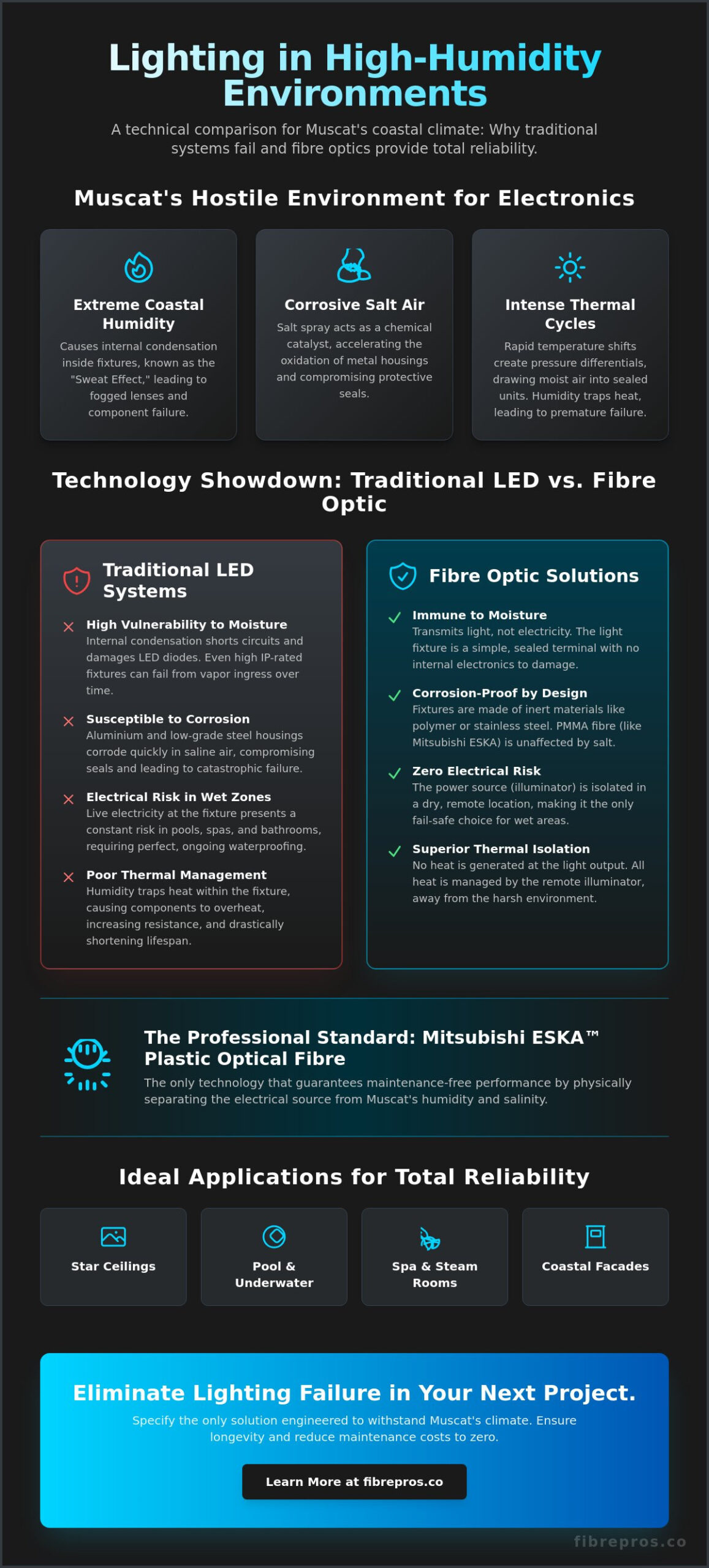
Fibre Optic vs. Traditional LED: Which Survives Muscat Coastal Humidity?
Traditional LED fixtures, despite high IP ratings, carry an inherent vulnerability: the electrical circuit exists at the point of light. In the saturated air of a Muscat spa or coastal garden, moisture eventually finds a path to these circuits. Fibre optic technology reverses this risk profile by physically decoupling the light source from the electrical supply. This architecture is the most robust solution for lighting for high humidity environments Muscat because it removes the sensitive components from the hostile zone entirely. While a sealed LED unit fights a constant battle against vapor ingress, a fibre optic cable remains completely inert and unaffected by water or salt.
Separation of Power and Light
The technical advantage of fibre optics lies in the remote placement of the light source. By installing LED illuminators in climate-controlled interior spaces or sealed plant rooms, you eliminate the risk of electrical failure at the fixture point. Only the light travels through the Mitsubishi ESKA plastic optical fibre to the wet area. This configuration is exceptionally safe for pool decks, steam rooms, and coastal gardens where traditional 240V or even 12V systems present an ongoing maintenance burden. Since the fibre ends generate zero heat, the “sweat effect” discussed previously is completely neutralized. There’s no internal temperature shift to draw in moisture, making it a truly waterproof solution for Muscat’s most demanding zones.
Long-Term Cost Analysis in Muscat
Project managers often focus on initial capital expenditure, but the true cost of lighting for high humidity environments Muscat is found in the maintenance lifecycle. Traditional LEDs in saline environments often require replacement every 24 to 36 months due to diode degradation or housing failure. In contrast, fibre optic systems function as a “fit and forget” infrastructure. While the initial investment may be higher, the centralized illuminator is the only component requiring maintenance. This box is easily accessible in a dry area, avoiding the need for scaffolding or draining pools to change a single failed bulb.
Adhering to corrosion control standards is significantly easier when the exposed hardware consists of inert plastic fibre and stainless steel end fittings. Centralizing the light source also improves energy efficiency; one high-output illuminator can power dozens of points of light, replacing multiple high-wattage fixtures that each require their own waterproof housing and cabling. For high-end architectural details in Muscat, this specialized approach ensures the design remains intact without the recurring costs of environmental failure.
Installation Best Practices for Humid and Saline Environments
Precision is mandatory during the installation phase to ensure long-term system integrity. While the fibre itself is impervious to moisture, the points where it enters a fixture or connects to the illuminator remain potential sites for atmospheric ingress if not handled correctly. Protecting the “backbone” of the system involves more than just selecting the right components; it requires a systematic approach to sealing and cable management. For professional-grade lighting for high humidity environments Muscat, every conduit entry and termination point must be treated as a critical failure point.
Conduit and cabling strategies should prioritize the prevention of moisture creep. Capillarity can pull humid air and salt spray through loose conduit runs, eventually reaching the electronics. Installers should use IP68-rated cable glands and adhesive-lined heat-shrink tubing at all transition points. Strategic placement of the LED illuminators is equally vital. These units should be housed in climate-controlled interior zones or dedicated ventilated cabinets. In Muscat homes, where ambient dust levels are high, ensuring these cabinets have filtered intake fans prevents the internal drivers from overheating due to clogged heat sinks.
Terminating Fibre in High-Humidity Zones
In humid zones, end-polishing and sealing are critical technical steps. If the fibre tip is left raw or unsealed, moisture can eventually degrade the optical clarity at the termination point. Using crystal end fittings provides a robust physical barrier that protects the fibre tip while enhancing the aesthetic output. This is particularly important for outdoor star-ceiling or deck lighting installations where the fixtures are directly exposed to Muscat’s heavy coastal mist. A properly sealed termination ensures that the light remains crisp and the system remains maintenance-free for years.
The Role of Professional Maintenance
Even the most resilient systems require scheduled oversight to combat Muscat’s environmental load. Annual checks should focus on seal integrity and the removal of salt buildup from lenses and fittings. While 316 stainless steel is highly resistant, regular cleaning with fresh water prevents “tea-staining” caused by prolonged salt accumulation. Furthermore, illuminator air filters must be monitored and cleaned quarterly. In Muscat’s dusty environment, a clogged filter reduces airflow, causing the LED driver to run at higher temperatures and shortening its operational life. Proactive maintenance preserves the “fit and forget” advantage of your infrastructure.
If you are planning a high-stakes project, you can consult our technical team for specialized installation support across the region.
Specialized High-Humidity Lighting Solutions from Fibrepros
Fibrepros brings over 30 years of specialized Middle Eastern lighting experience to every project. We understand the specific failure modes associated with the Gulf’s climate and have engineered our offerings to counter them directly. For architects and developers, we provide Mitsubishi ESKA Plastic Optical Fibre for Muscat projects, ensuring a foundation of optical clarity and environmental resilience. This material serves as the global benchmark for durability in saturated environments, outperforming generic polymers that cloud or degrade when exposed to constant moisture.
Our engineering team develops underwater lighting fixtures specifically designed for high salinity. We utilize marine-grade stainless steel and specialized sealing techniques to ensure these units remain watertight and corrosion-free over a multi-year lifecycle. Whether it’s a private infinity pool in Al Mouj or a luxury spa in a five-star hotel, our solutions provide consistent performance without the risk of electrical shorts. We also offer turnkey sensory fibre optic kits, providing immersive lighting for high humidity environments Muscat that traditional electrical systems can’t safely match.
Why Muscat Architects Choose Fibrepros
Architects in the region require more than just hardware; they need technical precision and local accountability. We provide end-to-end support, from initial design simulations to final delivery across Oman. Our systems comply with the latest regional standards for both the luxury hospitality and residential sectors, ensuring your project meets all regulatory requirements. We specialize in high-performance star ceiling kits that withstand extreme humidity, allowing for architectural features that remain pristine even in damp interior environments where standard LEDs would fail.
Get a Professional Consultation
Selecting the correct hardware for a coastal project is a high-stakes decision that shouldn’t be left to chance. Our specialists help you specify the exact IP-rated components and material grades required for your specific site conditions. We offer customized solutions for coastal villas, hotels, and public spaces in Muscat, ensuring every point of light is protected against the elements. Contact Fibrepros today for a comprehensive technical assessment of your high-humidity lighting needs. We’ll ensure your project benefits from the reliability and craftsmanship that three decades of regional experience provides.
Securing Your Lighting Infrastructure Against Muscat’s Coastal Climate
Muscat’s humidity is a constant operational threat, but it’s one that you can manage with technical precision. By prioritizing the separation of electrical components from moisture and insisting on 316 Marine Grade Stainless Steel, you ensure your installation survives the saline environment. Fibre optic technology remains the gold standard for these high-stakes zones. It offers a reliable solution that traditional LEDs simply can’t match in saturated conditions. Implementing effective lighting for high humidity environments Muscat requires a partner who understands these specific regional stressors.
Fibrepros has operated in the Middle East since 1995, positioning us as a dependable specialist for complex infrastructure projects. As an authorized distributor of Mitsubishi ESKA™ Plastic Optical Fibre and specialists in 316 Marine Grade Stainless Steel fixtures, we provide the materials necessary to build resilient systems. Consult with Fibrepros for your Muscat high-humidity lighting project to secure a technical assessment of your specific requirements. Our team is ready to help you transition from high-maintenance failures to durable, professional-grade lighting solutions that stand the test of time.
Frequently Asked Questions
What is the best IP rating for outdoor lighting in Muscat?
IP67 or IP68 ratings are the professional standard for exposed outdoor lighting for high humidity environments Muscat. While IP65 is acceptable for covered patios or areas shielded from direct spray, the heavy coastal mist in districts like Al Mouj requires a higher level of ingress protection. These ratings ensure the housing remains sealed against both fine dust and high-pressure water vapor during the extreme humidity of the Omani summer.
Can I use standard LED strips in a high-humidity steam room?
Standard LED strips shouldn’t be used in steam rooms because they lack the specialized sealing required to prevent vapor ingress. Even “waterproof” strips often fail as heat causes the adhesive and silicone to expand, letting moisture reach the diodes. The professional solution is to use Side-Glow or End-Glow fibre optics. This keeps all electrical components outside the room, ensuring the installation remains safe and functional despite 100% humidity levels.
Why does my garden lighting keep tripping the circuit breaker in summer?
Garden lighting usually trips the circuit breaker because of moisture ingress and salt accumulation within the fixture housing. During Muscat’s summer, rapid temperature shifts create a vacuum effect that draws humid air through aging gaskets. This leads to internal condensation and electrical shorts. Switching to fibre optic systems eliminates this issue by removing the electrical current from the garden fixtures and placing the power source in a dry, remote location.
Is Mitsubishi ESKA fibre resistant to salt and moisture?
Mitsubishi ESKA plastic optical fibre is completely resistant to salt and moisture because it is an inert polymer. It doesn’t oxidize, rust, or conduct electricity, making it immune to the corrosive effects of Muscat’s saline atmosphere. This makes it a permanent solution for architectural lighting for high humidity environments Muscat, as the optical performance won’t degrade even after years of exposure to coastal conditions.
How often should I clean stainless steel light fixtures in Muscat?
You should clean stainless steel light fixtures at least once every three months to prevent “tea-staining” from salt buildup. Even high-quality 316 Marine Grade Stainless Steel requires regular rinsing with fresh water to remove corrosive chloride deposits. In coastal areas near the Gulf of Oman, a monthly cleaning schedule is recommended to maintain the aesthetic finish and prevent salt from compromising the structural integrity of the seals.
What is the difference between damp-rated and wet-rated lighting?
Damp-rated lighting is designed for areas with high moisture levels but no direct water contact, such as a covered bathroom or a laundry room. Wet-rated lighting is engineered for direct exposure to rain, ice, or salt spray. For Muscat’s coastal properties, wet-rated fixtures are mandatory for any exposed outdoor area to ensure the internal electronics are protected from the heavy mist and humidity prevalent during the summer months.
Are fibre optic lights safer than LEDs for swimming pools?
Fibre optic lights are inherently safer than LEDs for swimming pools because they carry no electrical current in the water. The LED illuminator is installed in a dry plant room or cabinet, and only the light travels through the fibre to the underwater lighting fixtures. This configuration eliminates the risk of electrical leakage into the pool, providing a fail-safe lighting solution that complies with the strictest safety standards for wet environments.
How do I prevent condensation from forming inside my outdoor light fixtures?
You can prevent condensation by using high-quality fixtures with silicone gaskets that maintain a seal during thermal expansion. Cheaper EPDM gaskets often fail in Muscat’s heat, allowing humid air to enter the fixture and condense as it cools. Alternatively, deploying a fibre optic system removes the heat-generating electronics from the humid zone entirely. This stops the “sweat effect” and ensures your lighting remains clear and moisture-free throughout the year.